
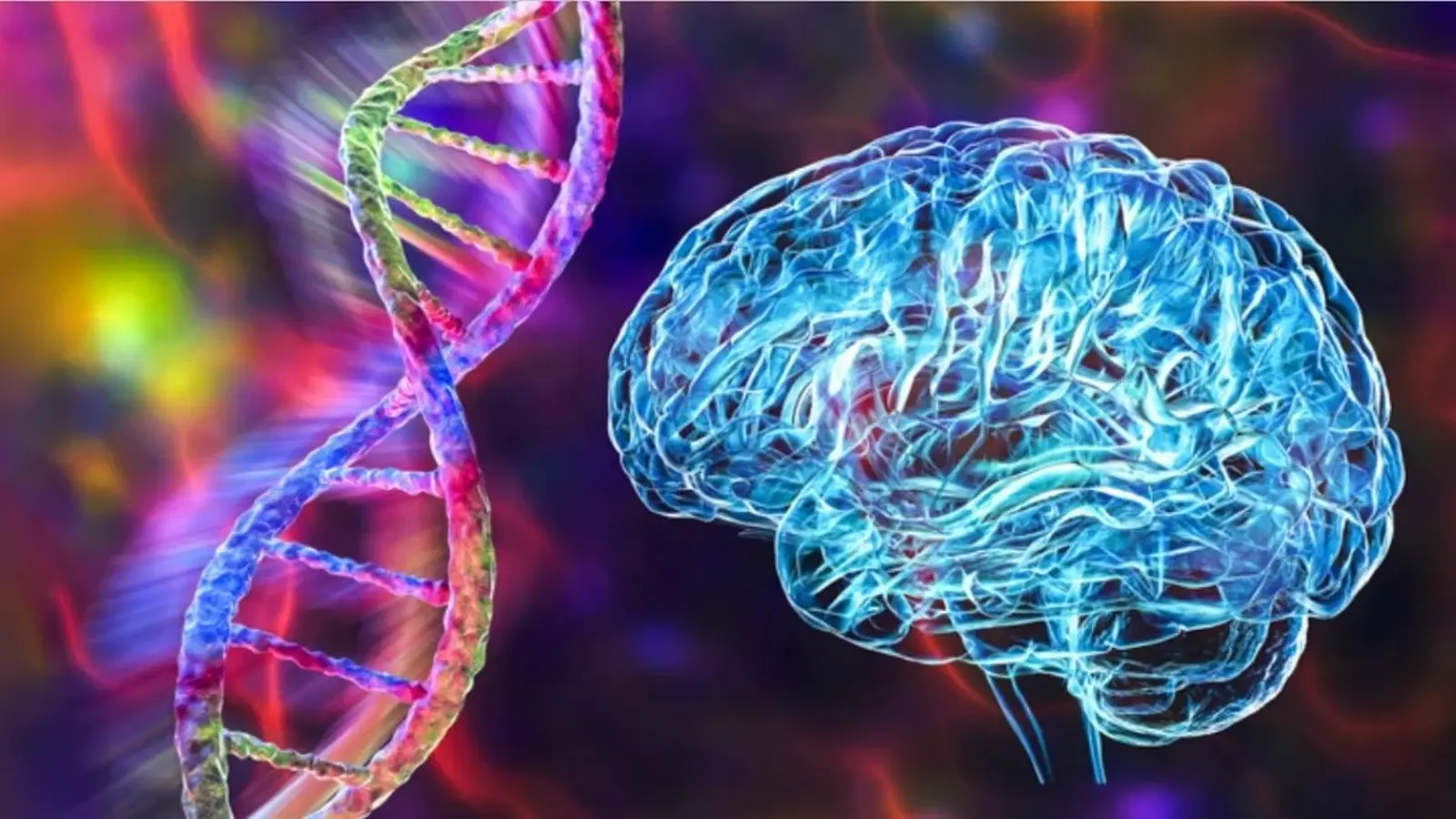
Imagine two psychiatric diagnoses that have long been treated as distinct illnesses, yet beneath clinical labels they carry much of the same genetic code. That is the striking conclusion from two recent, large-scale genetic studies that chart how psychiatric risk is distributed across disorders.
Scientists analyzed DNA from more than a million people diagnosed with at least one of 14 psychiatric conditions and compared those genomes with roughly five million people without a diagnosis. The result was not a scatter of isolated risk genes. Instead it was a pattern: five shared genetic signatures that explain most of the inherited vulnerability across a broad set of mental-health conditions.
Short list? Compulsivity. Mood and anxiety. Substance use. Neurodevelopmental conditions. And, perhaps most provocatively, a near-overlap between schizophrenia and bipolar disorder. In this last case, about 70 percent of the genetic signal linked to schizophrenia is also implicated in bipolar disorder. That degree of overlap forces clinicians and researchers to ask a blunt question: are we naming separate diseases when we are observing different faces of the same biological process?
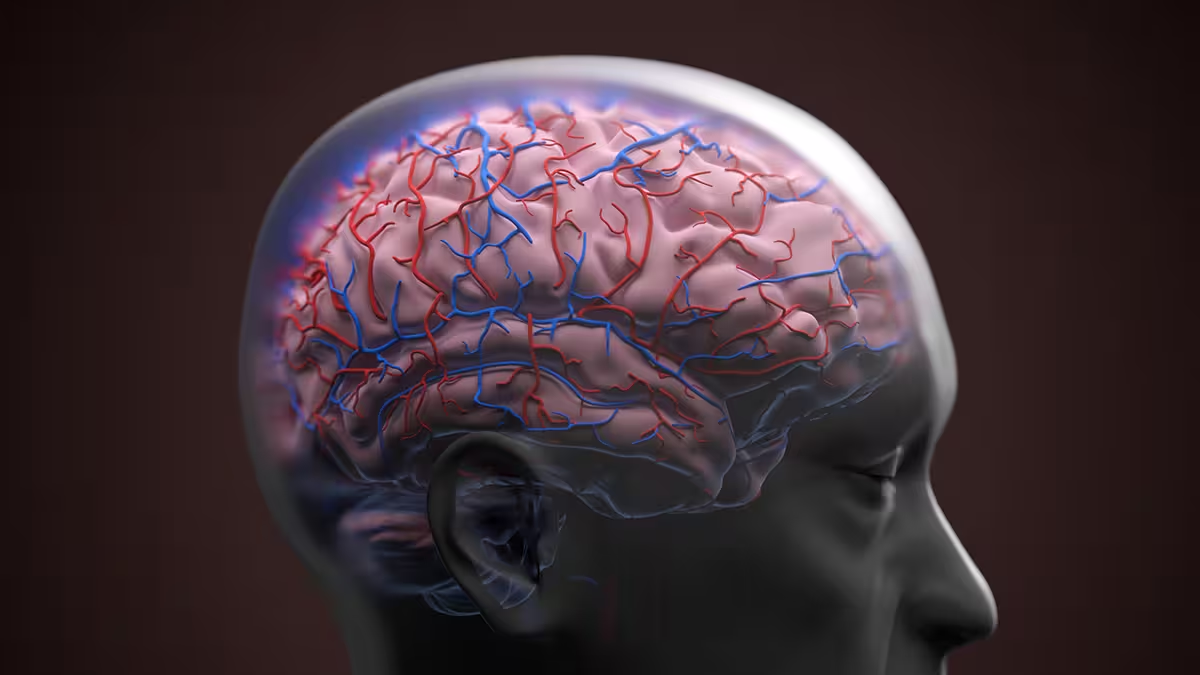
Five underlying genetic signatures appear to account for the majority of psychiatric risk.
How the genetic picture was painted
These results build on earlier work that used genome-wide association studies to identify dozens to hundreds of loci that influence psychiatric traits. One study published in Cell took 18,000 genetic variations identified across eight psychiatric diagnoses and studied how those changes affect developing neurons. That experimental step matters because it moves beyond cataloguing variants to testing how they alter gene regulation and cellular behavior in the developing brain.
The term pleiotropy describes the phenomenon researchers found most often. A single genetic variant can nudge many downstream processes and show up in multiple conditions. Pleiotropic variants tend to interact with more proteins, to be active across several brain-cell types, and to influence regulatory networks at multiple stages of neurodevelopment. That ability to trigger cascades, rather than a single isolated malfunction, offers a mechanistic explanation for why one gene can be relevant to distinct psychiatric outcomes.
Andrew Grotzinger, an assistant professor of psychology and neuroscience at the University of Colorado Boulder, put it plainly: genetically these disorders often look more similar than unique. When one set of variants affects multiple pathways, traditional diagnostic boundaries based on observed symptoms begin to blur.

Human precursor neurons with protein expression stained in different colors, indicating the type of neurons developing.

Clinical implications and the future of treatment
What might this mean for patients? First, consider the limitations of our current diagnostic system. Clinicians base many diagnoses on symptom clusters observed during interviews and clinical assessment. Patients frequently carry more than one diagnosis. That complicates treatment. It is discouraging when a person is prescribed several medications or enrolled in multiple, separate psychotherapies because of diagnoses that often overlap genetically.
If shared genetic drivers can be identified and validated, then it becomes feasible to develop therapies that target those common mechanisms. That could shrink the polypharmacy problem and allow a single, biology-directed approach to treat symptoms that today receive different labels.
Not every psychiatric condition collapses into another. Clear genetic clusters were still associated with compulsive disorders such as obsessive-compulsive disorder, anorexia nervosa, and Tourette syndrome. Another cluster grouped major depressive disorder, generalized anxiety, and post-traumatic stress disorder. Substance use disorders also showed a distinct genetic profile. Neurodevelopmental diagnoses including autism spectrum disorder and attention-deficit/hyperactivity disorder formed a fourth pattern, which helps explain frequent co-occurrence and symptom overlap in early life.
Expert Insight
Dr. Mira Chen, a fictional but realistic psychiatric geneticist and science communicator, commented: "These studies change the geometry of psychiatric genetics. Instead of isolated peaks, we are seeing ridges that link disorders together. That doesn’t erase clinical differences, but it does point the field toward shared biology. Translating that into treatments will require careful work: validating targets, testing safety, and understanding when shared genetics actually predicts shared treatment response."
Broader context and next steps
Why does this matter beyond the lab? The World Health Organization estimates that roughly one in seven people worldwide live with a psychiatric condition. Improved precision in diagnosis and therapy could therefore affect hundreds of millions. But caution is essential. Genetic overlap does not mean identical clinical trajectories. Environment, life experience, epigenetic changes, and developmental timing all shape how risk unfolds into illness.
Future research will need to tie genetic signatures to specific biological changes in the brain and to measurable clinical outcomes. That means more functional genomics, more cell-type and developmental-stage resolved studies, and clinical trials designed to test whether interventions aimed at shared mechanisms improve outcomes across diagnostic categories.
Conclusion
The emerging picture from large-scale genomics is both clarifying and complicating. Clarifying because it shows consistent shared genetic architectures across many psychiatric disorders. Complicating because it challenges existing diagnostic categories and forces medicine to rethink treatment strategies. The work does not collapse psychiatry into a single disease, but it does provide a map for where shared therapies might be found.

“The cosmos has always fascinated me. I write about space missions, astronomy, and the technologies pushing humanity beyond Earth.”

Discussion
Leave a Comment
Comments (2)
Is this for real? genetics overlap ok, but environment, timing, upbringing matter a lot too. feels a bit fast to rewrite diagnoses yet
wow didnt expect schizophrenia and bipolar to overlap this much. big implications, kinda scary. hope this leads to better treatments not just relabels