
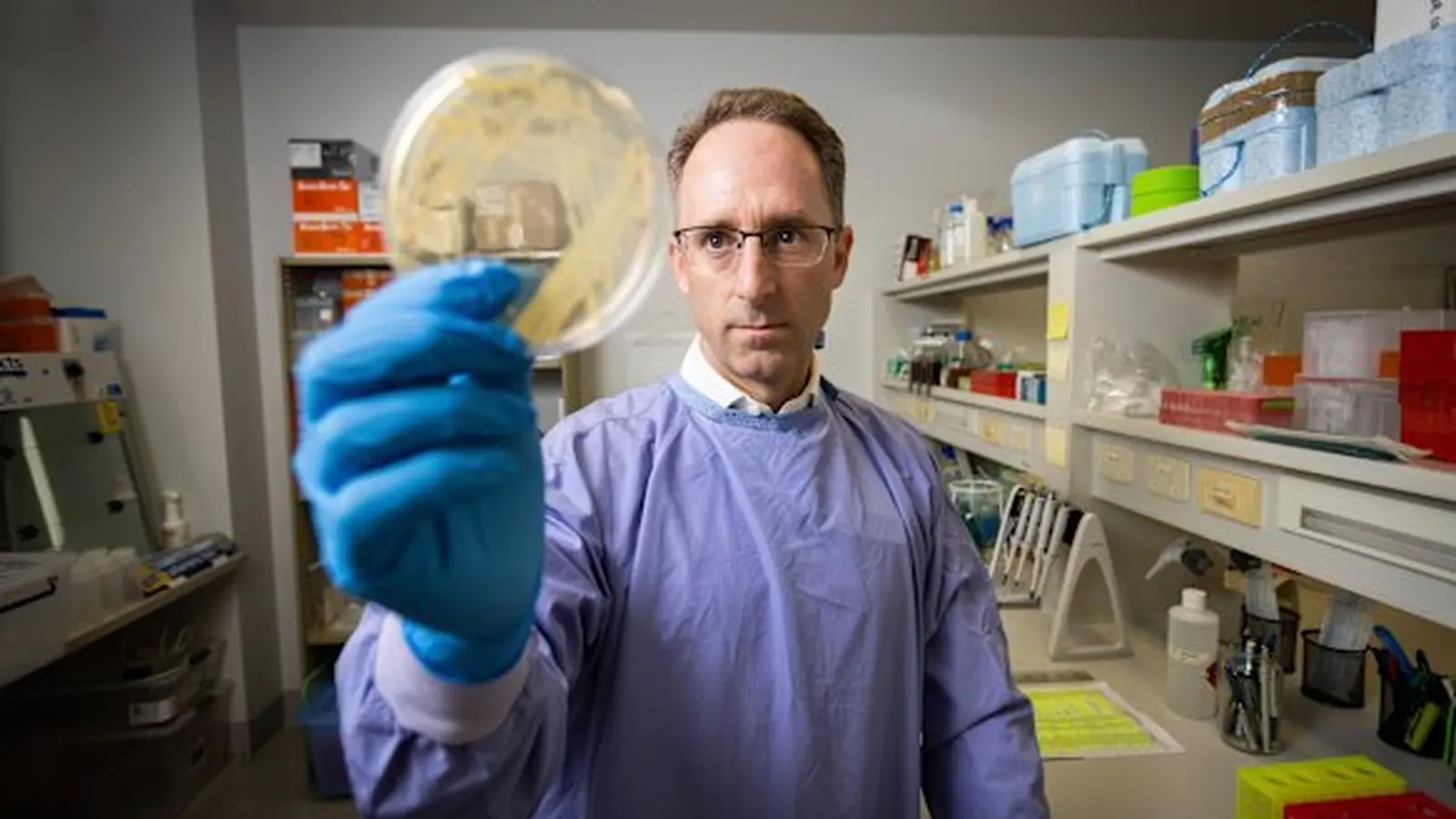
Imagine a decades-old antibiotic suddenly effective again. Not by tweaking its chemical backbone, but by sneaking in a tiny companion that disarms the bacterium’s defenses. That is exactly what a team at Cold Spring Harbor Laboratory and collaborators at Scripps Research have shown: an unassuming small molecule can restore vancomycin’s ability to kill certain resistant bacteria.

A chemistry-built compound helped vancomycin overcome resistance in a dangerous bacterial strain. The result highlights how molecular libraries could uncover unexpected partners for established antibiotics.
Vancomycin has been a mainstay against serious Gram-positive infections such as methicillin-resistant Staphylococcus aureus and Clostridioides difficile. But as bacteria evolve, the drug’s reliability erodes. Resistance can turn routine procedures, from hip replacements to chemotherapy, into riskier ventures because standard prophylaxis and treatments may fail.
From reaction development to a biological fix
John Moses and his group at Cold Spring Harbor have long been focused on making chemistry faster and more flexible. Their toolset includes diversity-oriented clicking, a practical approach for generating many structurally diverse molecules by using reliable chemical reactions as building blocks. The result: a molecular library with more than 150 distinct compounds ready for biological testing.
How do you turn synthetic chemistry into a weapon against resistance? By asking a different question. Instead of searching only for new antibiotics, the researchers screened their library for molecules that neutralize bacterial factors that enable resistance. That search produced pghi-4, a small molecule identified in 2020 that inhibits a bacterial enzyme known as secreted antigen A, or SagA, which has been linked to survival strategies in some strains.
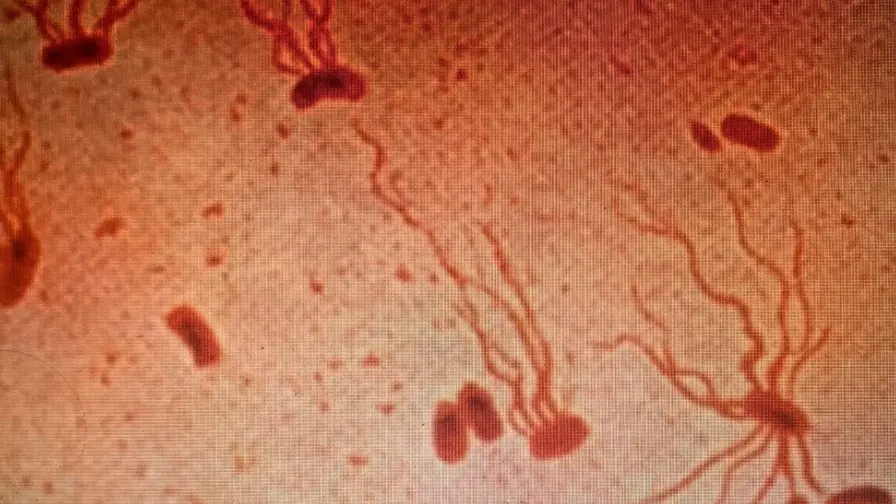
When pghi-4 was paired with vancomycin against drug-resistant Enterococcus faecium, the antibiotic’s killing power returned. The combination worked in laboratory assays where vancomycin alone failed. This is not a tweak to vancomycin itself. It is a tactical partnership: an adjuvant that removes an obstacle so the classic antibiotic can do its job.

That outcome matters because discovering wholly new antibiotic classes has become slower and more costly. Adjuvants offer a pragmatic alternative. They convert existing medicines into renewed assets by targeting bacterial enzymes, transporters, or repair systems that underpin resistance. In effect, these small molecules extend the useful life of trusted drugs.
Implications and next steps
There are practical reasons to pursue this route. Libraries like the one from Moses’s lab accelerate the search for biological activity across a wide chemical space. Sharing these collections with other labs multiplies the chances of breakthroughs against different pathogens. The Moses team and Howard Hang’s group at Scripps demonstrated the principle with vancomycin and E. faecium, but the same strategy could be applied to other urgent targets, including drug-resistant tuberculosis.
Questions remain. Will pghi-4 and molecules like it be safe and effective in animals and humans? Can bacterial populations evolve resistance to the adjuvant itself? Researchers will need to test pharmacology, toxicity, dosing and the durability of efficacy under realistic infection conditions. Still, early-stage success in restoring activity is a powerful proof of concept.
The broader message is about process. Fundamental chemistry that improves how molecules are made can yield unexpected biological tools. Reaction development, performed well, is not an abstract exercise. It seeds the bench with candidates that biologists can probe, and sometimes the result is a partnership that revives an antibiotic once thought compromised.
Expert Insight
"This is the sort of translational thinking the field needs," says Dr. Elaine Park, an infectious disease pharmacologist. "Rather than racing solely for novel scaffolds, we should exploit the pharmacopoeia we already have. Adjuvants that neutralize resistance mechanisms could buy time and reduce the clinical impact of multidrug-resistant infections. But careful preclinical studies are essential before we bring these combinations into practice."
Conclusion
Restoring an antibiotic’s effectiveness by pairing it with a small molecule is a subtle, high-leverage strategy. It reframes part of the antibiotic crisis: not only as a search for new drugs, but as an opportunity to recover and prolong the usefulness of existing ones. The work from Cold Spring Harbor and Scripps is a reminder that chemistry, when shared and tested across disciplines, can uncover unexpectedly simple fixes to complex biological problems.

“The cosmos has always fascinated me. I write about space missions, astronomy, and the technologies pushing humanity beyond Earth.”

Discussion
Leave a Comment
Comments (2)
is this even true? sounds promising but bacteria adapt fast, will adjuvant resistance emerge, also curious about dosing and animal tox, need more data, not sold yet
wow didn't expect this... an old antibiotic rescued by a tiny molecule, clever! hope they check safety and longterm resistance tho, fingers crossed