
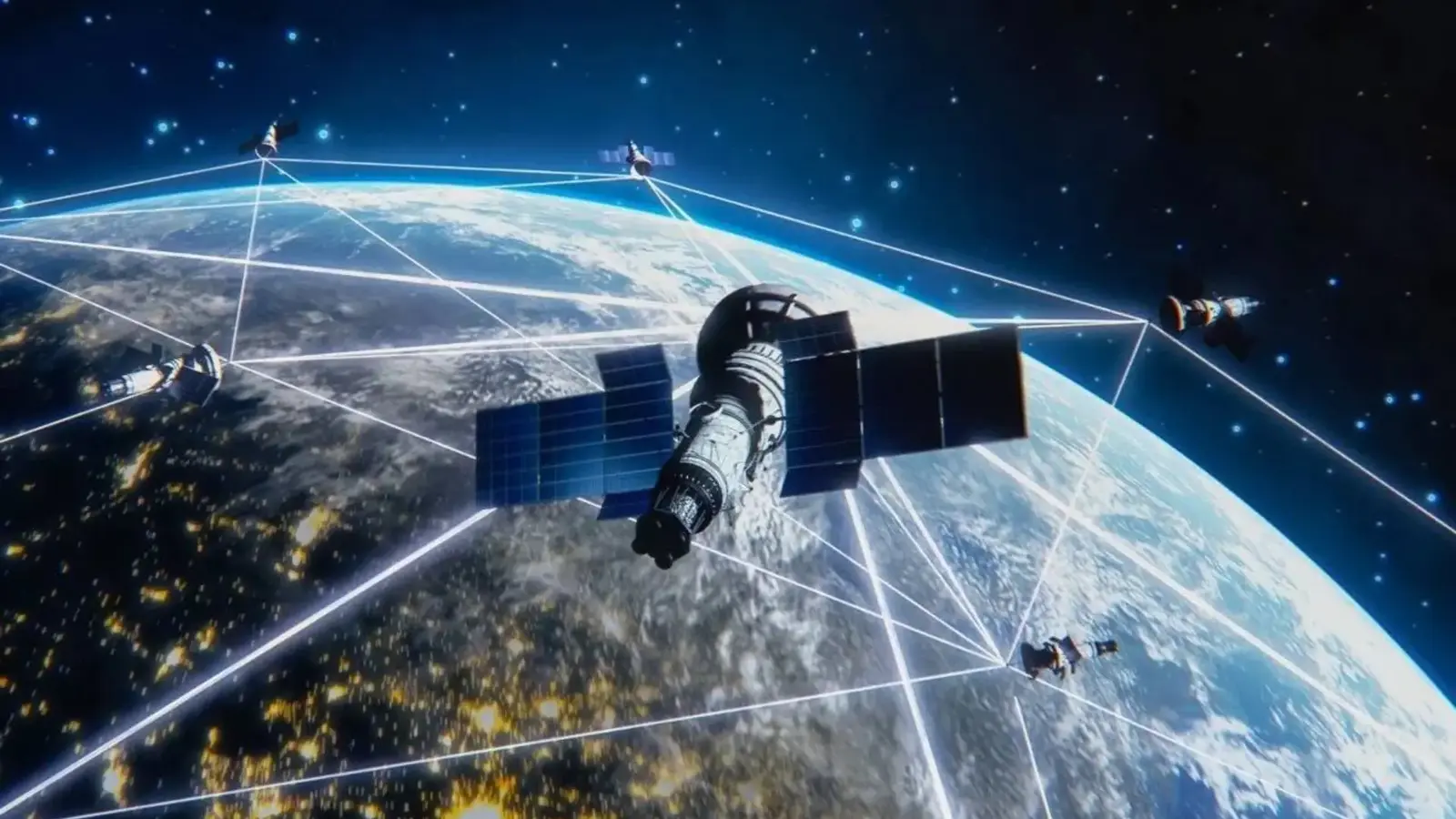
A small satellite the size of a shoebox slipping up alongside a suspicious spacecraft sounds like science fiction. Yet new research suggests that a tiny inspector could do exactly that and reveal whether a satellite hides a nuclear warhead without ever opening it.
A new kind of orbital sniff test
As nations pour thousands more satellites into Earth orbit, the idea of a nuclear device secretly placed among them has moved from hypothetical to plausible. An ordinary detonation in space would trap intense radiation in Earths magnetic environment and could knock out large swaths of the satellite network that modern life depends on. So scientists have been asking one blunt question: how would we know if someone had put a weapon up there?
The answer in a paper published in Nature is surprisingly low-tech in concept and high-tech in execution. Researchers led by MIT nuclear physicist Arg Danagoulian propose using very small satellites, sometimes called smallsats or CubeSats, equipped with neutron detectors to ‘‘sniff’’ for signatures of nuclear material. The principle is straightforward. Natural high-energy particles in regions of strong radiation interact with fissile materials such as uranium and plutonium, producing neutrons. Those neutrons act like a telltale scent: measurable at safe distances and difficult to mimic by benign spacecraft components.

How the detection works in practice
Around Earth lie two broad belts of charged particles known as the Van Allen radiation belts. In parts of these belts, highly energetic protons constantly sweep by. If a warhead with uranium were parked in such an environment, those protons would strike uranium nuclei and liberate a burst of neutrons. An inspector satellite flying in formation with the target could register that extra neutron flux with sensitive sensors, while other instruments filter out backgrounds from protons and electrons so false alarms stay rare.
Computer simulations run by the team indicate that a detector-equipped smallsat could confirm the presence of a fissionable device from roughly four kilometers away, provided it remains in the vicinity of the suspect satellite for about a week. Bring the inspector closer, or use several inspectors operating in concert, and the observation window shrinks to hours. That trade-off — distance for time — shapes the operational and diplomatic choices for deploying such a system.
Technical promise, political complexity
The physics is elegant. The engineering is doable. The politics are thorny. The Outer Space Treaty of 1967, ratified by 118 countries including the United States and Russia, bans placement of nuclear weapons in space. However, the treaty lacks a practical, on-orbit verification mechanism. That absence leaves a gap: how can the international community know compliance or detect violation without intrusive inspections?
Using autonomous smallsats for non-invasive verification could close some of that gap. But there are real operational hurdles. Getting an inspector satellite close enough to a target without prior coordination risks being seen as threatening and could even raise the odds of accidental collision, which would generate more debris and more danger for other spacecraft. Orbital dynamics specialists warn that inspection maneuvers must be tightly controlled and agreed in advance, or they could create diplomatic incidents rather than confidence.
Real-world context and strategic signals
Recent geopolitical tensions make this research timely. The United States has publicly accused Russia of developing space-based nuclear technologies, citing spacecraft such as Cosmos 2553 that transit the inner Van Allen belt. Moscow denies these claims. Whether the allegations are true or not, the episode underscores why independent verification tools matter. If nations can demonstrate credible, non-destructive ways to check satellites, the incentives for covert programs change.
Beyond verification, the detection technique has other practical uses. Civil and scientific satellites sometimes carry materials that produce secondary radiation; characterizing those signatures in orbit could improve space situational awareness generally. The same neutron-sensing technology could also strengthen debris mapping, anomaly diagnosis, and cooperative inspection missions run under transparent international frameworks.
Expert Insight
Dr. Elena Ruiz, a space systems physicist with long experience in satellite operations, notes: "This approach cleverly leverages physics that already happens around Earth. It is not about nukes watching nukes; it is about creating a neutral measurement standard. The challenge will be diplomatic: operators need rules of the road for proximity operations so a harmless inspection doesnt become a crisis. But technically, smallsats already have the power and sensors to make these measurements feasible."
Operational and ethical safeguards
Designers of any inspection architecture must balance sensitivity with restraint. Sensors need to be tuned to detect neutron signatures while avoiding intrusive maneuvers. Protocols for who can task inspectors, how data gets shared, and how to authenticate detections are essential. Independent verification only works if parties trust the measurement chain from sensor to report.
There is also a safety calculus. The Van Allen belts are not a benign place for conventional satellites. Radiation can degrade electronics and shorten mission lifetimes. Paradoxically, that harsh environment makes it a useful amplifier for detecting hidden fissile material, yet it also raises the bar for building hardened inspector satellites that can survive months in orbit.
Conclusion
The idea of a shoebox-sized satellite as a nuclear detective is both practical and provocative. It shows how small, inexpensive platforms can contribute to strategic transparency in space if paired with international rules and confidence-building measures. The science is sound, the simulations are promising, and the next steps will test whether diplomacy can keep pace with technology. If it can, the world might gain a quiet, technically savvy way to deter some of the riskiest arms-control violations above Earth.


“The cosmos has always fascinated me. I write about space missions, astronomy, and the technologies pushing humanity beyond Earth.”

Discussion
Leave a Comment
Comments (3)
Neat tech, but sounds a bit overhyped. Radiation hardening alone will jack costs up. Also who trusts the data chain lol
Is the neutron signature really unique? Could other materials or cosmic events mimic it? And who gets to authorize a close pass? sketchy but promising
wow a shoebox sat playing detective in the Van Allen belts? wild idea. but proximity ops worry me, collision risk, false alarms, trust..