
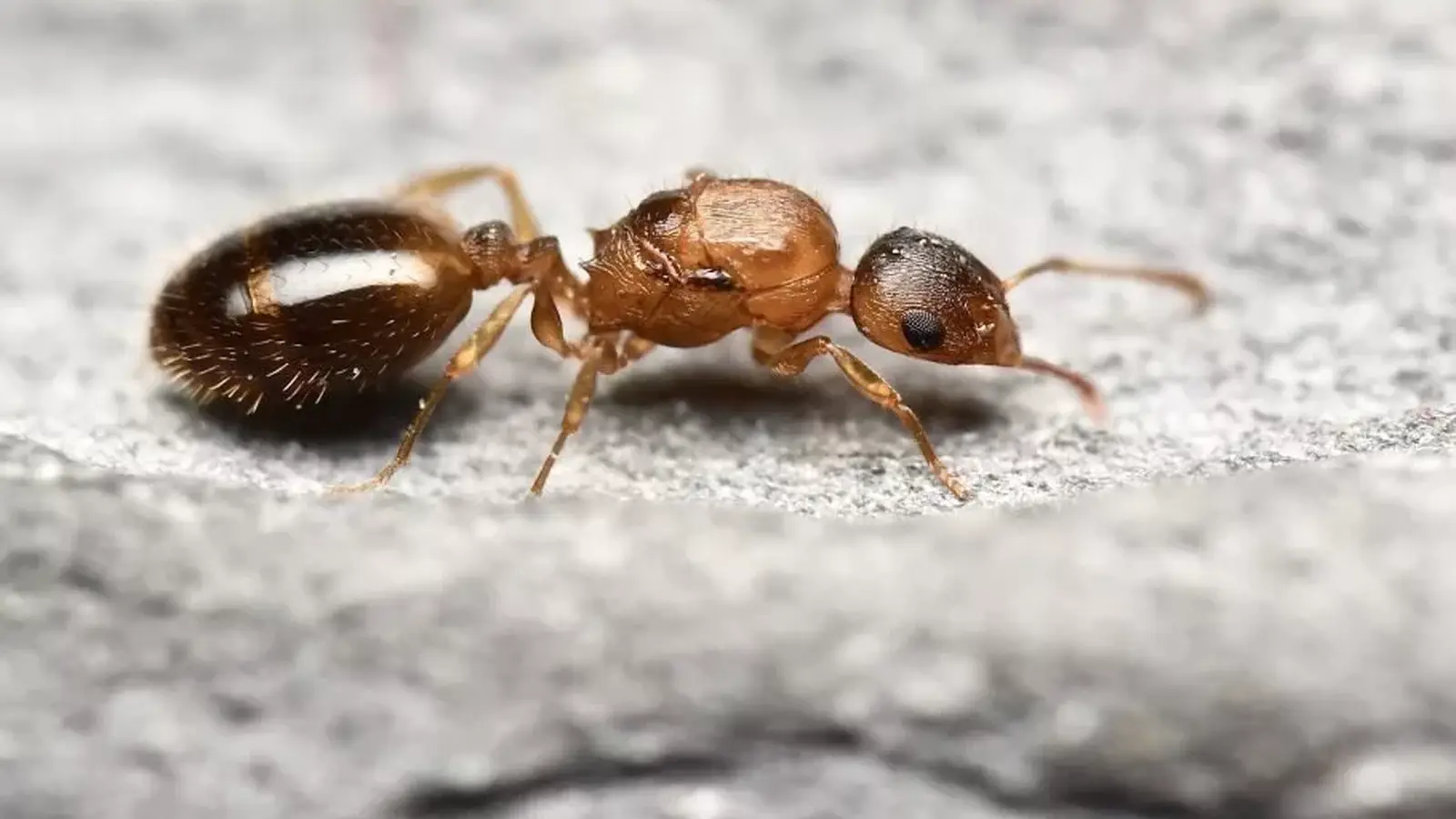
Imagine an ant that stops working, grows paler, lives far longer than its nestmates and receives royal treatment from the colony. It sounds like science fiction. It is not. A tiny tapeworm hijacks both body and social life of the ant Temnothorax nylanderi to turn ordinary workers into queenlike hosts, reshaping physiology and behavior to complete the parasite's life cycle.
The twist in the colony: life, color and chemistry altered
The chain of events begins at the breakfast of a future worker. Ant larvae that feed on woodpecker droppings ingest eggs of the tapeworm Anomotaenia brevis. The parasite then develops inside the ant. Infected workers become noticeably different. Their dark brown cuticle fades to a pale yellow. They remain smaller in body size. Yet they emit a distinct chemical profile. The pheromones released by these infected individuals mimic cues associated with queens, and fellow workers respond by treating them as if they held reproductive status.
Food is brought to them. They are groomed and sheltered. They are moved where the colony needs them to be. The infected ant accepts the change. It abandons routine tasks, rarely leaves the nest, and enjoys a dramatically extended life span that can be many times longer than that of uninfected workers. All the while, regular workers continue to provision and defend the colony, effectively serving the parasite's agenda.
.avif)
Why would a parasite turn a worker into a pampered outlier? The answer lies in transmission. When a woodpecker attacks a nest, healthy workers flee, but the infected, sluggish ant stays behind and is more likely to be eaten. Once swallowed, the tapeworm reaches the bird gut, matures and produces eggs that exit with the bird's droppings. Those droppings, recycled by ant larvae, restart the cycle. The parasite's manipulation is therefore a precise ecological strategy to move from insect to bird and back again.
Genes, fat body and a divided brain
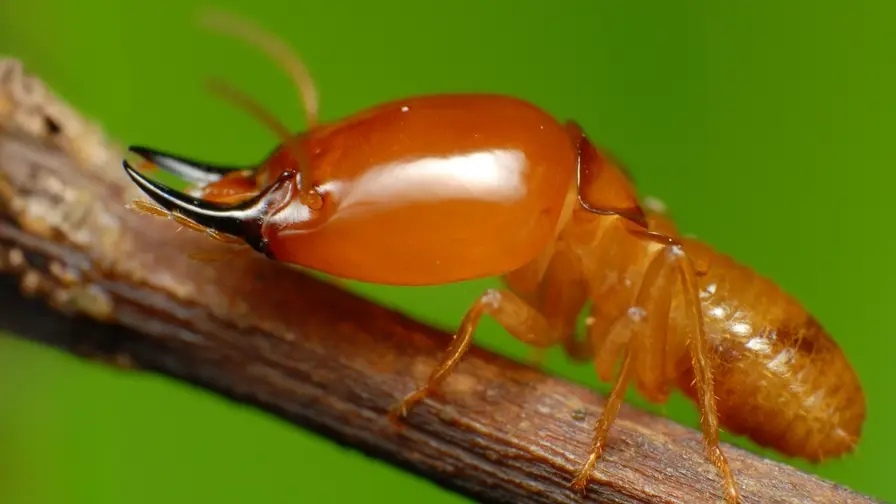
A new genetic study published in BMC Genomics used samples from researchers at Johannes Gutenberg University Mainz and Zhejiang University to probe how deep this takeover goes. The team compared gene expression in two crucial tissues: the fat body and the brain of infected workers, uninfected workers and queens. The fat body in insects functions like a liver and immune organ combined; it controls metabolism, detoxification and immune responses.
Results surprised the investigators. Infected workers show fat body gene-expression patterns that closely match those of natural queens. Pathways related to metabolism, immune function, stress response and ageing were altered in the same direction as in queens. That molecular shift helps explain the extended lifespan and the changed chemical signals that trick nestmates into offering royal care.
But the brain tells a different story. In infected ants, many signaling molecules and their receptors were downregulated in neural tissue. Those changes likely blunt motivation and task-related behaviors, producing the loss of worker fidelity and the passive, exposed behavior that makes infected ants more vulnerable to predation. In short, the parasite appears to reprogram peripheral physiology toward a queenlike state while suppressing the neural circuits that drive work.
.avif)
Why this matters
This system is a striking example of how a parasite can manipulate host biology at multiple levels to enhance its own transmission. It challenges simple classifications of parasitism as merely harmful; here, the manipulation is targeted and adaptive for the parasite. For scientists, the case offers a window into aging, social signaling and the molecular control of caste differences in social insects. Could studying these mechanisms reveal new insights into longevity or immune trade-offs? Possibly, though practical applications remain speculative.
Conclusion
The Anomotaenia brevis and Temnothorax nylanderi interaction is a vivid reminder that behavior, physiology and ecology are tightly woven. A microscopic parasite can tilt the balance of an entire colony by changing gene expression in a handful of tissues. The result is a worker that looks and is treated like a queen, but exists primarily to complete the tapeworm's remarkable life cycle.


“My work centers on sustainability, energy, and environmental science — examining how innovation can lead to a greener future.”

Discussion
Leave a Comment
Comments (2)
Is this even real? sounds like parasite puppeteering, but how sure are the gene links? small sample? lab confounders? still, wild if true
wow didnt expect this, ants turned into mini-queens by a tapeworm? creepy but brilliant. makes me wonder about aging genes lol gonna read more