
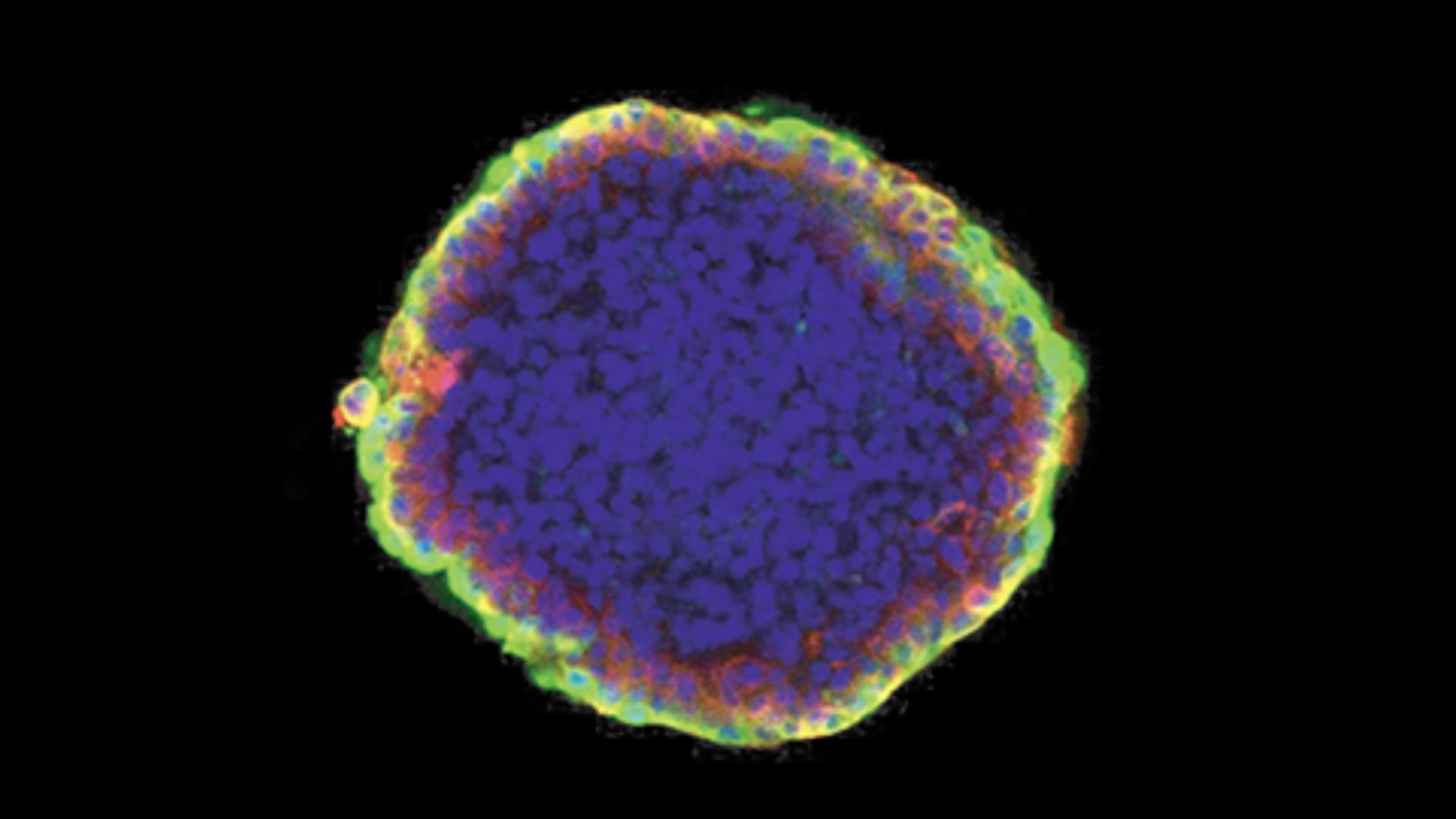
A lab light picks out delicate, root-like projections from a tiny cluster of breast cancer cells. Under that glow, a four-day whisper of THC changed everything about how those cells behaved.
Cancer researchers are increasingly alarmed by one trait many tumors share: plasticity. Cells that once looked mature can slip back into an immature, stem-like state. They diversify. They become aggressive. They resist treatment. Standard therapies that aim to kill dividing cells can unintentionally apply evolutionary pressure, favoring variants that spread more readily. What if, instead of trying to kill every malignant cell, we nudged them to stay put and behave?
How a tiny cannabinoid pulse changed organoid behavior
In a recent Communications Biology paper, Martínez-Illescas and colleagues tested that very idea. They treated three-dimensional mammary tumor organoids—lab-grown mini-tumors made from human and mouse breast cancer cells—with an ultra-low-dose, four-day pulse of THC, the psychoactive compound found in cannabis. The experiment targeted the endocannabinoid system, a signaling network active in both development and disease.

A graphical abstract of the experiment.
Two receptors sit at the heart of this system: CB1R and CB2R. CB1R links to neural and psychoactive responses. CB2R is tied to immune and inflammatory pathways. The team used ligands that either stimulate or reduce activity at each receptor, testing which changes mattered most for tumor behavior.
After the short THC exposure the organoids showed striking shifts. They lost invasive protrusions. Their capacity for self-renewal fell. Their ability to seed new tumors dimmed. Visually, treated organoids moved from granular to more cystic structures, a coordinated multicellular transition rather than a scattered change in a few cells.

The THC-treated organoid on the right exhibits a reduction in migratory cellular projections compared to the control variant on the left.
CB2R emerges as the key player
Surprisingly, the beneficial effects did not require CB1R. An inverse agonist of CB2R reproduced THC’s tumor-mollifying outcome, while blocking CB1R did not. Even more puzzling: organoids from mice engineered to lack CB2R displayed similar differentiation shifts. The authors suggest the baseline activity of CB2R matters. Tinkering with that baseline, either by nudging it up briefly or dialing it down, appears to push tumor cells into a less plastic, more differentiated state.
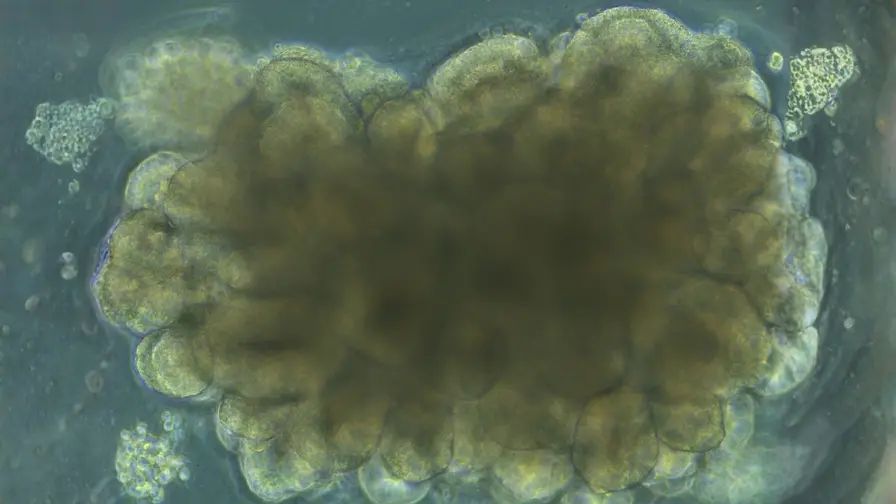

Granular to cystic represents a coordinated, multicellular, system-level change, rather than altered activity in, say, a few cells or cell types.
Why is that clinically interesting? Because more differentiated tumor cells often occupy space and resources that aggressive clones would otherwise exploit. In other words, you can curb expansion not only by killing cells but by encouraging certain cells to hold the fort.
In vivo durability and therapeutic signs
The effect was not an in vitro curiosity. When researchers transplanted THC-treated organoids into cancer-prone mice, the protective pattern stayed. Tumors appeared later, grew more slowly, and were less aggressive for up to 100 days. In a separate test, THC-treated cells formed fewer lung clusters four weeks after injection. Researchers also forced the modulated organoids toward higher tumorigenic activity and found them noticeably more resilient to that push.
Another practical angle: CB2R modulation correlated with increased estrogen receptor activity in these models, rendering cells more responsive to tamoxifen, a common endocrine therapy. That suggests a complementary strategy—use subtle cannabinoid signaling tweaks to make established drugs work better.
The paper frames these results within a broader theoretical view: tumor cell populations occupy continuous, dynamic landscapes. Small perturbations can trigger large, self-reinforcing shifts in collective behavior. The THC pulse seems to be exactly the kind of small nudge that flips a population toward a safer attractor state.
Expert Insight
"This is a striking demonstration of control rather than destruction," says Dr. Amelia Vargas, a cancer biologist and translational researcher. "We often think of anticancer therapy as a battle of attrition. Here, the strategy is ecological: change the rules so the ecosystem of cells favors restraint. It's an elegant complement to cytotoxic approaches and may reduce selection for resistant clones."
The quote captures the study’s practical promise while noting the caveats. Dose, timing, receptor specificity, and long-term safety remain open questions. So do mechanisms at the chromatin and transcriptional network levels that preserve the effect long after the THC is gone.
Conclusion
Martínez-Illescas and colleagues offer a different lever to influence breast tumor evolution: brief, low-dose modulation of the endocannabinoid system, especially via CB2R, can stabilize tumor cell identity and blunt aggressive behavior. The approach shifts thinking from eradication-only therapies toward modulation that limits plasticity and improves responsiveness to existing drugs. Clinical translation will require careful dosing studies and safety assessment, but the pathway is clear: small perturbations, big shifts in tumor fate.

“The cosmos has always fascinated me. I write about space missions, astronomy, and the technologies pushing humanity beyond Earth.”

Discussion
Leave a Comment
Comments (2)
Is this for real? mouse models and organoids are cool but humans are messy. curious about safety, dosing and what happens longterm. if that works tho, big deal
wow didn't expect THC to calm tumors like that. kinda hopeful but also nervous, dosing and longterm stuff worries me…