

Imagine a single food that scores high on nutrition, costs little, shows up in grocery aisles everywhere, and leaves a light footprint on the planet. That food is tofu, according to a new ranking that compared 20 common protein sources across health, affordability, accessibility, and environmental impact.
Tofu’s top position comes from a careful balancing act. Researchers did not simply count grams of protein. They measured trade-offs. The result flips the usual conversation about protein on its head: quality and context matter as much as quantity.
Tofu is a versatile, plant-based protein made from soybeans that provides all nine essential amino acids.
How the researchers measured what matters
Dr. Chris Macdonald, publishing in Frontiers in Sustainable Food Systems, developed a four-part framework to compare proteins. He scored foods on environmental performance, nutritional and health factors, price, and how easy they are to buy. The environmental side included greenhouse gas emissions, water pollution, land use, and freshwater demand. The nutritional side rewarded complete amino-acid profiles and other health signals.
Totals were not arbitrary. Foods were grouped into fifths so patterns could emerge. Plant-based options filled the top fifth; animal-based items clustered in the bottom fifth. Tofu led the pack with nearly perfect marks on environmental measures and high scores for health and accessibility, earning top marks for supplying all nine essential amino acids.
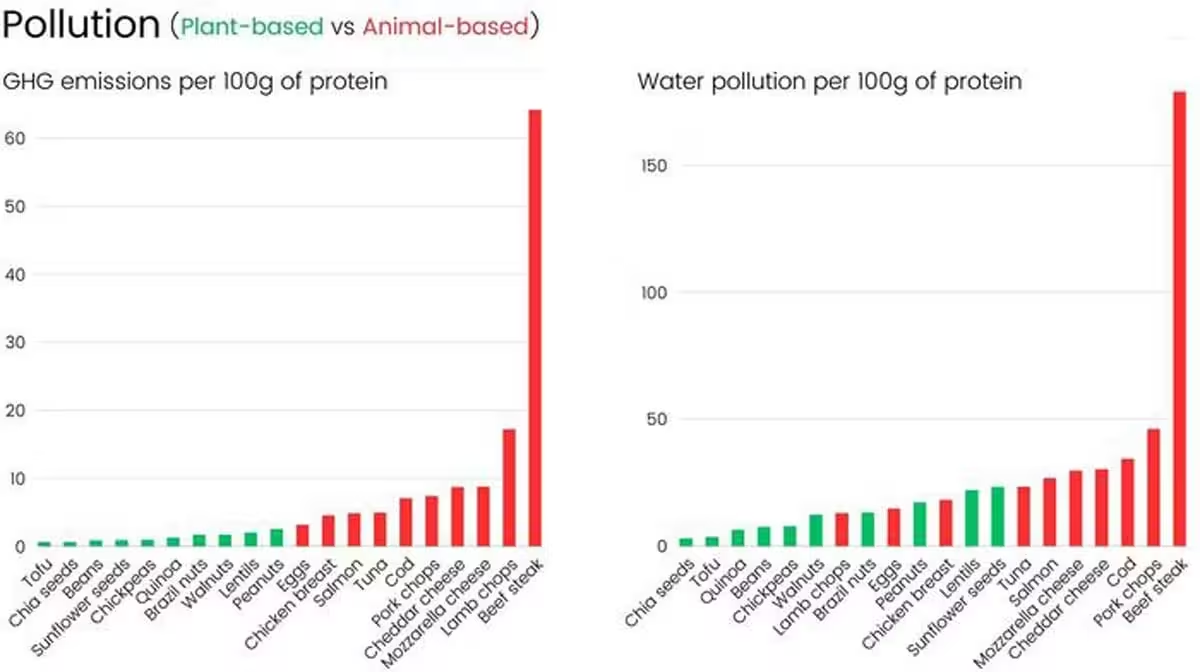
Two bar charts comparing greenhouse gas emissions and water pollution produced by plant-based and animal-based protein sources per 100 g of protein.
Why a single-number label won’t tell the whole story
One clear message: a label that highlights only one attribute—protein per serving, or a health claim—can be misleading. A food that looks excellent in one metric can have hidden costs in another. The researchers argue that consumers need a broader literacy about the systems their food choices support, not a marketing shorthand that obscures trade-offs.
What does that mean for everyday shoppers? First, plant-based proteins, when assessed beyond raw protein content, often outperform animal products on environmental measures. Second, affordable and accessible plant proteins can simultaneously address public health and sustainability goals. Third, context matters: local production methods, processing, and supply chains will shift rankings for specific regions and populations.
The study builds on work at the Better Protein Institute, where researchers explore how much protein people need, how to influence food choices at scale, and where investment could expand sustainable protein options. By testing assumptions from first principles, the work aims to answer practical questions people commonly search for about what to eat for both health and the planet.
Choosing protein has always been about more than muscle. It is now a social and environmental decision as much as a nutritional one. For consumers, that means asking new questions at the supermarket: How was this produced? Who benefits from my purchase? What does this cost the planet?
In short: tofu’s victory is not a call to ban animal proteins. It is an invitation to rethink how we evaluate food. Pick the metrics that matter to you. Then compare honestly.


“The cosmos has always fascinated me. I write about space missions, astronomy, and the technologies pushing humanity beyond Earth.”

Discussion
Leave a Comment
Comments (2)
Is this even true? The single-number claim feels risky, graphs help but regional farming, processing will flip rankings, right?
wow tofu at #1? didnt expect that. kinda cool, and hopeful. but i wonder about local soy, supply chains and taste prefs…