
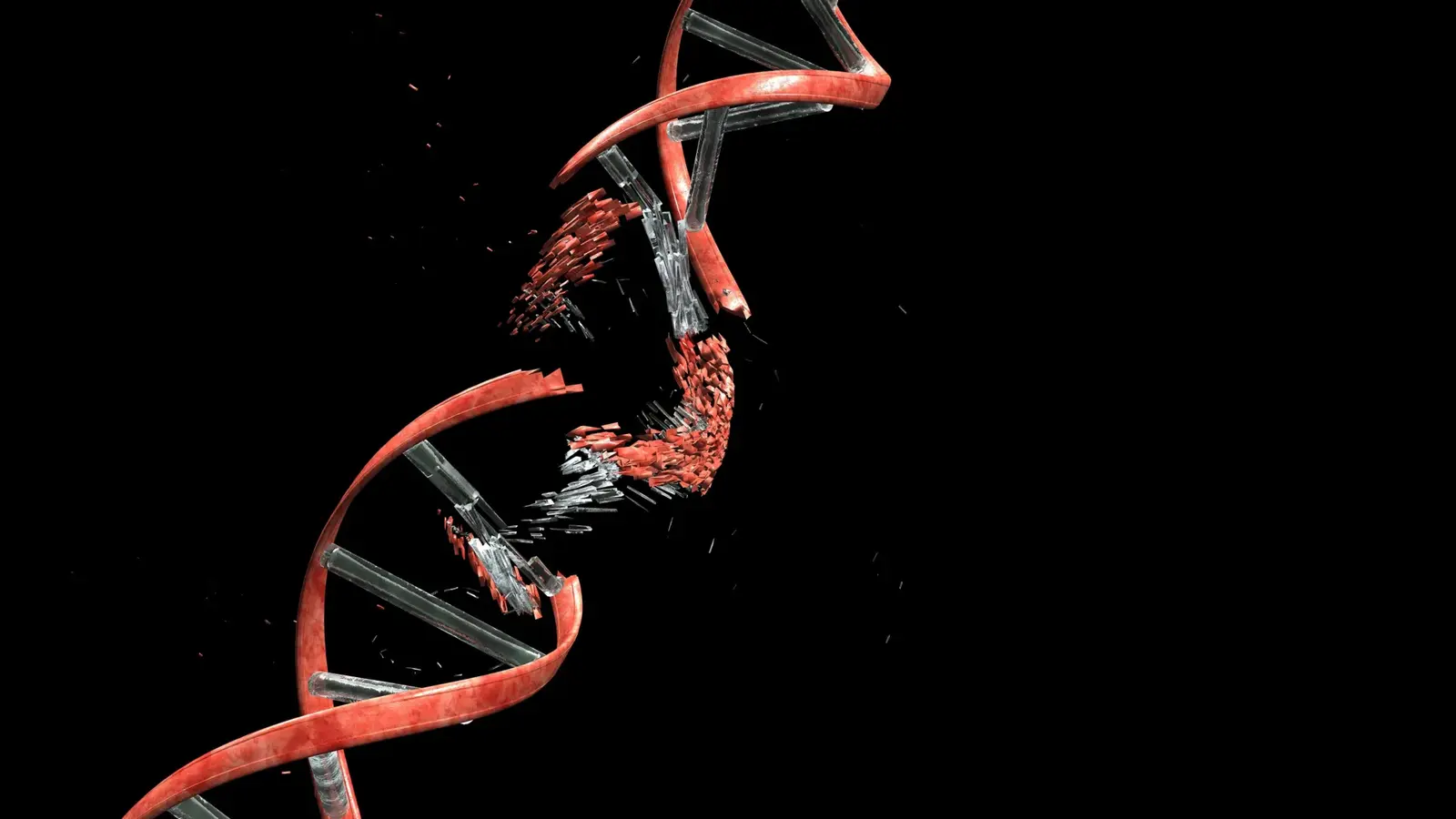
Cancer can be its own saboteur. By forcing critical growth programs to run nonstop, tumor cells may be tearing their DNA and then gluing it back together — imperfectly. Those small mistakes pile up and give cancer the raw material it needs to change, adapt, and sometimes become more dangerous.
Researchers at the Hebrew University of Jerusalem have uncovered a striking link between the high-octane control regions that turbocharge cancer genes and the physical strain those regions place on the genome. The team, led by PhD student Osama Hidmi under Prof. Rami Aqeilan, reports in Science Advances that DNA double-strand breaks — one of the most severe types of genetic damage — cluster where cancer cells rely on so-called super-enhancers to drive relentless gene activity.
When the cell's accelerator overheats
Think of a super-enhancer as a control panel with an amplifier wired to a growth engine. Normal cells use these regulatory hubs sparingly. Tumor cells do not. To divide, survive, and outpace the body’s checks and balances, cancer cells crank those switches up. Result: sustained, extreme transcription of genes that keep the tumor in business.

What happens when you run a machine at full throttle for too long? Parts fatigue. The genome behaves the same way. The study mapped where double-strand breaks occur across the cancer genome using a sensitive genome-mapping technique and found the damage was far from random. Breaks clustered inside genes under super-enhancer control, and the cellular alarm bells that tag damaged DNA—molecular beacons that recruit repair crews—lit up repeatedly in those exact spots.
Repair saves the cell. But repair is not flawless. Each cycle of break-and-fix opens the door to small errors: insertions, deletions, or rearrangements that change DNA sequence or its regulatory logic. Over time, these tiny rearrangements can accumulate into mutations that alter gene behavior, modify cellular responses to stress, and even create new opportunities for a tumor to survive therapies.
Mapping the breaking points and what they reveal
The Hebrew University team’s maps give us a new, spatial view of cancer instability. Rather than viewing genetic chaos as a diffuse byproduct of malignant transformation, this work argues that instability can be a direct consequence of the very mechanisms tumors exploit to grow. Super-enhancers make growth genes reliable and powerful. That reliability comes at a cost: relentless transcriptional pressure that promotes DNA fragility in specific genomic neighborhoods.
Why does intense transcription lead to breaks? Several molecular tensions can build up when RNA polymerase and associated factors avalanche through DNA: torsional stress, collisions between replication and transcription machinery, and the formation of atypical DNA-RNA structures. These stresses are not evenly distributed. They pile up where the transcriptional traffic is heaviest. The result is hotspot formation — the same loci repeatedly suffering double-strand breaks.

Importantly, the research shows these are not one-off accidents. The same hotspots are repaired multiple times, leaving a fingerprint of repeated insult and imperfect restoration. That fingerprint likely accelerates local mutation rates and could accelerate the emergence of cancer variants better suited to invade, resist, or survive under therapy.
Why this could be a therapeutic vulnerability
If tumors rely on super-enhancers to keep critical programs running, then those high-stress regions are also potential pressure points. Interfere with the amplifier and you might slow the engine. Block the repair machinery at those hotspots and you may tip cancer cells toward lethal damage. Either approach carries risks — healthy cells also use enhancers and DNA repair — but the dependency of cancer on unusually extreme enhancer activity creates a therapeutic window that did not exist in plain view before.
Researchers envision two complementary strategies. One is to dampen runaway enhancer activity: small molecules or targeted therapies that modulate the factors assembling at super-enhancers could reduce transcriptional stress. The other is to selectively hinder the repair pathways that rescue heavily transcribed loci, making it harder for tumor cells to tolerate repeated breaks. The second strategy echoes existing treatments that target DNA repair, such as PARP inhibitors, but would aim those interventions at mechanistic vulnerabilities tied specifically to enhancer-driven instability.
Targeting these processes requires precision. Tumors are heterogeneous and adaptable. A therapy that slows one growth program may simply shift cellular reliance to another. But by mapping where the genome repeatedly fractures, scientists now have a clearer set of coordinates for where to press.
Expert Insight
"This study reframes genetic instability not just as a background feature of cancer, but as a byproduct of the tumor’s own transcriptional strategy," says Dr. Elena Morales, molecular oncologist at the Institute for Cancer Research. "If you understand the geography of breaks, you can design interventions that are spatially and mechanistically informed — and that makes them more likely to succeed in the clinic."
Her comment reflects a growing view in oncology: vulnerabilities often lie where the tumor places its bets. By betting on extremely active enhancers, cancer may expose the very locations that can be exploited therapeutically.
Conclusion
The Hebrew University team’s findings add an important piece to the puzzle of how cancers evolve. Super-enhancers help tumors grow, but their sustained activity appears to carve weakness into the genome itself. repeated break-and-repair cycles increase mutation rates locally, providing raw material for evolution while also creating actionable targets. The path ahead will require careful translation: therapies must blunt tumor advantage without unacceptable collateral damage. Still, the idea that cancer’s growth strategy creates its own Achilles’ heel is a powerful one — and it points researchers toward new experiments, new drug targets, and new hope for limiting cancer’s adaptability.
Further research will need to define which cancer types show the strongest enhancer-associated break patterns, how those patterns change during therapy, and whether combining enhancer modulation with selective repair inhibition improves patient outcomes. For now, the message is clear: when tumors press the accelerator, their DNA sometimes breaks — and those breaks could help us drive new treatments forward.

“My work centers on sustainability, energy, and environmental science — examining how innovation can lead to a greener future.”

Discussion
Leave a Comment
Comments
No comments yet. Be the first.