
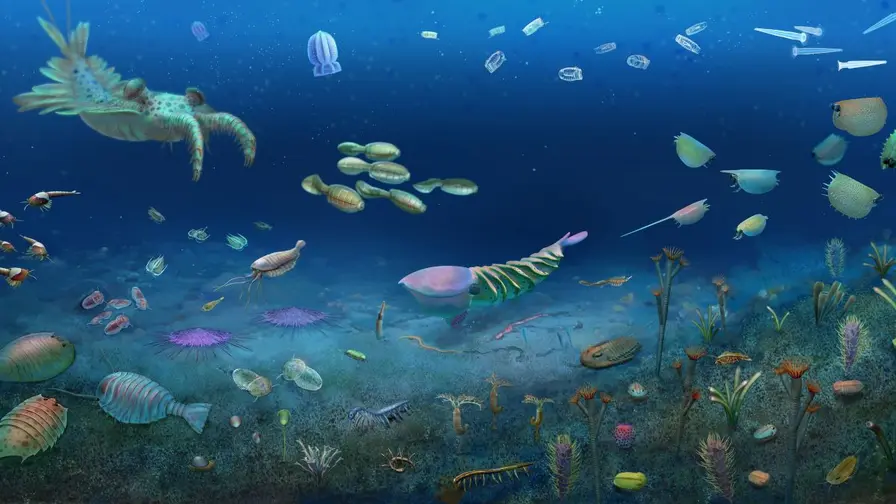
Picture a shallow Cambrian tidepool, 518 million years ago. Small scuttlers crowd the seafloor. Among them, an elongated arthropod no larger than a grape moved with dozens of tiny legs and wore a shielded head with stalked eyes. Meet Urokodia aequalis, a creature that until now looked like an odd mix of shrimp and armored bug. Paleontologists have now uncovered a surprising detail: tiny pincerlike mouthparts that hint at the earliest stages of spider and scorpion fangs.
Urokodia stretches roughly 2 to 3 centimeters in life. Its body is segmented, its tail whiplike, and its head carries compound eyes set on stalks. The animal has been known to science for decades, but recent imaging work has revealed features hidden in the rock matrix — soft tissues preserved well enough to show anatomy that ordinary examination missed.
When pincers began to appear
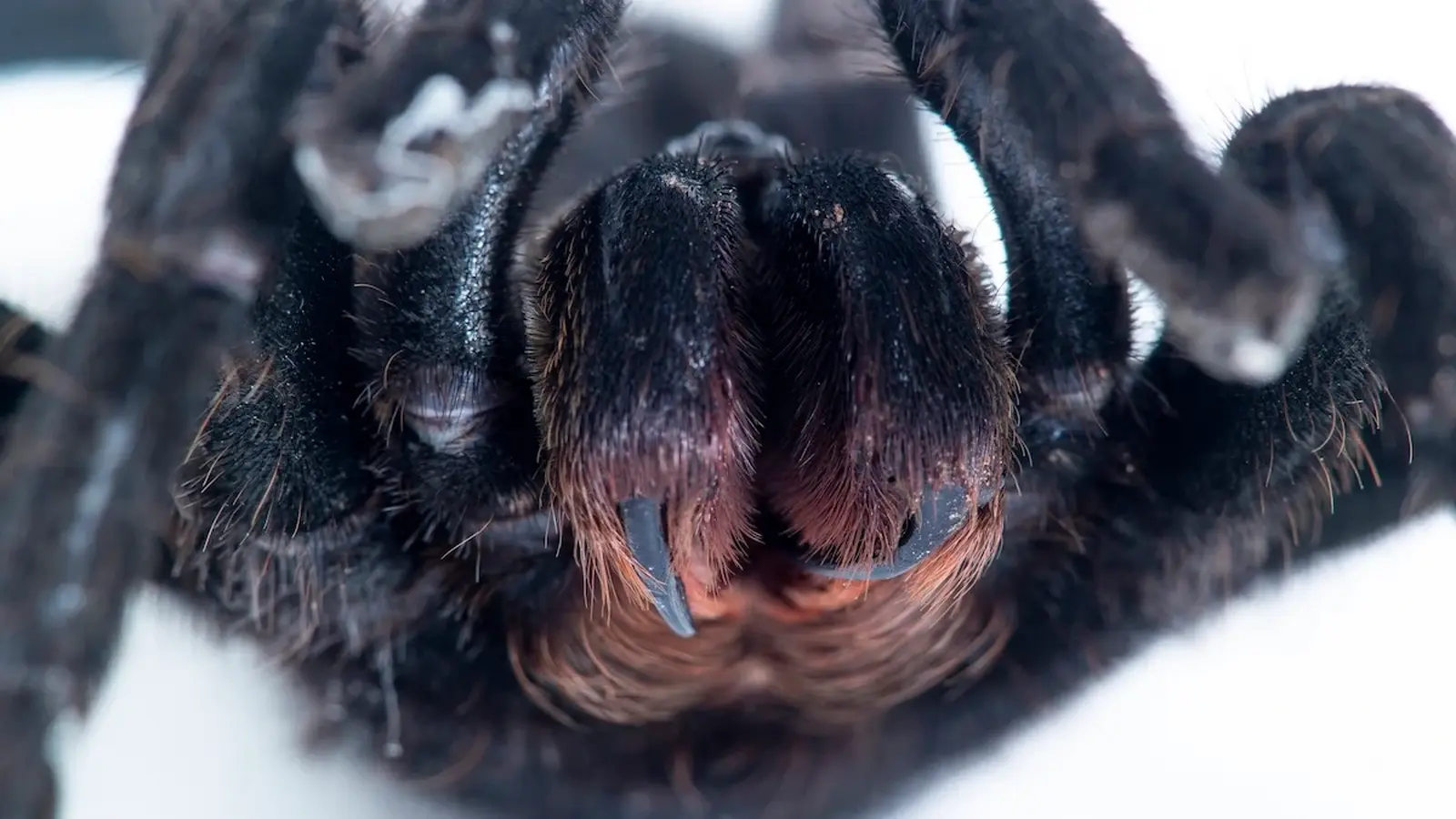
The mouthparts in question are chelicerae, the appendages that, in modern relatives, range from small feeding pincers to true fangs. Chelicerae define a major group of arthropods called chelicerates, which includes spiders, scorpions, mites, ticks, and horseshoe crabs. Finding chelicerae so early in the fossil record rewrites part of the chelicerate origin story.
Scientists from Yunnan University and the University of Leicester applied high-resolution X-ray tomography to several Urokodia specimens and the surrounding rock. This noninvasive scanning technique can detect faint contrasts in mineralized soft tissues, and here it revealed a pair of tiny, pincerlike limbs positioned just behind the eyes. Those limbs match the location and basic form expected for primitive chelicerae.
Prior to this discovery, the earliest clear chelicerae were reported in an animal called Megachelicerax cousteaui, dated about 504 million years ago. Urokodia predates that species by roughly 14 million years, placing an evolutionary origin for these mouthparts deeper into the Cambrian. The shift is not merely chronological. In earlier stem groups, these anterior appendages were multi segmented and limblike. In Urokodia they already show a more compact, tweezerlike profile that foreshadows the fangs and pincers that would diversify across chelicerates.
"We were using X-ray tomography analysis of these fossils to reveal their soft anatomy buried in the rocks for hundreds of millions of years, when suddenly we noticed the pincer-like limbs at the front of the animal," says Yu Liu, paleobiologist at Yunnan University. "We knew immediately that this was a very exciting fossil and indeed a distant ancestor of living chelicerates like scorpions and spiders."

An artist's reconstruction of Urokodia aequalis.
What this tells us about evolution
Small changes in shape can open new ecological roles. The compact chelicerae seen in Urokodia would have allowed more efficient grasping or rasping at food items than a long, multi jointed limb. Over deep time, descendants honed the same basic structure into tools for prey capture, feeding, and defense. Horseshoe crabs and scorpions use pincerlike chelicerae as hands to manipulate food. Ticks evolved sharp, piercing variants to feed on blood. Spiders transformed chelicerae into venom‑bearing fangs useful for subduing prey and deterring threats.
This fossil therefore provides a direct morphological link between ancestral limblike appendages and the specialized mouthparts of modern chelicerates. It helps explain how a limited set of anatomical components can be repurposed to sustain a wide range of lifestyles across hundreds of millions of years.
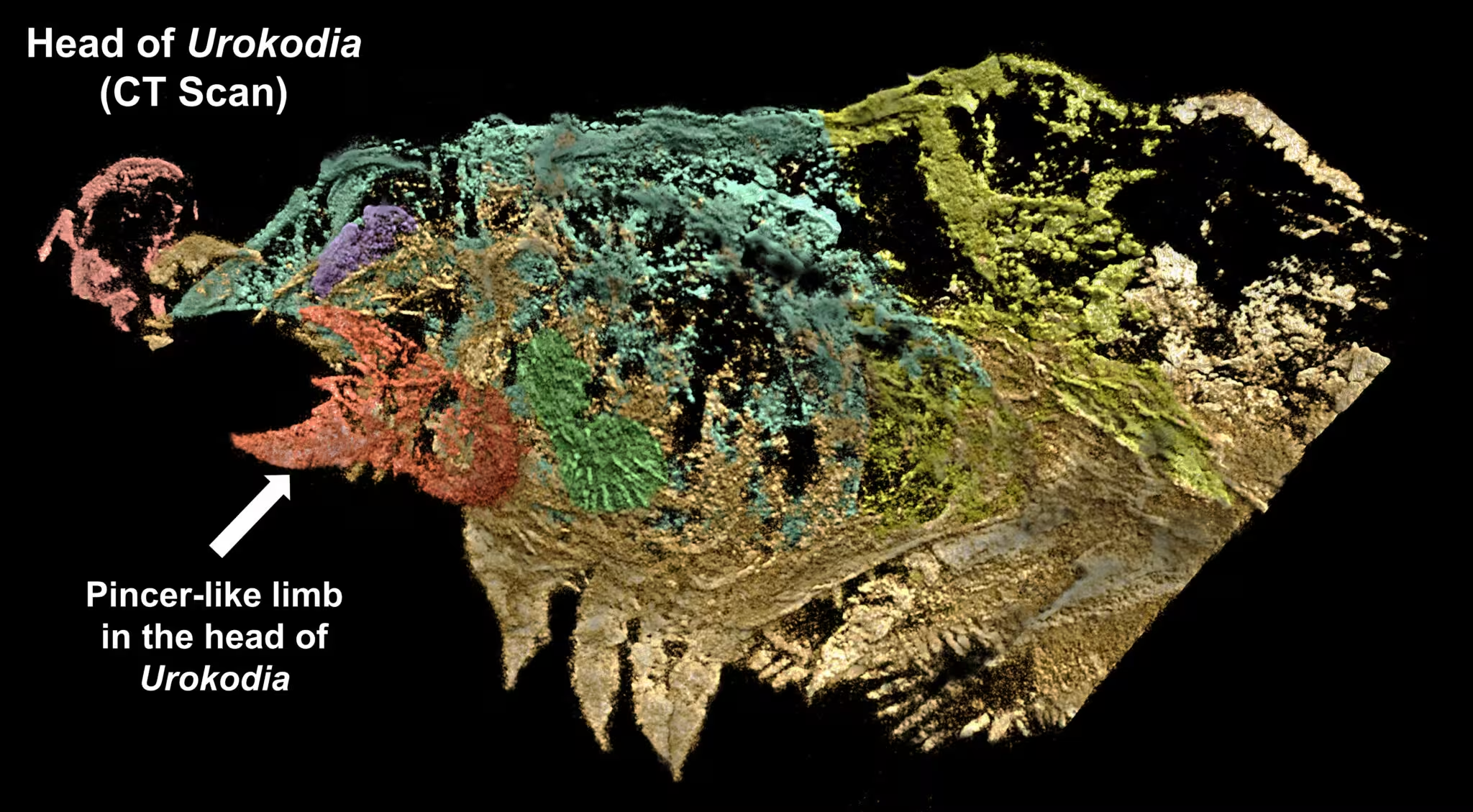
A CT image of the head of Urokodia, including the chelicerae.
Methodologically, the study highlights the power of advanced imaging in paleontology. Many fossil specimens were collected long ago and examined with the tools of their time. Reanalyzing historical collections with X-ray tomography and similar techniques can unlock previously invisible anatomical detail, shifting phylogenetic placements and evolutionary timelines without the need for new digs.
Expert Insight
"Discoveries like this change subtle assumptions into testable ideas," says Dr. Elena Morris, evolutionary biologist and science communicator. "Finding proto-chelicerae in Urokodia bridges a gap between early Cambrian body plans and the specialized appendages we see in modern chelicerates. It tells us that key functional transformations were underway very early in arthropod evolution."
Beyond naming another ancient ancestor, the work prompts fresh questions. How many other overlooked specimens conceal early soft anatomy? Which environmental or developmental pressures drove the early specialization of these mouthparts? Answering those questions will require more scans, comparative anatomy, and refined evolutionary trees.

The new findings appear in Nature and add a concrete chapter to the story of how simple limbs became the complex tools used by spiders and scorpions today. For anyone curious about deep time and the mechanics of evolutionary innovation, Urokodia offers a small but revealing window into the past.

“The cosmos has always fascinated me. I write about space missions, astronomy, and the technologies pushing humanity beyond Earth.”

Discussion
Leave a Comment
Comments (2)
Is this even true? 14 mya earlier seems like a big leap, could taphonomic bias or misinterpretation explain those tiny pincers? hmm
Whoa, 518 million yrs and already pincerlike mouthparts? Mind blown. CT scans keep unearthing wild stuff, if that’s real then we gotta rejig the chelicerate tree...