
US Rabies Cases May Be Vastly Underreported, Study Finds
They were the kind of deaths that leave questions behind. A man in Michigan receives a kidney and, within weeks, dies of a disease most Americans think belongs to old folktales: rabies. The organ came from an otherwise generous donor in Idaho who had lately been scratched by a skunk. Nobody suspected rabies until it was too late.
On the surface, rabies in the United States looks like a solved problem. Official records list only a trickle of human cases each year, fewer than three on average from 2000 to 2024. But a new analysis in Communications Health argues that the official tally may be only a sliver of the true burden. The paper suggests routine surveillance is missing the majority of human rabies infections, and organ-transplant-linked cases are a glaring clue.
When transplants expose unseen cases
Organ donors are a small, select group. If infections show up among those donors, the implication is stark: either donors are uniquely at risk or the disease is leaking past clinical detection in many other deaths. Researchers from the Pandemic Sciences Institute at the University of Oxford took the latter view. They used the handful of documented transplant-transmitted rabies events as a statistical lever to estimate the underlying number of missed cases nationwide.
The known data are sparse but troubling. Since 1978 there have been only four documented instances in the United States where undiagnosed rabies in a deceased donor transmitted the infection to a recipient. Those high-profile tragedies provide a window into diagnostic blind spots: because donors are tested more often and their tissues scrutinized, rabies can be caught after an organ has already been used. Most people who die do not become organ donors. That mismatch creates a strong inference that many fatal rabies infections are never recognized.
Using reasonable assumptions about donor selection and average risk, the Oxford team estimates roughly 856 human rabies cases occurred in the US between 2000 and 2024. The CDC’s records, by contrast, list only 60 confirmed cases for that span. Put another way, the analysis indicates the system may only be confirming about 7 percent of true cases, with an optimistic upper bound near 22 percent.
The math is simple and unsettling. If sporadic donor-derived transmissions are the visible tip of a larger iceberg, then each identified case points to many more that sank beneath routine diagnostic radar. The researchers note their calculation does not model regional differences in wildlife exposure, occupation, or healthcare access. Still, the gulf between 60 and 856 is large enough to demand attention.

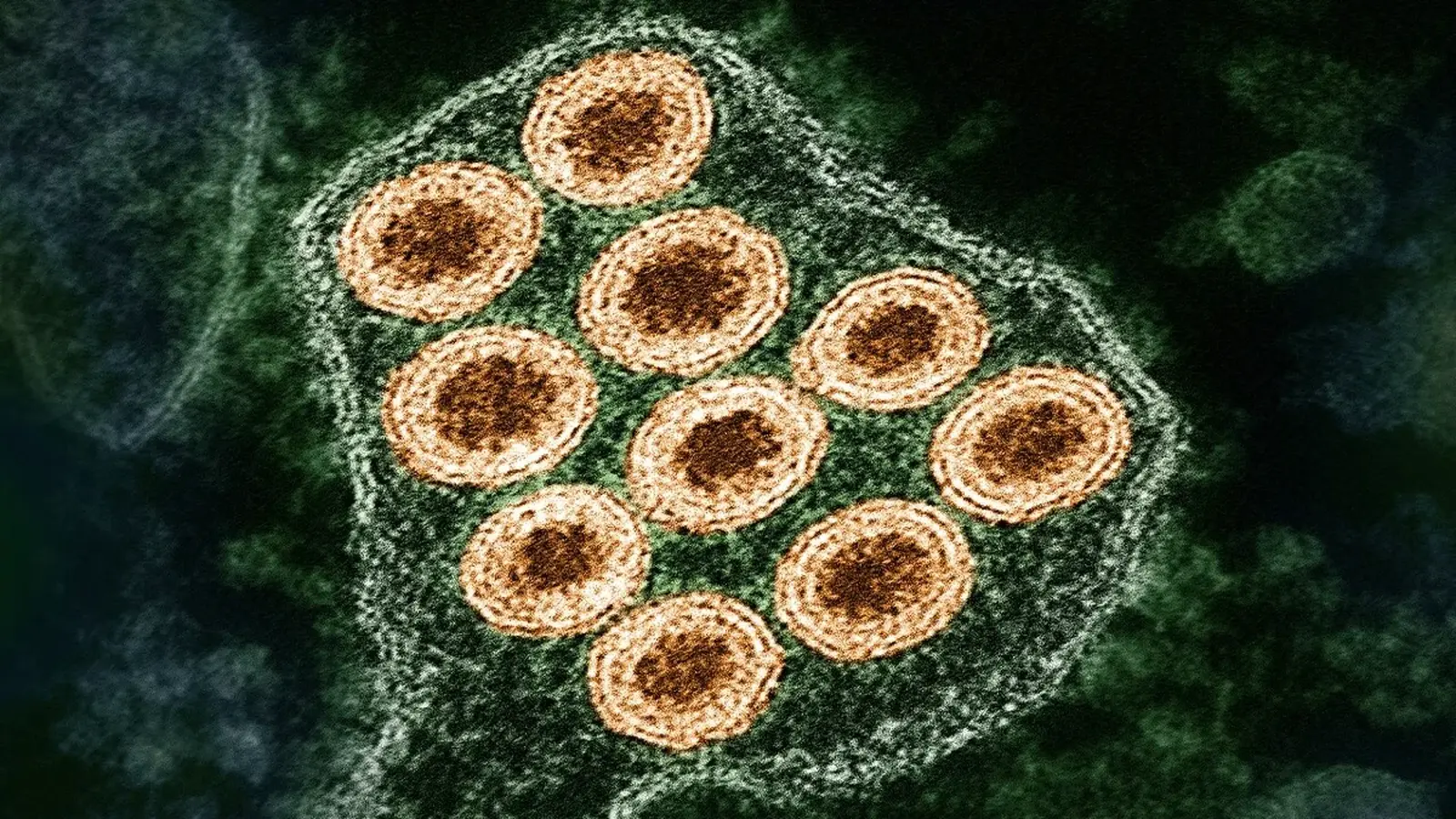
Colorized transmission electron micrograph of rabies virus particles.
Why rabies slips through
Rabies is a master of disguise in clinical practice. Early symptoms are nonspecific: fever, headache, malaise. As the virus advances into the central nervous system, manifestations can include difficulty swallowing, paralysis, agitation, hallucinations, seizures, or coma. Those signs overlap with many other neurological and cardiopulmonary conditions. Without a specific suspicion, clinicians rarely order the specialized tests needed to confirm rabies.
Transplant timing adds another constraint. Organs must be transplanted within hours to remain viable. The CDC has previously noted that when rabies is not suspected, laboratory testing is not routinely performed because clinicians have little time to obtain and return confirmatory results before transplantation must proceed. That clinical urgency narrows the window for diagnosis and encourages default explanations such as stroke, cardiac arrest, or encephalitis of unknown cause.
Post-mortem diagnosis can reveal the truth, but autopsies are not universal. In several of the transplant-linked cases, donors experienced alarming neurological decline—nausea, vomiting, hemorrhagic events, seizures, profound behavioral changes—but no one at the time recognized the pattern as rabies. Only after recipients fell ill and investigators traced infections back to shared donors did the picture clarify.
Public-health implications and next steps
If the Oxford analysis is correct, the consequences are not only statistical. Undiagnosed rabies deaths mean missed opportunities for contact tracing, post-exposure prophylaxis for exposed caregivers or family members, and interventions that might prevent secondary transmission via organ or tissue donation. It also implies surveillance systems are insufficiently sensitive to pick up a rare but universally fatal infection.
Improving detection need not be dramatic or costly. Targeted measures could include routine testing of donors with unexplained neurologic illness, clearer clinician guidance about suspecting rabies in atypical encephalitis, and enhanced post-mortem screening protocols in jurisdictions with higher wildlife exposures. Wider use of rapid diagnostic algorithms and better clinician awareness about animal exposures would likely catch more cases early enough to protect contacts and recipients.
Expert Insight
"Rabies remains rare in the United States, but rarity breeds complacency," says Dr. Elena Morales, an infectious-disease physician who has consulted on several neurologic mortality reviews. "When a disease kills swiftly and has non-specific early symptoms, we need systems that flag unusual neurologic declines for targeted testing. That means clear pathways for rapid laboratory support and post-mortem inquiry when the clinical course is unexplained."
Dr. Morales adds that a One Health approach matters: monitoring wildlife reservoirs, educating rural clinicians about exposures to skunks, bats, and raccoons, and ensuring transplant teams have rapid access to suspect-case protocols all reduce the chance of surprises.
Conclusion
The story of the Idaho donor and the Michigan recipient is tragic and illuminating. It forces a hard question: how many other deaths carry the mark of rabies but are never identified as such? The answer may be far larger than public records suggest. Strengthening diagnostic pathways, refining donor screening guidance, and improving clinician awareness are pragmatic steps that could narrow the gap between recorded and real cases.
Rabies is preventable when exposures are recognized and treated, and it is nearly always fatal once symptoms appear. That combination makes surveillance and early detection not academic exercises but vital public-health priorities. The study is a clear call to reexamine assumptions and to ensure that the faint signals—organ-transplant clusters, odd neurologic deaths—are not lost in routine care.

“My work centers on sustainability, energy, and environmental science — examining how innovation can lead to a greener future.”

Discussion
Leave a Comment
Comments (3)
I've seen odd encephalitis cases in the ER, docs jump to stroke, shrug it off. If that's real then we missed a lot, and families suffer.
Is this even true? 856 vs 60 sounds insane, maybe assumptions skewed or donors not representative. Anyone read the methods?
Wow, chilling read. Thought rabies was basically gone here, but organ cases? wild. More testing NOW, please...