
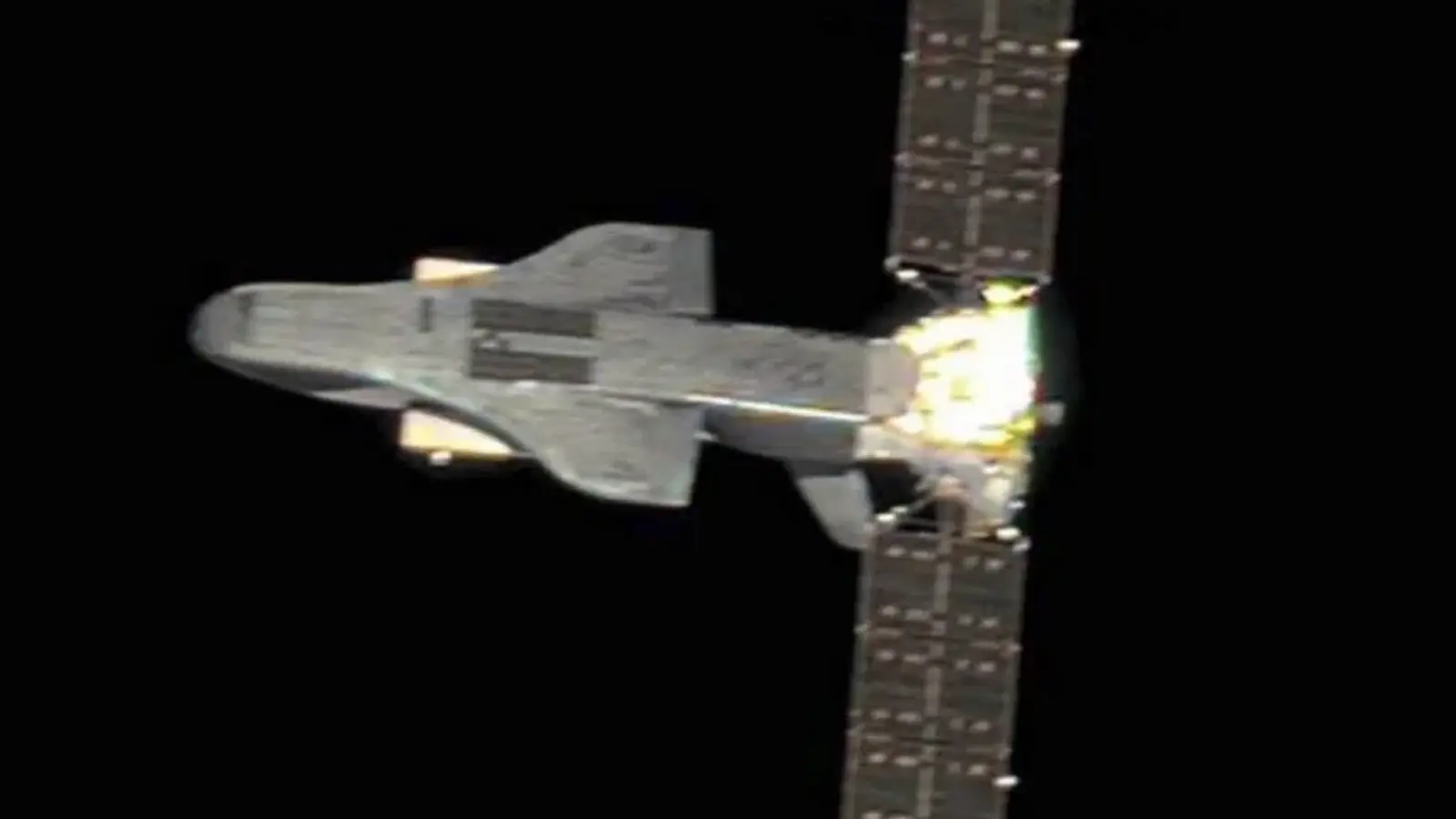
A single photograph can change a debate. In this case, it sharpened months of speculation into a readable silhouette: a winged, reusable vehicle in low Earth orbit that looks strikingly like the United States' clandestine X-37B.
A clear picture at last
The U.S. Defense Intelligence Agency included that image in a newly released 130-page report titled "Challenges to Security in Space." The photo appears on page 53 and, according to the report, was captured in 2024 by a commercial imaging satellite operated by Maxar Technologies, now known as Vantor. Until now, observers had only intermittent, blurry streaks of light and indirect telemetry to piece together the story of China’s winged orbital vehicle, often called Shenlong or "divine dragon."
That scarcity of reliable imagery fed uncertainty. Was this an operational prototype? A test bed? A weapon? The new photograph does not answer every question, but it supplies unmistakable design cues and fresh leads for analysts monitoring orbital behavior.
What the image reveals and what it suggests
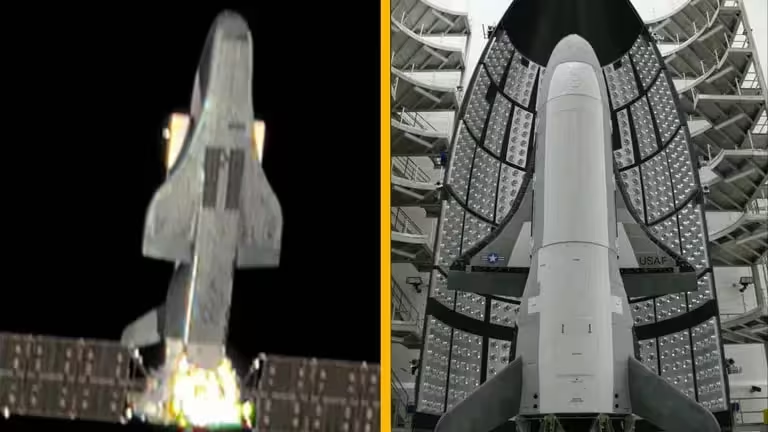
The vehicle in the picture shows triangular wings, a clear payload-bay door, a dark thermal protection area on the underside, and a rear service module fitted with solar panels. Those elements, together, point to a reusable glider architecture: launched on a rocket, operating in orbit for days to months, then returning to a runway-like landing as a spaceplane. In form and function, that profile echoes the X-37B.
Still, the geometry is not identical. Wing sweep and planform differ enough to suggest that Shenlong and X-37B are separate designs rather than direct copies. Precise dimensions remain unconfirmed; for context, the X-37B measures roughly 8.8 meters long with a wingspan near 4.5 meters.
Operational history compiled by independent trackers and referenced in the DIA report indicates Shenlong first flew for two days in September 2020. That short sortie was followed by at least two long missions, lasting about 276 and 268 days respectively. A fourth mission reportedly launched on 7 February aboard a Long March 2F rocket, and cumulative on-orbit time for Shenlong-class flights now exceeds 800 days. Whether those totals represent a single vehicle reused multiple times or several near-identical airframes remains unsettled.
One of the most provocative pieces of the puzzle is payload behavior. Observers have recorded at least nine discrete objects released from the spaceplane, often interpreted as small cube-style satellites. Close-proximity maneuvers near co-orbiting targets, sometimes to within roughly 100 meters, strengthen the hypothesis that the vehicle is testing precision rendezvous and proximity operations. Those maneuvers could be technology demonstrations for inspection, satellite servicing, or other functions such as capture or controlled release, possibly with a robotic arm.
Implications for orbital security and strategy
The image and activity profile do not prove an offensive weapon on board. Still, they add weight to concerns already highlighted by defense analysts: reusable, maneuverable spaceplanes complicate attribution and increase the range of tactical options available in orbit. Nations deploying such platforms gain a flexible means to inspect satellites, deliver or retrieve small payloads, and conduct experiments without launching a fresh dedicated vehicle each time.
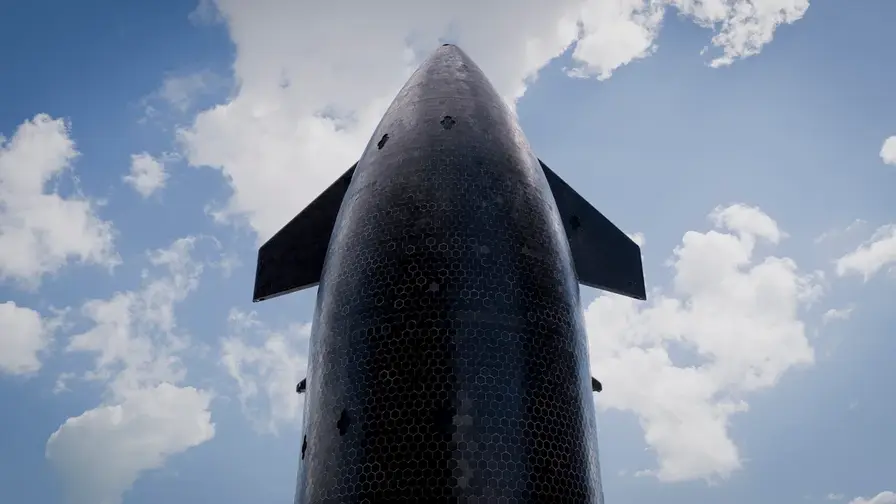
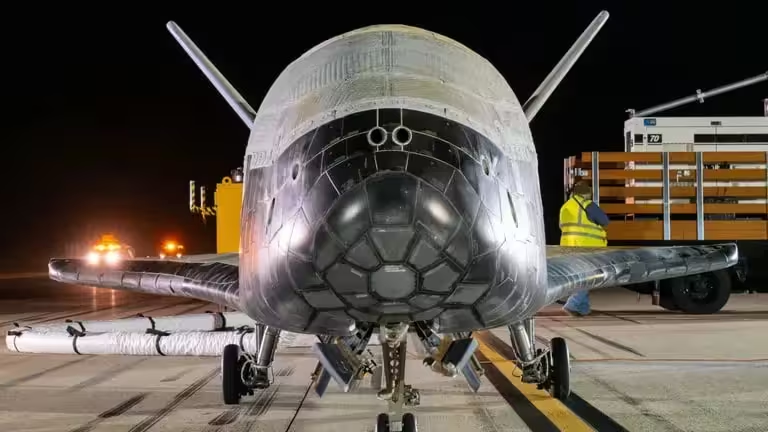
For space traffic management and norms of behavior in orbit, these developments matter. Proximity operations can be benign, for example enabling repair or refueling. They can also be destabilizing if executed without transparency. The international community has sparse technical norms governing close approaches; incidents at short range can be misread and escalate diplomatic tensions.
Expert Insight
Dr. Elena Morales, an orbital dynamics researcher at a U.S. university, commented on the significance of the imagery: "Photographs like this change the conversational baseline. We move from conjecture to a field of measurable features: wing planform, payload bay configuration, and power-generation layout. Those are the data that allow engineers and policymakers to model capabilities and risk. Close-proximity behavior in particular tells us what operations are being rehearsed, not just what hardware exists."
She added, "Whether Shenlong is used for logistics, inspection, or more aggressive operations depends as much on doctrine as on hardware. The image is a prompt: it forces other states and commercial operators to account for a moving, reusable actor in their risk assessments."
Technical context and future prospects
Reusable winged vehicles have technical trade-offs. Thermal protection, lightweight structures, and avionics suited to both vacuum and atmospheric flight add complexity. Yet they also offer lower marginal cost for repeat missions and faster turnaround for technology demonstrations. China’s apparent parallel development of another concept, Tengyun, was noted in open-source reporting, though Tengyun has not produced a confirmed orbital launch and its architecture appears different in early mock-ups.
What happens next will depend on a mix of observable activity and policy choices. More high-resolution imagery, spectrometric analysis of launches, and open reporting of rendezvous events would reduce uncertainty. For military planners, engineers, and satellite operators, the practical question is not whether such vehicles can exist; it is how states will employ them and how the international community will respond to reduce risks and misunderstandings.
Conclusion
The Vantor image makes clear that China operates a reusable, winged orbital vehicle with capabilities that deserve sustained technical scrutiny and international discussion.
As tracking data and imagery continue to accumulate, analysts will refine models of Shenlong’s performance and mission set. In the short term, the photograph is a reminder that the character of space activity is changing: vehicles are becoming more reusable, more maneuverable, and more consequential for both civilian and security domains.

“My work centers on sustainability, energy, and environmental science — examining how innovation can lead to a greener future.”

Discussion
Leave a Comment
Comments (1)
Wow, a real pic at last. But is that Shenlong or a test mockup? The close approaches spook me, could be harmless inspection, could be..