
Imagine a common nutrient doing more than fighting colds. Imagine it quietly shaping the brain's architecture as we grow older. That is the provocative suggestion emerging from a large Japanese study that linked lower blood levels of vitamin C with thinner gray matter and weaker wiring in a key brain network for memory and attention.
Researchers analyzing brain scans and blood samples from more than 2,000 older adults found that lower vitamin C levels were linked to differences in brain structure and connectivity.
Study points to a nutritional link
The team examined magnetic resonance images and plasma samples from 2,044 people aged 64 and up, measuring overall gray and white matter volume while adjusting for brain size and lifestyle factors such as education and physical activity. They also focused on the default mode network, a constellation of brain regions that stays active during inward-focused thought and supports memory, attention, and self-reflection.
Across the cohort, lower circulating vitamin C was associated with reduced gray matter in multiple areas and with weaker connectivity inside the default mode network. These associations held after accounting for age and common health and behavioral variables, suggesting the signal was not simply due to older participants being less active or less educated.
The investigators identified three gray matter structural components tied to the default mode network: an anterior segment and two posterior components that include the posterior cingulate cortex and precuneus—regions often implicated in age-related cognitive change. The study presents a clear correlation. It does not prove that low vitamin C causes brain shrinkage.
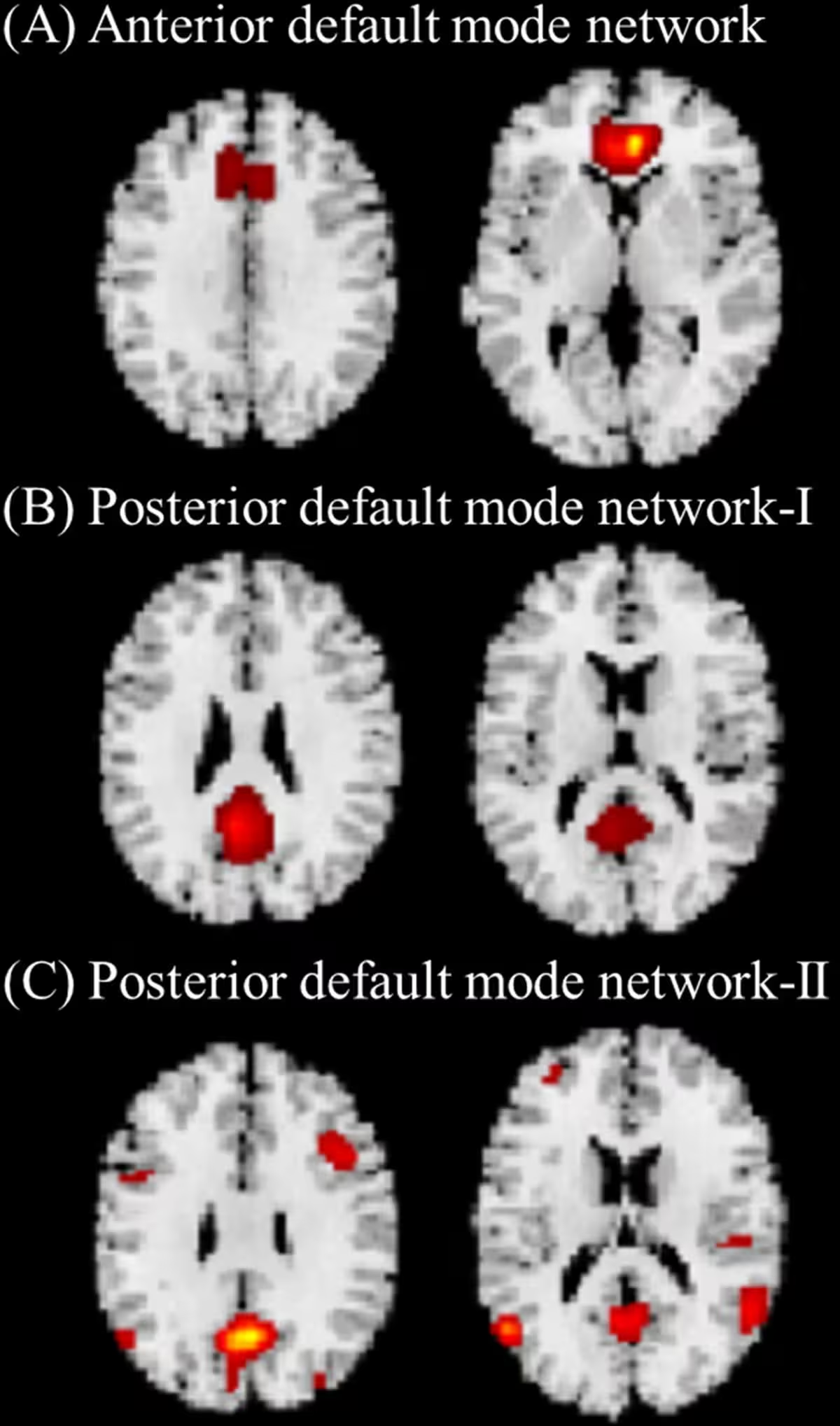
Three gray matter (GM) structural networks related to the default mode network (DMN). Three GM structural networks related to DMN that were identified are shown. (A) anterior DMN; (B) posterior DMN-I, including the posterior cingulate cortex (PCC) and precuneus; and (C) posterior DMN-II, including the PCC, precuneus, inferior parietal cortex, and lateral temporal cortices.

Why vitamin C could matter to the brain
Vitamin C, or ascorbic acid, is widely known for immune support. But in the nervous system it plays multiple biochemical roles. It is a potent antioxidant that neutralizes reactive oxygen species, and it acts as a cofactor for enzymes involved in neurotransmitter production and in maintaining blood vessel and connective tissue health. Those functions are plausible mechanisms by which vitamin C status could influence neuron survival, synaptic maintenance, and the integrity of brain networks.
Still, biology is rarely simple. Blood vitamin C levels reflect a mix of dietary intake, absorption, metabolism, and underlying health. A low plasma concentration might mirror poor overall nutrition, chronic illness, or medication use—factors that themselves affect the brain. That is why the researchers call for cautious interpretation and for follow-up studies that can tease apart cause and effect.
What would stronger evidence look like? Prospective studies that track vitamin C over years and randomized controlled trials of supplementation in at-risk groups would help. Imaging before and after an intervention could reveal whether raising plasma vitamin C produces measurable changes in gray matter volume or connectivity. Diverse samples will be important too, because this study was conducted in a Japanese community cohort and results may not generalize worldwide.
Expert Insight
Dr. Elena Romero, a neurogerontologist and science communicator, offers a pragmatic take: 'This study gives us a signal worth following. It is not a prescription for everyone to pop a pill, but it does highlight that micronutrients are part of the brain's environment. Think of vitamin C as maintenance for cellular machinery—helpful, but not a silver bullet.'
She adds, 'Dietary patterns matter. Whole-food sources of vitamin C come with other phytochemicals and fibers that influence metabolism. Future trials should test dietary strategies and careful supplementation in people who are genuinely deficient.'
Conclusion

The new work strengthens the case that nutrition matters to brain aging, adding imaging evidence to prior epidemiological links between vitamin C intake and cognitive outcomes. It opens a practical research question: can we preserve neural structure and network integrity with improved micronutrient status? For now, the safest takeaway is modest and actionable—ensuring adequate vitamin C through a balanced diet rich in fruits and vegetables is a low-risk strategy that could contribute to brain health as people age. Definitive answers will require longitudinal and interventional studies that track both blood levels and brain measures over time.

“My work centers on sustainability, energy, and environmental science — examining how innovation can lead to a greener future.”

Discussion
Leave a Comment
Comments (2)
is this even true? correlation doesnt equal causation. maybe low C is marker of poor diet overall, not the direct cause.
wow didnt expect vitamin C tied to brain wiring... kinda wild. makes me wanna eat more citrus, for real lol