
Under an infrared camera, a sculpted head should glow like a warm beacon. Instead, heat flows around it as if the object were not there. The result is almost eerie: a temperature map that reads flat where a shape exists.
That is the visual proof of a new kind of thermal cloak developed by researchers at the University of Illinois Urbana-Champaign in collaboration with the Technical University of Denmark. It is not a magic trick. It is engineered control of heat, sculpted in three dimensions, and it can hide complex objects from infrared detection from almost any direction.
How the cloak reroutes heat around an object
Think of heat as a crowd flowing through a corridor. Put an obstacle in the way and the crowd splits, swirls, slows. The cloak teaches heat to take a different route, diverting the flow around the protected region and then reconnecting it smoothly beyond the obstruction. To the observing infrared camera, the temperature field outside the cloak looks undisturbed. The concealed item leaves no obvious thermal footprint.

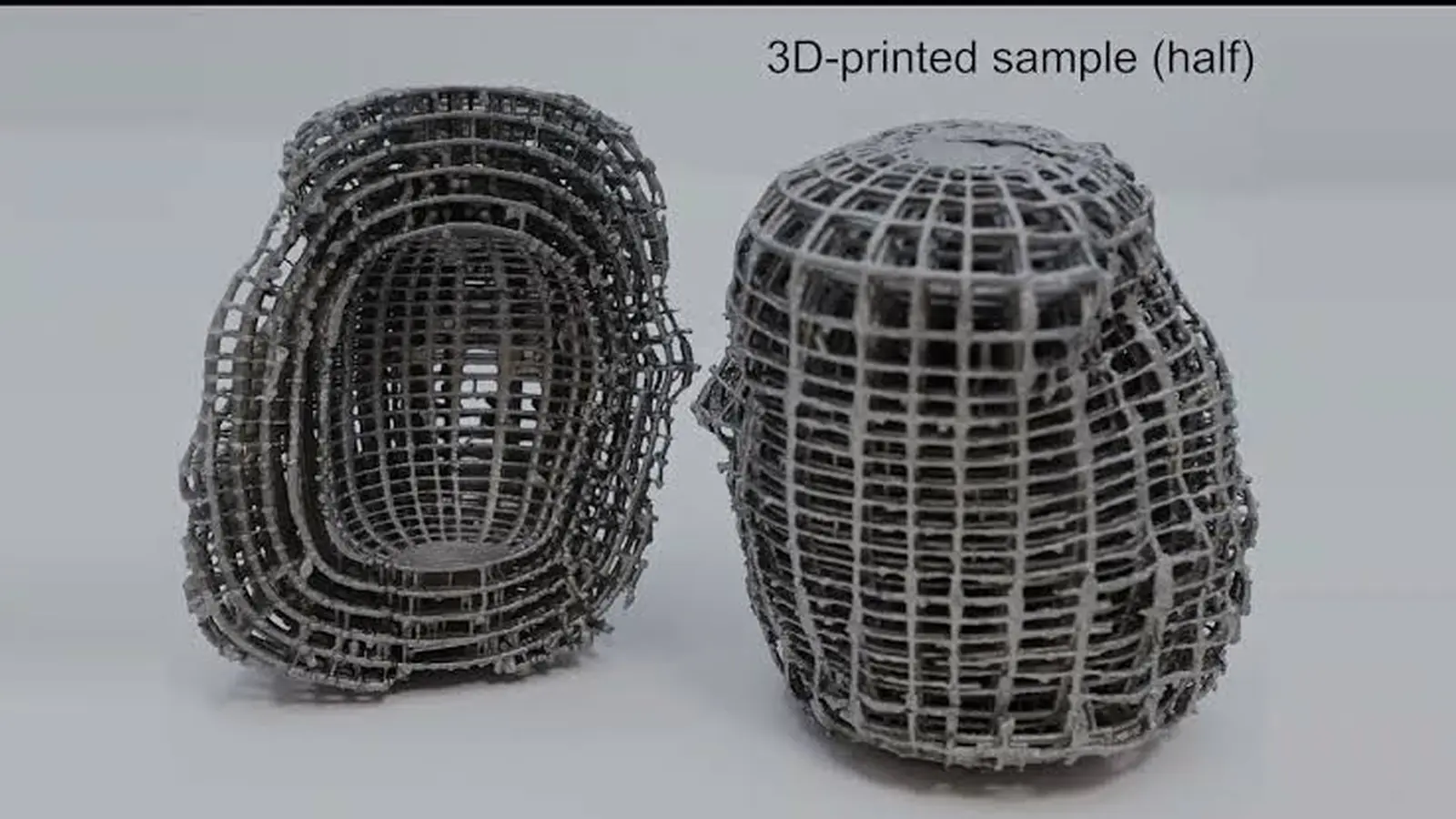
U. of I. engineers introduce a 3D-printed, hybrid aluminum-and-rubber cloaking device that blocks an object’s thermal signature by guiding heat around it, rendering it invisible to infrared cameras.
The method builds on transformation thermotics, a mathematical framework that prescribes how heat must travel so the external temperature pattern remains unchanged. The challenge is practical: how do you build a material whose internal pathways force heat to move exactly as the equations require? Here the team used geometry as their tool. Instead of relying on exotic substances, they combined a 3D-printed aluminum lattice with a rubber-like filler. Aluminum provides fast, directed heat highways. The rubber slows the flow. By changing the lattice geometry in three dimensions, they tuned local thermal conductivities and anisotropies, giving the cloak the latitude to act like the theoretical ideal.

That mix of materials accomplishes two things simultaneously. First, it creates regions that channel heat rapidly along preferred directions. Second, it produces insulating zones that block or delay thermal transfer. The interplay between these zones shapes the overall heat stream so that it skirts the hidden volume. In laboratory tests the team placed the cloak between hot and cold plates and watched with an infrared camera as the thermal gradient marched across the device. The pattern outside the protected space remained strikingly similar to the uncloaked baseline. Inside, temperatures stayed stable and insulated from extremes.
Why omnidirectional performance matters
Previous experimentally realized thermal cloaks worked only in limited settings. Many were essentially two-dimensional or designed for heat arriving from one preferential direction. Change the incident angle and the disguise failed. That limitation is fatal for real-world use. Heat sources are rarely fixed. They move. They flicker. They come from multiple sides.
By contrast, the Illinois-Denmark device is omnidirectional. The lattice design provides the necessary spatial complexity to steer heat no matter where it comes from. The researchers demonstrated concealment of irregular, three-dimensional shapes, including detailed forms that mimic human heads. Those tests are important because they show the cloak can handle geometric complexity, not just idealized spheres or cylinders carved for the lab.
Applications are immediate and practical. In electronics, microchips and other components can fail when local hotspots develop. Redirecting heat away from vulnerable parts without adding bulky thermal barriers could increase reliability and density. In harsh environments, sensitive instruments might be shielded from external temperature extremes without physically isolating them. Security and defense sectors will also take notice: reducing thermal signatures can make people or machines less visible to infrared surveillance. This raises ethical and regulatory questions as well as technical ones. The technique is a heat-control tool, and tools can be used for many ends.
Engineering the lattice: materials and manufacturing
The researchers used two contrasting materials to realize the design. The aluminum lattice was printed with precise geometry so that conductive paths align with the intended heat routes. The interstices were then cast with a rubbery polymer that is a poorer conductor of heat. That juxtaposition creates anisotropic and spatially varying thermal conductivity without invoking complex or prohibitively expensive constituents.

Manufacturing brings its own constraints. Thermal contact resistance at interfaces, small-scale printing defects, and material aging can alter performance. The team accounted for those factors in both simulation and experiment, but scaling up will demand further work. Can such cloaks be integrated into the cramped interior of a printed circuit board? Can they be made thin enough to fit aerospace payloads? Those are engineering questions now on the table.
Expert Insight
"This is a credible step from theoretical prescriptions to manufacturable devices," says Dr. Maria Chen, a thermal systems engineer who is not affiliated with the study. "What makes it useful is the combination of manufacturability and direction-agnostic performance. It shifts thermal cloaking from demonstration to potential deployment in real systems. There will be tradeoffs between size, weight, and cloaking bandwidth, but the concept is robust."
Dr. Chen adds a practical note: "Active heat management is the next frontier. Passive cloaks like this one are promising, but integrating sensors and adaptive control could let a device handle internally generated heat as well as external fluxes. That would broaden the range of applications significantly."
Future directions and limits
The current cloak is optimized to deflect heat passing through or across it. Concealing objects that generate their own heat is harder. A device that only reroutes external flux will eventually allow internally produced energy to build up and reveal the hidden source. Solving that requires active or multifunctional cloaks that can sense, redistribute, or remove heat dynamically. Imagine a cloak that routes excess warmth to a heat sink on demand, or that reconfigures internal pathways in response to a sensor network. Those are the kinds of capabilities the team plans to explore next.
There are also questions of scale and material choice. Aluminum and rubber work well for laboratory demonstration, but specialized applications may need ceramics, composites, or phase-change materials. The computational design tools, tuned for transformation thermotics, are flexible enough to accept different building blocks. That gives engineers options when adapting the concept to electronics, aerospace, or field equipment.

Conclusion
The Illinois and Denmark teams have moved thermal cloaking from flat, one-directional tricks toward practical, three-dimensional devices that hide complex shapes from infrared cameras. The approach combines mathematical design, geometric control, and conventional materials to steer heat in precise ways. Immediate uses are likely in thermal management for electronics and in any field that needs to control or conceal heat. Longer term, active and adaptive cloaks could do more than hide: they could manage where heat collects and how it leaves a protected volume. That dual capability would change how engineers think about temperature as a resource and as a signal.

“My work centers on sustainability, energy, and environmental science — examining how innovation can lead to a greener future.”

Discussion
Leave a Comment
Comments (3)
Feels a bit overhyped. cool 3D printing trick but internal heat sources and interface losses matter. hope they test active versions, scaling is key.
Is this even true? Rerouting heat around a live hot object seems tricky, lab demo ok but outdoors...
wow didnt expect this, heat hiding tech feels spooky but also exciting. can it be thin enough for phones??