
A fossil feather ruffles the simplest image of flight. Imagine a creature no larger than a modern crow, its skeleton a patchwork of reptile and bird. It could not throw its wings up like today’s birds. It had no deep, keeled breastbone to anchor powerful flight muscles. And yet, somehow, it got airborne.

Archaeopteryx was a feathered, bird-like dinosaur that lived about 150 million years ago and combined traits of both dinosaurs and modern birds.
Legs first, wings second
Researchers at the University of Southampton argue that the secret to Archaeopteryx’s takeoff did not lie in a single explosive wingbeat. Instead, their models point to repeated, powerful pushes from the hind legs — two or three bipedal leaps that stitched together the speed needed for sustained flight. The wings, limited by shoulder mechanics and the absence of a keeled sternum, provided lift and sustained flapping only after those initial boosts.

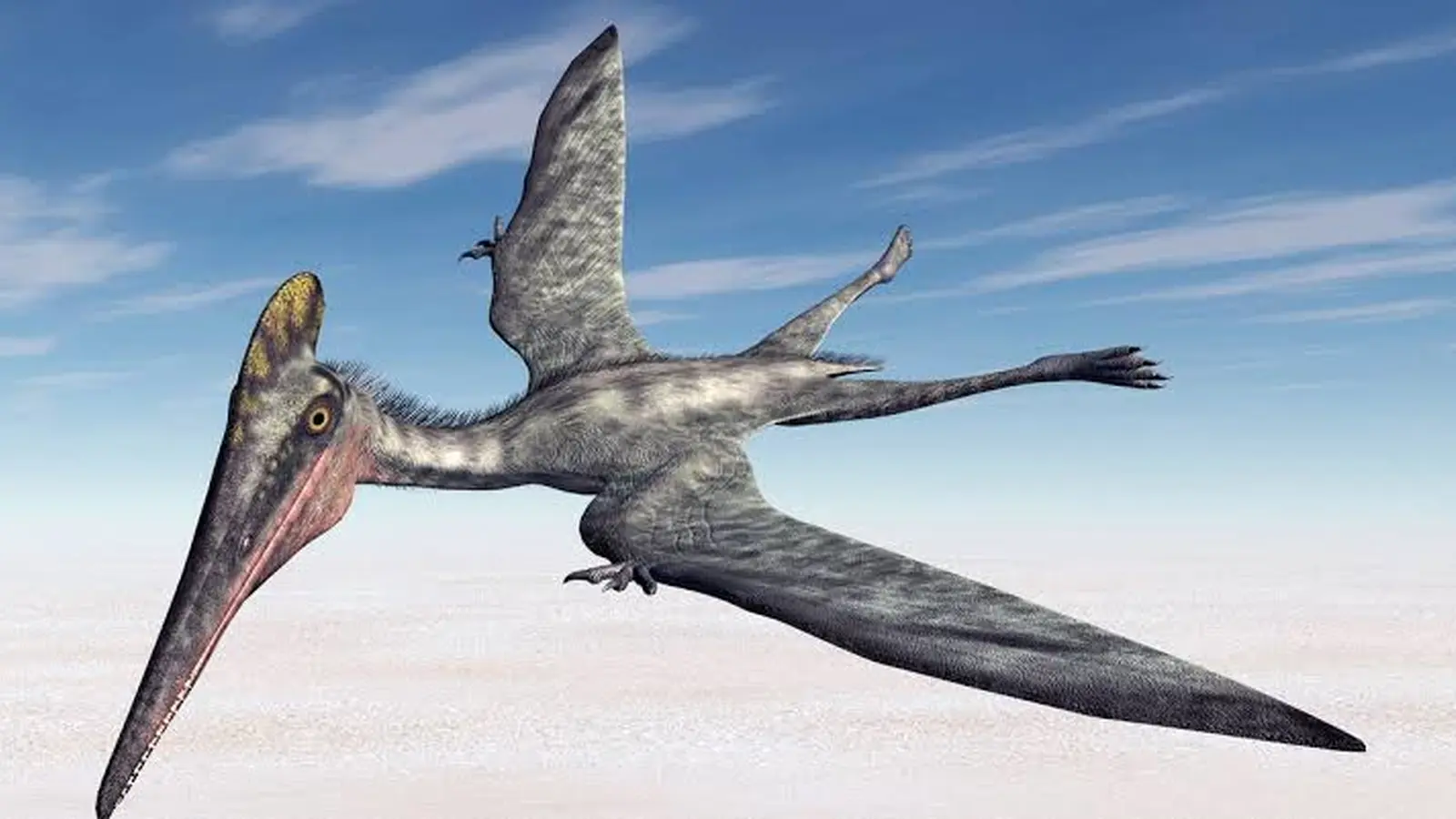
An illustration of Archaeopteryx.
The animal sits at a pivotal moment in evolution, where dinosaurian anatomy and avian adaptations overlap. Paleobiologist Neil Gostling, part of the team, notes that Archaeopteryx retained dinosaur-like features such as a long bony tail, separate finger claws, and teeth in a tooth-bearing jaw. Those traits, combined with feathered wings, make it an evolutionary bridge. But the locomotor puzzle remained: how could it reach flying speed without the muscular architecture of modern fliers?
Testing a prehistoric launch
The study used a practical approach. Observations from living birds — gulls, magpies, crows, finches — were combined with biomechanical modeling and earlier work by the late Dr Colin Palmer. The team adapted measured forces and muscle outputs at the hip, knee, and ankle to the skeletal geometry of Archaeopteryx, estimating how much acceleration the legs could deliver.

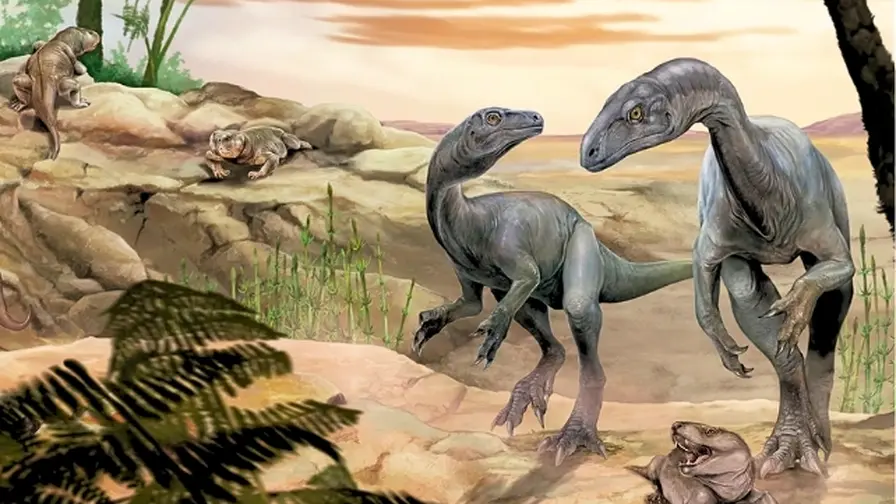
An illustration of how Archaeopteryx could have taken off.
What emerged was a surprisingly efficient sequence. A mid-sized Archaeopteryx, roughly 400 grams in mass, could reach an estimated sustained flight speed of about seven meters per second after two or three successive leaps. Alternatively, two leaps separated by a downward wing flap could achieve the same effect. In plain terms: short hops, each timed to add velocity, then continuous wing-driven flight.
Modeling showed that the legs supplied the lion’s share of launch force — as much as 90 percent in many birds — while wings took over once sufficient forward speed and airflow over the feathers were established. That pattern mirrors behavior in several modern species that still favor multiple hops when they want to conserve energy or are not pressed to escape quickly. Crows, magpies, and seagulls will often use two or more pushes before sustained flapping.

A model of Archaeopteryx.
Implications for the origin of flight
This leg-driven hypothesis reshapes how we imagine the transition from ground-dwelling dinosaurs to airborne birds. It weakens a strict narrative that early avian flight required an abrupt adoption of modern wing-powered launch mechanics. Instead, takeoff could have evolved incrementally: greater leg power and coordinated wing-assisted hops helped bridge the gap until the chest grew a larger keel and shoulder mobility increased.
Methodologically, the study demonstrates the value of combining extant-animal biomechanics with fossil anatomy. When direct observation is impossible, living birds provide measurable analogs for muscle performance and limb coordination that can be scaled back in time. The approach also highlights specific fossil features to seek in other transitional specimens: relative limb proportions, pelvic mechanics, and shoulder articulation that permit or constrain wing elevation.
Expert Insight
Dr. Anna Ruiz, a paleo-biomechanist at the Natural History Museum who was not involved in the research, says this study adds important nuance to the origin-of-flight debate. She points out that multiple-hop launches are energetically sensible for small animals and are consistent with both arboreal and terrestrial ecologies. "This model bridges behavior and anatomy. It gives us testable predictions for other early birds and feathered dinosaurs," she adds.
Conclusion
Archaeopteryx did not need to mimic the single, explosive leaps of many modern fliers to become airborne. A sequence of strong leg pushes, aided by well-timed wing strokes, could have been enough. That picture does more than solve a paleontological riddle; it paints an evolutionary pathway where small adaptations in leg power and wing control gradually unlocked the skies.

“My work centers on sustainability, energy, and environmental science — examining how innovation can lead to a greener future.”

Discussion
Leave a Comment
Comments (2)
Is this solid tho? models rely on modern birds, big assumptions, fossils dont show muscles. curious but skeptical
Wow, did not picture Archaeopteryx doing little hop launches. Legs did the grunt work, wings just follow up. kinda beautiful, weird