
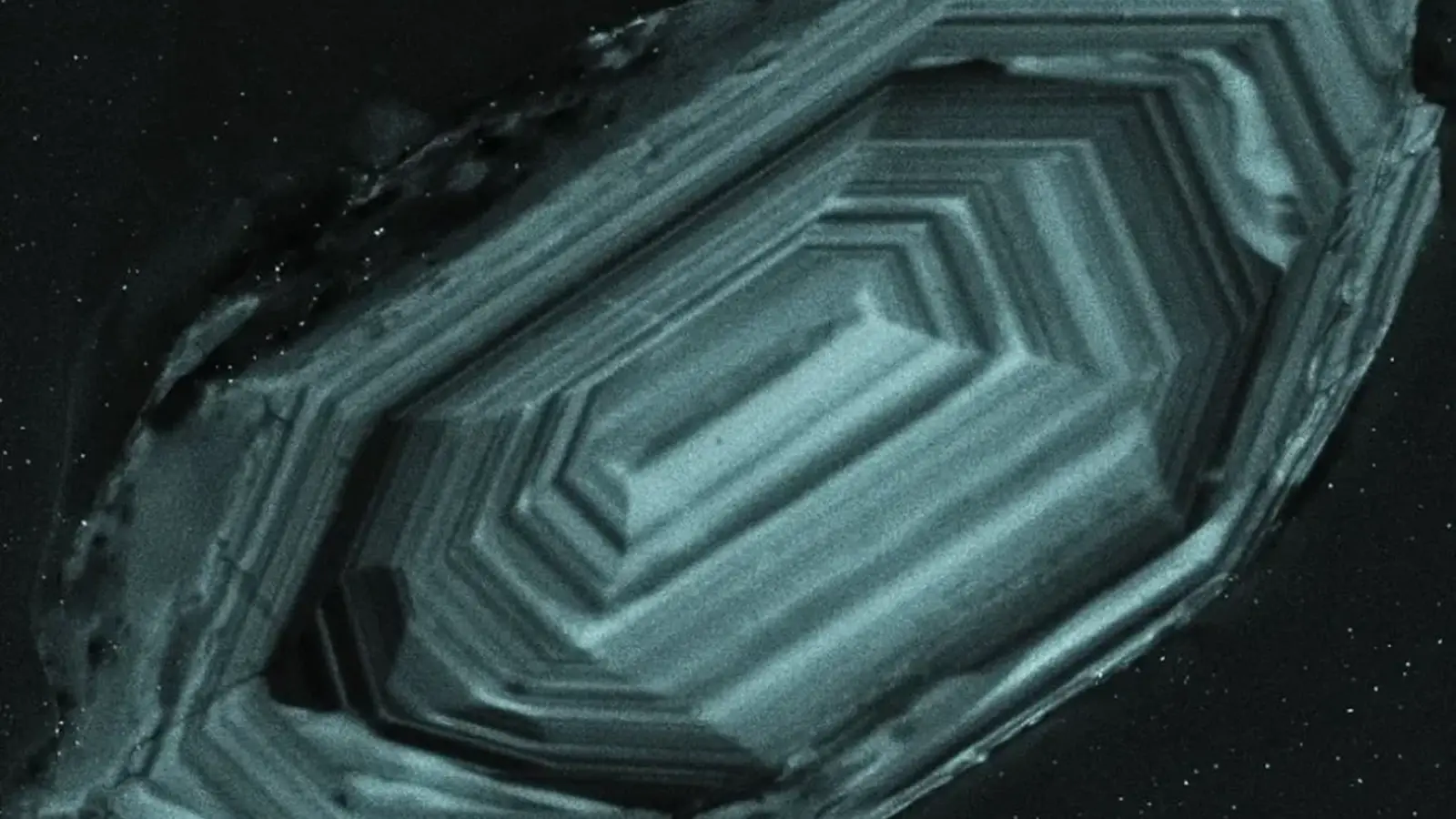
A patch of dark, carbon-rich film trapped in ancient silica offers a rare window into Earth’s deep past. Amid the weathered outcrops of the Singhbhum craton, researchers have directly dated organic material that appears to be the remains of a microbial community living some 3.5 billion years ago.
That single sentence hides decades of debate. For years, scientists have argued over whether faint textures and thin carbon layers in the oldest rocks are biological fossils or the result of nonbiological chemistry. Many claims rested on the age of the surrounding rock, not the age of the carbon itself. That gap left room for doubt.
How the team closed the loop
A team led by geologist Trisrota Chaudhari from the Geological Survey of India targeted a narrow but crucial problem: can the carbon that looks like fossilized microbial mats be dated directly, and therefore be unambiguously tied to life at a specific time? Their study, published in Proceedings of the National Academy of Sciences, reports just that—organic-bearing layers preserved inside chert that yield an age of roughly 3.5 billion years.

Chert is a fine-grained, silica-rich sediment that can encapsulate delicate structures quickly. When microbial communities form mats on seafloors or in shallow waters, their organic remains can become trapped and sealed by silica precipitation. Under the right conditions, those carbon films survive later deformation and heating and remain available for isotopic analysis.
Chaudhari told ScienceAlert that finding both well-preserved organic material and datable minerals in the same rock is extremely rare in early Earth studies. When both are present, the age of the host rock and the evidence for life can be linked directly, producing stronger isotope-based arguments for ancient biology.
The distinction matters. Other sites have produced candidate traces of life dated at 3.7 to 3.8 billion years, but controversy persists because researchers mainly dated the layers around the carbon rather than the carbon itself. A direct date anchors the biosignature to a time slice and narrows alternative, abiotic explanations.
The implications stretch beyond a single craton. If microbial communities were already established by 3.5 billion years ago, then life emerged and found stable ecological niches very early in Earth’s history, not long after the planet cooled enough to sustain oceans. That timing influences models of how fast life can originate, how resilient it is to planet-scale change, and where to look for life on other worlds.

Laboratory work for this study combined careful petrography with isotopic measurements on the carbon-rich films. The researchers also examined the geochemical pathways that could preserve organic matter in silica-rich sediments, and they compared the isotopic signatures to distinguish biological carbon from inorganic sources such as hydrothermal input.
Not every scientist will stop arguing tomorrow. Extraordinary claims still require multiple lines of independent confirmation. Yet this result tightens the chain of evidence. It shifts the balance toward a biological origin for at least some of the oldest carbon-bearing rocks on Earth.
Published in a leading journal, the study does more than add one date to a spreadsheet. It demonstrates a method: directly date the organics when preservation and mineral context permit. That approach gives paleobiologists and geochemists a clearer way to interrogate the earliest chapters of life’s story.


“The cosmos has always fascinated me. I write about space missions, astronomy, and the technologies pushing humanity beyond Earth.”

Discussion
Leave a Comment
Comments
No comments yet. Be the first.