
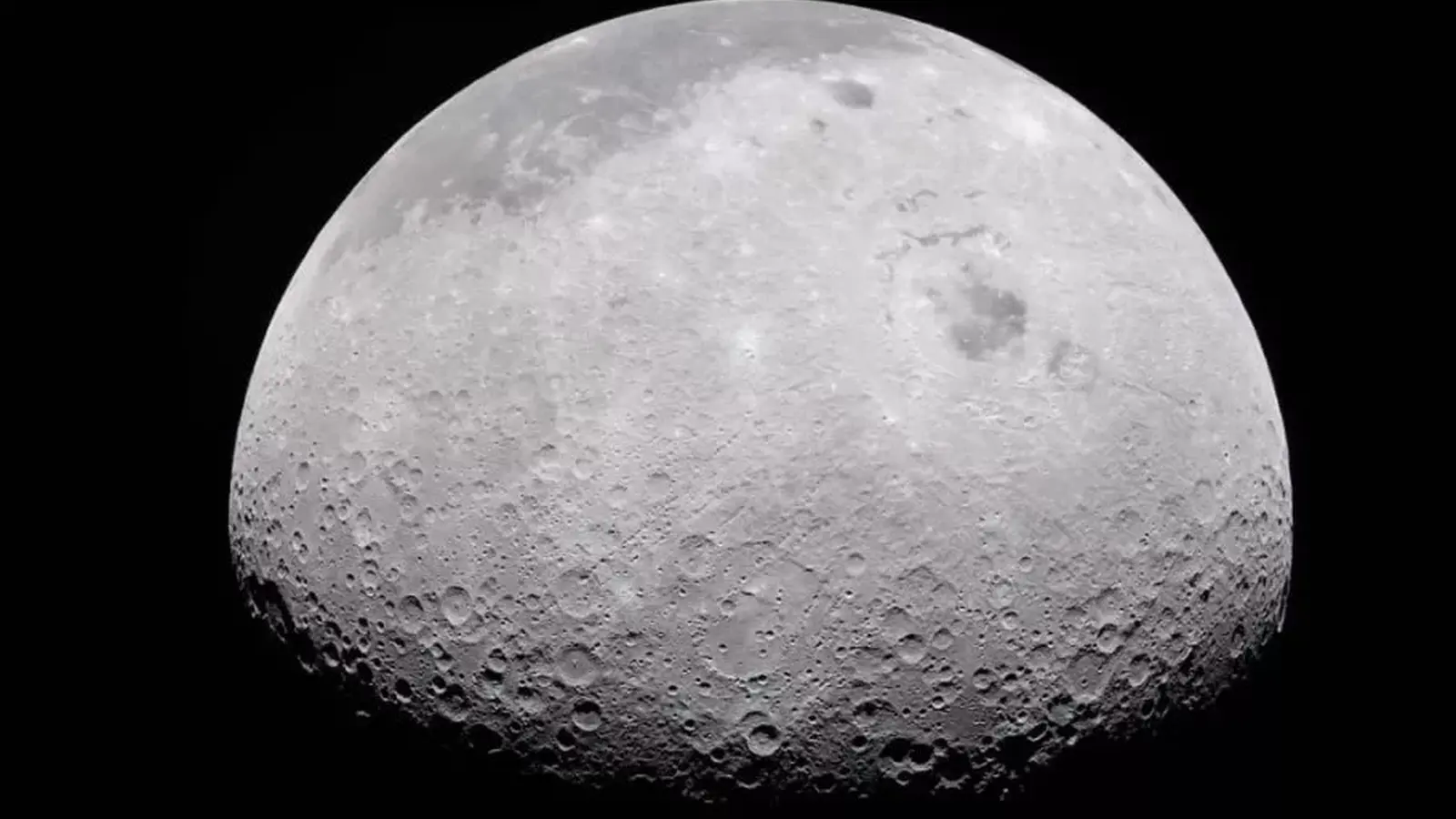
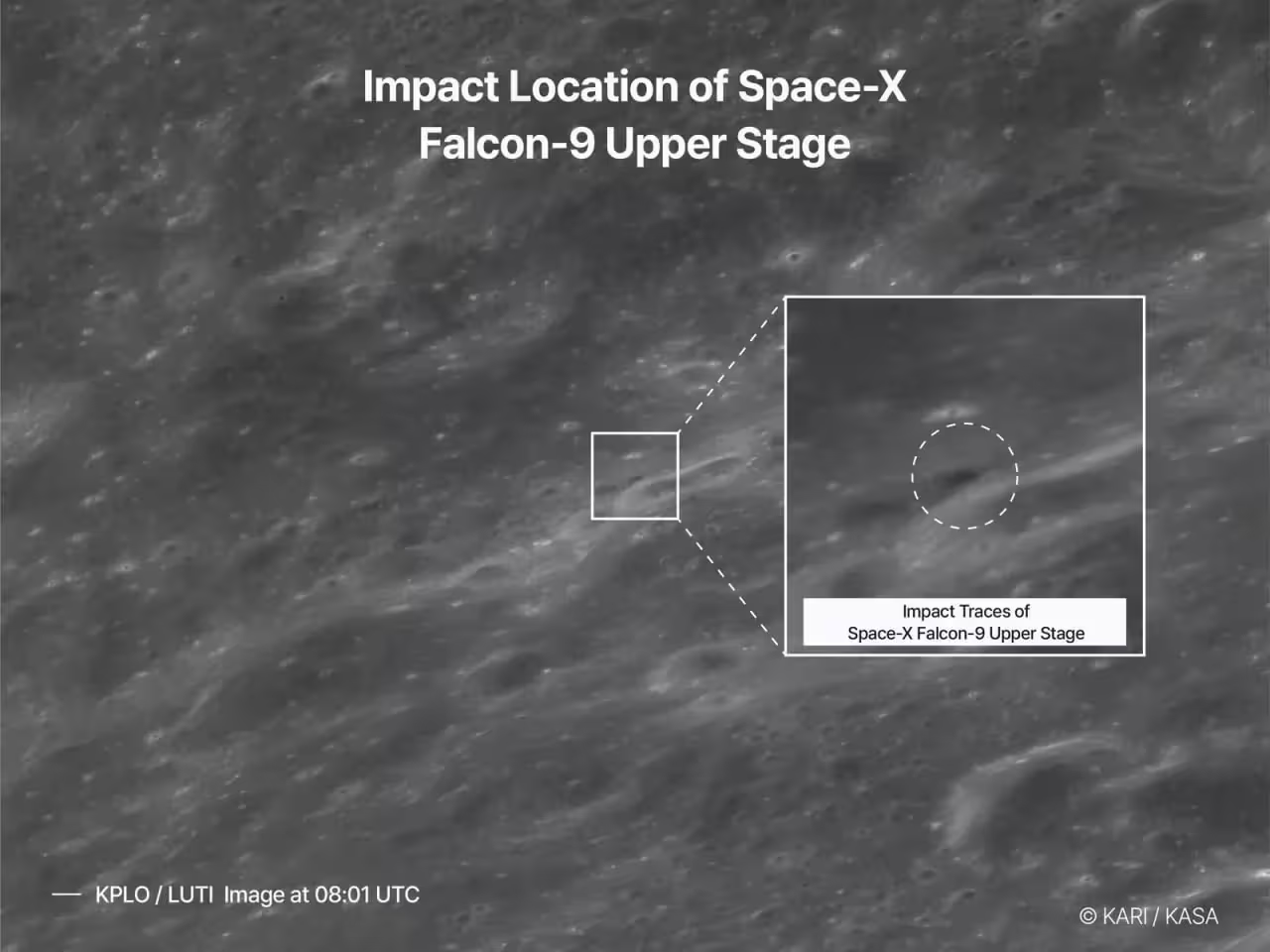
From Danuri's orbit the mark looked unmistakable: a fresh indentation on the lunar surface, photographed soon after a second-stage of SpaceX's Falcon 9 apparently struck the Moon. The Korea Aerospace Research Institute's orbiter passed above the site and returned images that, when compared with earlier frames, show the change created by the impact.
A piece of metal on a slow collision course
Spacecraft hardware does not always come down on Earth. In January 2025 a Falcon 9 second stage completed its primary job delivering lunar landers, then began a long, uncelebrated existence in cislunar space. Over more than a year, the combined gravitational pulls of Earth, Moon, and Sun nudged its orbit ever so slightly until the stage intersected the lunar surface.
Astrophysicists had forecast both the location and timing of the strike well before it happened. Their best models suggested the impact would carve a crater roughly 3.6 meters deep. Professional and amateur observers prepared to watch, and some predicted the event could be visible with ground-based instruments. In the end, weather and the difficulties of timing a fleeting flash made direct optical observation from Earth challenging.

What scientists saw and why it matters
Danuri photographed the site before and after impact, providing the clearest view so far. Complementary evidence came from terrestrial telescopes that detected transient emissions of sodium and lithium in the Moon's exosphere at the predicted time. Those spectral signatures are a smoking gun: they indicate material was vaporized and lofted into the thin lunar atmosphere, consistent with a high-speed collision.
Observations and instruments
The Korea Aerospace Research Institute released images showing subtle but definite changes in albedo and texture where the stage struck. Meanwhile, spectroscopic detections of neutral sodium and lithium atoms helped confirm the physical interaction. Such detections matter because they let scientists estimate the energy of impact and the mass of vaporized material without needing a close-up photograph.
Cause and context
SpaceX explained that for many missions they plan controlled deorbit burns for upper stages so they reenter safely over oceans. However, in higher-energy missions that deliver payloads to trans-lunar trajectories the vehicle's performance is almost entirely devoted to placing the payload on the correct path, and a controlled disposal maneuver is not always feasible. Over time, perturbations altered the stage's orbit and steered it toward the Moon. The company says it is working with NASA and other partners to address long-term disposal and space safety for leftover hardware.
Why should anyone care? Because each impact is a live experiment. Impacts deliver kinetic energy, excavate subsurface material, and briefly inject atoms into the tenuous lunar exosphere. That matters for surface science, for interpreting future remote sensing, and for policy about human-made objects around celestial bodies. It also raises practical questions about tracking and mitigating future collisions in lunar space.
Images with higher resolution may follow as other lunar orbiters task their cameras to revisit the location, but specialists caution that obtaining an extremely close, high-detail view is unlikely in the immediate term. Still, the combination of orbital imagery and ground spectroscopy has already told a compelling story: an artificial object met the Moon, and scientists are piecing together the aftermath.
Small crater. Big lesson. Space activity is expanding beyond low Earth orbit, and with that expansion comes greater need for international coordination on debris, disposal, and planetary protection.


“My work centers on sustainability, energy, and environmental science — examining how innovation can lead to a greener future.”

Discussion
Leave a Comment
Comments (2)
hmm, if that stage really struck the Moon, why wasn't there a big flash seen from Earth? weather, timing ok but feels fishy... anyone else skeptical?
wow, a metal rocket stage made a fresh crater on the Moon? bizarre but kinda awesome. those sodium/lithium lines are solid proof. hope policy keeps up, this'll get messy