
Think of a night when snow falls so fine you feel nothing underfoot. Now imagine that snow is glass, a billionths of a meter across, and each grain started life on an asteroid orbiting the Sun. Every year our planet collects thousands of tons of this invisible rain. Most of it goes unnoticed. Yet inside some of those glassy beads are chemical signatures that point to an asteroid we have never sampled and rarely even suspected.
Micrometeorites are tiny and plentiful. They arrive as dust shed by comets and asteroids, heat on entry, and reform as glass spherules. For decades scientists have used these particles as a low-cost, high-yield way to read the material inventory of near-Earth space. Now a careful reexamination of oddball micrometeorites has revealed a startling result: a substantial fraction of the dust raining onto Earth appears to come from a parent body that does not match any known meteorite type in our collections.
Clues embedded in microscopic beads
Antarctic expeditions and micrometeorite collections have long contained specimens that resist neat classification. Some of these spherules show unusually heavy oxygen isotopes; others display mineral textures where olivine has accumulated on one side during atmospheric deceleration. Separately these oddities were curious. Together they began to look like a pattern.
Researchers led by Matthias Van Ginneken of the University of Kent pulled those threads together. They examined two anomalous populations and found a striking overlap. The combined characteristics suggested a single, unusual source. The new group has been nicknamed SCumPo, shorthand for sulfur-rich cumulate olivine spherules.

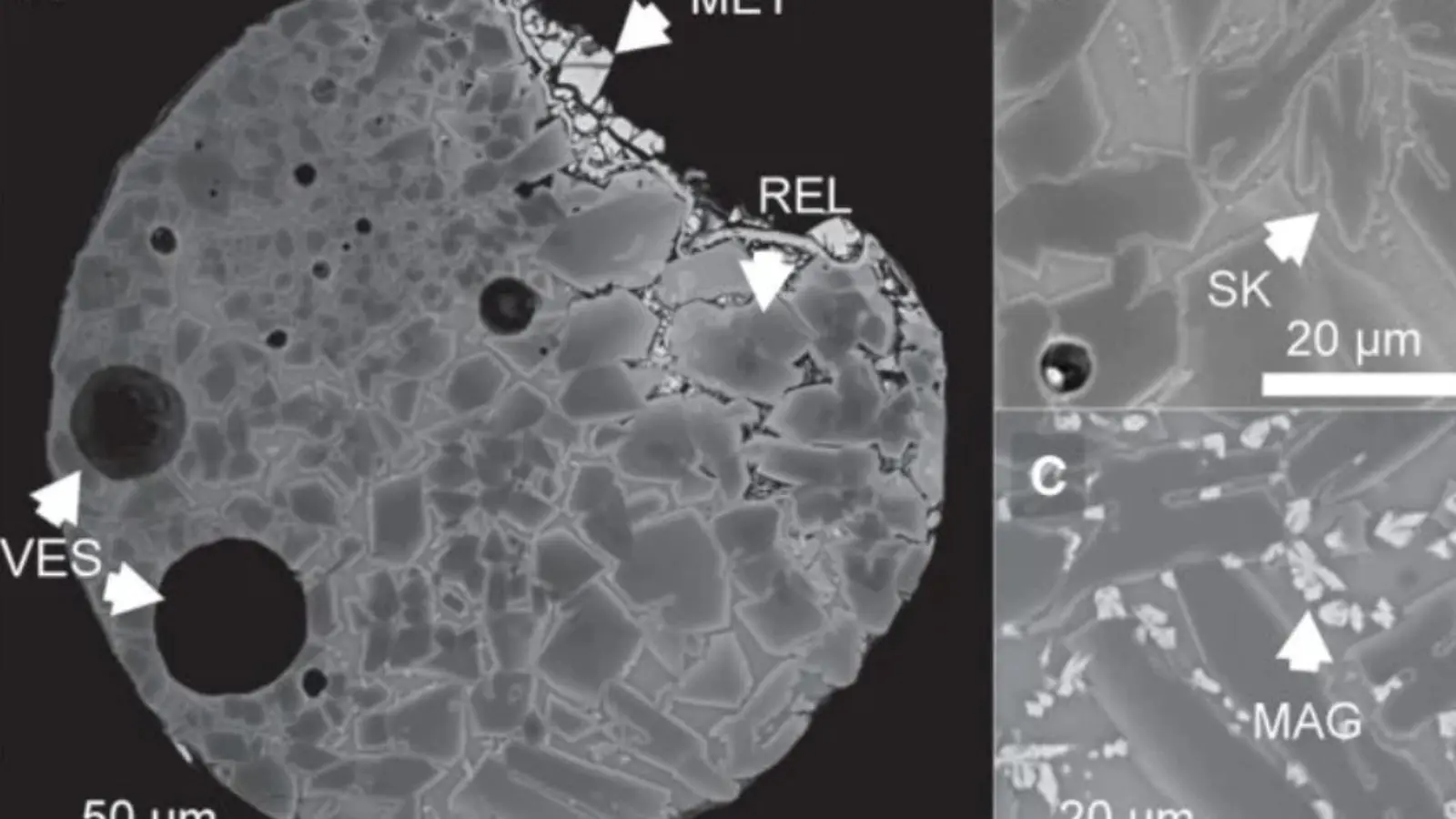
Thousands of tons of cosmic dust, like this micrometeorite pictured above, land on Earth every year.
SCumPo particles are odd for several reasons. They contain almost no magnetite, a mineral commonly produced when iron oxidizes during atmospheric entry. They are unusually rich in sulfur. And their oxygen isotope ratios are heavier than those of most known asteroids. Together these clues point to a parent body that was both reducing in its environment and rich in volatile elements, perhaps carbonaceous in nature. The team notes similarities with the rare CY chondrites, but the match is not precise.

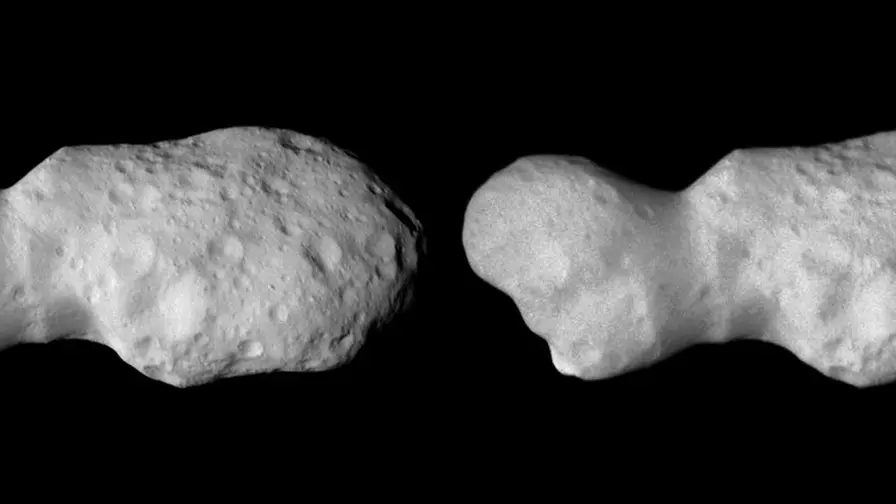
There are tens of thousands of asteroids in near-Earth space.
How did researchers crack the case?
They combined techniques. High-resolution electron microscopy revealed internal textures and mineral distributions. Isotope mass spectrometry measured oxygen ratios that are fingerprints of formation and alteration history. Computer simulations of atmospheric entry helped estimate entry velocities and trajectories, indicating a faster descent than typical main-belt grains. Faster entry implies a near-Earth origin rather than particles coming from the main asteroid belt between Mars and Jupiter.

A scanning electron microscope image of a SCumPo micrometeorite.
Slowly, a picture emerged. The parent body was likely altered by water with a heavy oxygen signature, contained abundant sulfur, and presented a reducing chemistry that left little magnetite behind. These features are uncommon among meteorites catalogued on Earth. And yet simulations and abundance estimates suggest that as much as 10 percent of the micrometeorite record could trace back to this one source or family of sources.
That is not a trivial share. If confirmed, it means a sizeable chunk of the mass arriving from space each year is underrepresented in the meteorite specimens we hold in museums. In other words: our roadside sample of the solar system is missing an important neighborhood.
What this means for asteroid science
We cannot visit every rock in space. Sample-return missions are expensive and rare. Dust, by contrast, falls to Earth constantly and is relatively cheap to collect and analyze. Finding a near-Earth asteroid that has been seeding Earth with dust for over a million years opens new scientific opportunities. It provides a proxy for studying the chemistry and history of an asteroid without the logistics of a mission.
.webp "Tiny Asteroid Passed Within 270 Miles of Earth in 2025")
There is a practical side too. Near-Earth object catalogs now list more than 40,000 bodies. The simulations suggest the SCumPo-producing source could already be among those cataloged. Identifying it would require targeted observations or, ideally, a returned sample. Until then, micrometeorites remain the archive.
More than that, the discovery highlights how much of our micrometeorite record remains unexplored. Collections from polar ice and deep-sea sediments hold tens of thousands of particles that have been only partially studied. Hidden within them may be other 'missing' parent bodies, each telling a different story about water, carbon, and early solar-system chemistry.
Expert Insight
"Dust is a surprisingly democratic archive," says Dr. Aisha Patel, planetary scientist at the Jet Propulsion Laboratory. "Each grain carries a condensed history of its parent body: temperature, oxidation state, volatile content. You do not need to land on an asteroid to learn its secrets. You need patience, sharp instruments, and imagination."
Patel adds, "If SCumPo proves to be linked to a known near-Earth object, that will be a triumph for ground-based surveys and laboratory cosmochemistry. If not, it will be a reminder that even nearby space still hides surprises."
Broader implications and next steps
For planetary scientists, the discovery reframes priorities. Do we invest more in large, ambitious sample-return missions, or do we scale up global micrometeorite programs that leverage Antarctica, deep-sea dredges, and urban dust collectors? The answer is both. Particle analysis can guide mission targets; missions can validate particle-based inferences. Each approach multiplies the value of the other.
On the technical side, continued improvements in isotope ratio mass spectrometry, nanoscale imaging, and computational modeling will sharpen identifications. Cross-referencing orbital dynamics with laboratory fingerprints could let researchers assign micrometeorites to candidate parent bodies with growing confidence.
The implications touch planetary defense and resource assessment too. Knowing which types of asteroids dominate near-Earth dust can inform models of surface composition, volatile reservoirs, and even the likelihood of encountering resource-rich objects for future exploration.
Conclusion
The humble micrometeorite is proving to be a powerful interpreter of our local cosmic environment. The evidence for a 'missing' parent asteroid that has been quietly dusting Earth for millennia reminds us that the solar system is more diverse than our curated meteorite collections suggest. Science advances little by surprise alone; it advances by noticing the patterns that others once dismissed as noise. These glassy spheres, invisible to casual view, may well rewrite a small but important chapter in our understanding of near-Earth asteroids and the materials they deliver to our planet.

“My work centers on sustainability, energy, and environmental science — examining how innovation can lead to a greener future.”

Discussion
Leave a Comment
Comments (3)
Feels kinda overhyped, lots of inference from tiny grains and sims. still promising tho, but I'd want a sample-return before betting big
Wait, how certain are they? oxygen isotopes and sulfur point to something new, but could sampling bias or entry heating skew results? curious...
wow this blew my mind, tiny glass from asteroids raining down? feels like sci fi but it's real... love the detective vibe, odd and thrilling