
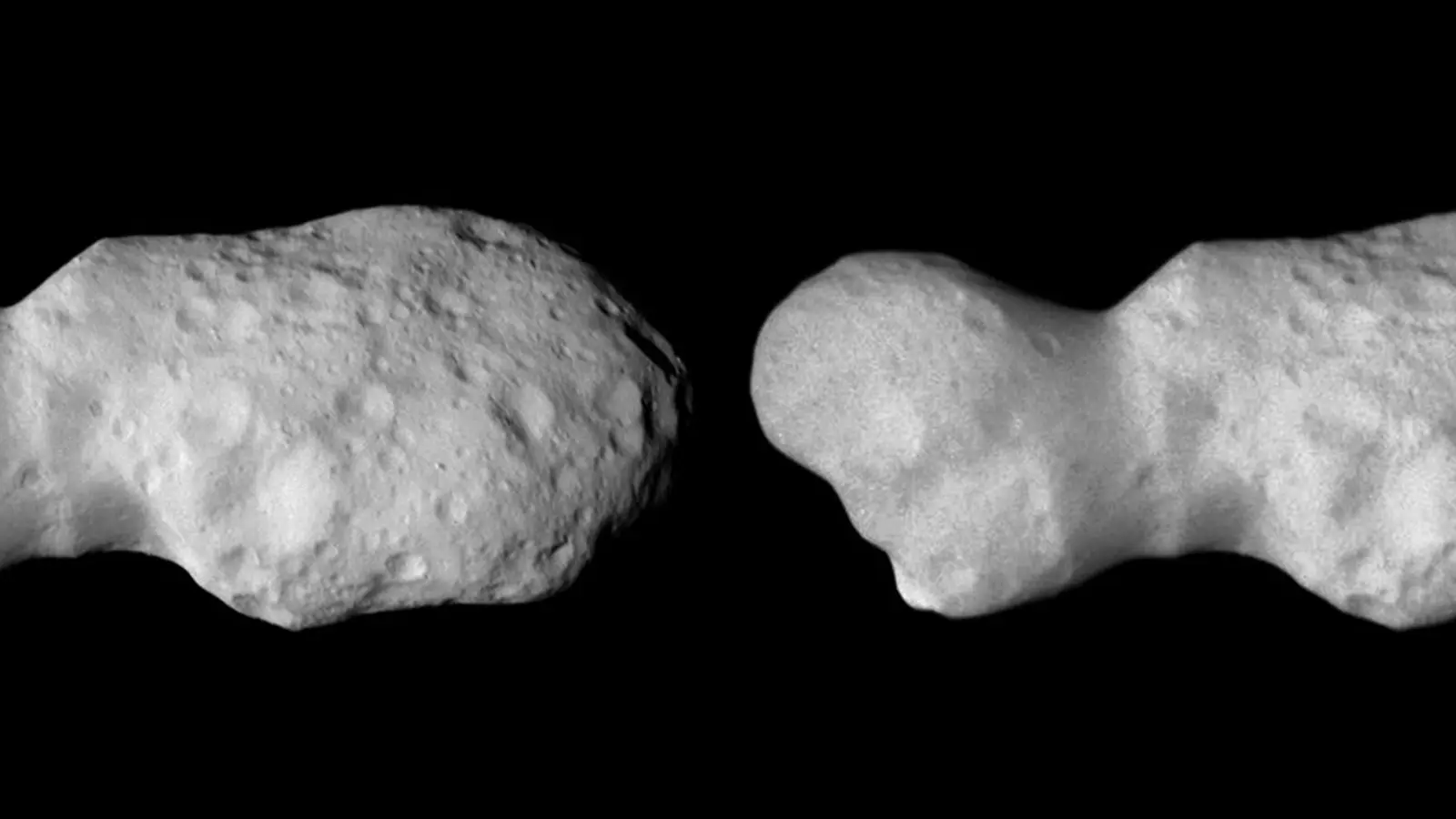
It looks like a celestial peanut and behaves like a drunk spinning top. Donaldjohanson is small, battered, and unexpectedly eloquent about its past.
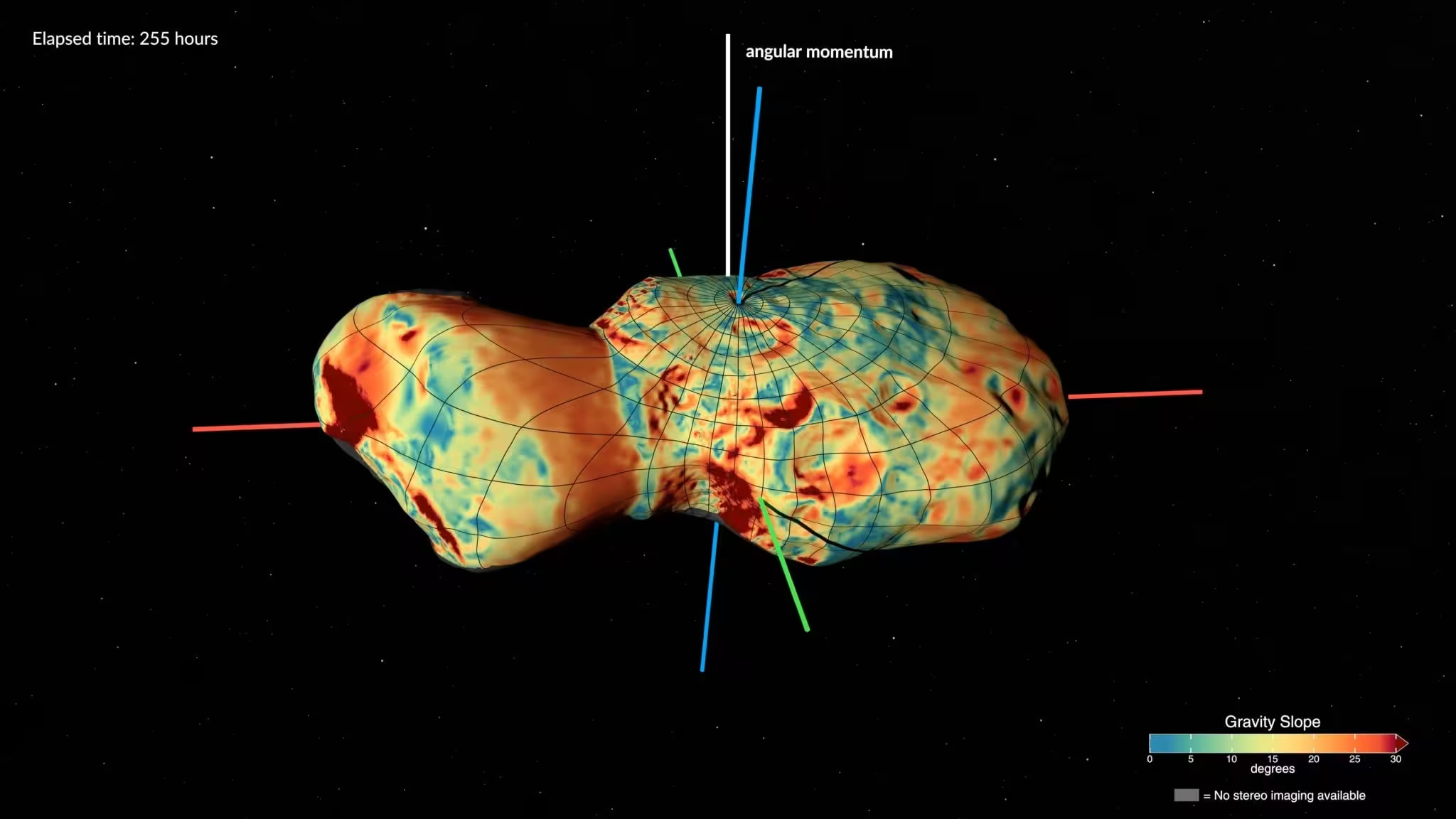
NASA’s Lucy mission found that asteroid Donaldjohanson is a wobbling, peanut-shaped space rock whose rotation has been gradually altered by sunlight for millions of years. It also contains clues that liquid water briefly existed on its parent body, offering fresh insight into the solar system’s early evolution.
On April 20, 2025, Lucy closed to within roughly 650 miles of Donaldjohanson, producing the first close-up images and spectra of this previously unexplored main-belt object. The spacecraft’s L'LORRI imager recorded a dramatic approach: a timelapse built from two hours of shots taken as Lucy fell from a distance of more than 58,000 miles 93,000 km down to a near miss of 1000 km from a roughly 8 km wide body.

A timelapse video made from images taken by NASA’s Lucy spacecraft as it approached the asteroid Donaldjohanson on April 20, 2025. The L’LORRI (Lucy Long Range Reconnaissance Imager) instrument, the spacecraft’s high-resolution black-and-white imager, collected these images over two hours as the spacecraft rapidly closed in on the asteroid from an initial separation of more than 58,000 miles (93,000 km), until the spacecraft passed a mere 650 miles (1000 km) from the 5-mile (8 km) wide asteroid.
Why this tumbling rock matters
Donaldjohanson does not behave like a neat, single-axis spinner. Instead, Lucy revealed a compound motion: the asteroid flips end over end every 10.5 Earth days while simultaneously rocking around its long axis on a roughly 26.5-day cycle. Those two motions together create a tumbling, non-principal axis rotation that tells a story of past violence and slow transformation.
Why care about spin? Because rotation governs shape, surface processes, and even how sunlight slowly alters a body over geological time. Donaldjohanson’s shape is bilobate, two lobes joined by a narrow neck, the classic peanut silhouette. That look is not gentle sculpting—it is the fingerprint of reaccumulation. Fragments from a catastrophic collision once came together under their own gravity to form this composite object some 155 million years ago, according to the Lucy team’s analysis published in Science.
Close images show a surface pocked with craters and sculpted ridges, but many bowl edges are softened. The telltale smoothing is a sign that loose material migrated downhill as the spin rate changed, burying sharper features and reshaping slopes. Models indicate Donaldjohanson once rotated at least ten times faster than it does today. Over the last 20 to 60 million years its spin slowed, allowing gravity to reclaim and redistribute surface debris.

Sunlight as a slow-motion engine
It might sound improbable, but sunlight can act like a subtle engine. The Yarkovsky-O'Keefe-Radzievskii-Paddack effect, commonly shortened to the YORP effect, arises because an irregular asteroid heats up under sunlight and re-radiates that energy as infrared light. That reradiated light carries momentum. On a lumpy, asymmetric object the tiny thrusts do not cancel out, and over millions of years they can twist and torque the body, changing its rotation rate and even flipping its spin axis.
Donaldjohanson appears to be a textbook case of YORP at work in the main belt. Its current slow, complex wobble is likely the endpoint of a long-term slowdown driven by uneven solar heating. The same mechanism has acted differently on other rubble piles: Bennu now spins roughly once every four hours and Ryugu once every seven hours, both much faster than typical primordial rotation rates. The contrast highlights how sunlight can propel otherwise similar objects along very different evolutionary tracks.
Mineral clues to fleeting liquid water
Perhaps the most striking discovery from Lucy’s brief rendezvous was the detection of iron-rich clay minerals on Donaldjohanson’s surface, identified by the mission’s infrared spectrometer. Iron-bearing phyllosilicates form in the presence of liquid water. Yet the particular signature on Donaldjohanson points to only brief exposure to aqueous alteration.
Why is the duration important? Prolonged interaction with liquid water typically converts iron-bearing clays into magnesium-rich variants as rock chemistry evolves. Bennu and Ryugu, in contrast, show magnesium-rich clays consistent with longer-lasting aqueous environments, possibly millions of years while they were still part of larger parent bodies. Donaldjohanson’s iron-rich clays imply short-lived wet episodes: perhaps localized heating from impact events, transient hydrothermal systems, or brief contacts within a parent body before the fragments reassembled and cooled.
During its April 20, 2025, encounter with the main-belt asteroid Donaldjohanson, NASA’s Lucy spacecraft discovered evidence for iron-rich clays on the surface using its infrared spectrometer. These clays, which are similar to those found in carbon-rich meteorites such as QUE 97990, indicate that water was briefly present in the asteroid during the distant past. Credit: NASA/Goddard/SwRI/Dan Gallagher
Those differences matter for understanding the early solar system. If parent bodies formed in distinct regions or at different times, their internal heat budgets, impact histories, and volatile inventories would diverge, producing the mineralogical variety we now observe. Donaldjohanson seems to be a relatively young fragment, created approximately 155 million years ago, much younger than Bennu and Ryugu, which trace back roughly one to two billion years.
Comparisons and context
Comparative planetology is the scientist’s toolbox. Bennu and Ryugu have been studied up close by OSIRIS-REx and Hayabusa2 respectively, including sample returns that let researchers peek into the chemistry of primitive solar system material. Lucy’s flyby of Donaldjohanson expands that sample set without physically returning material to Earth. Each asteroid is a time capsule, but each was sealed in a different laboratory.
Donaldjohanson has remained in the main belt its whole life, while Bennu and Ryugu migrated into near-Earth orbits. That difference affects the thermal and collisional environments those bodies experienced. Migration can expose asteroids to new heating episodes and tidal interactions, and it can change the rate and style of surface evolution. A peanut-shaped main-belt object that never left the belt gives scientists a complementary data point to the near-Earth samples.
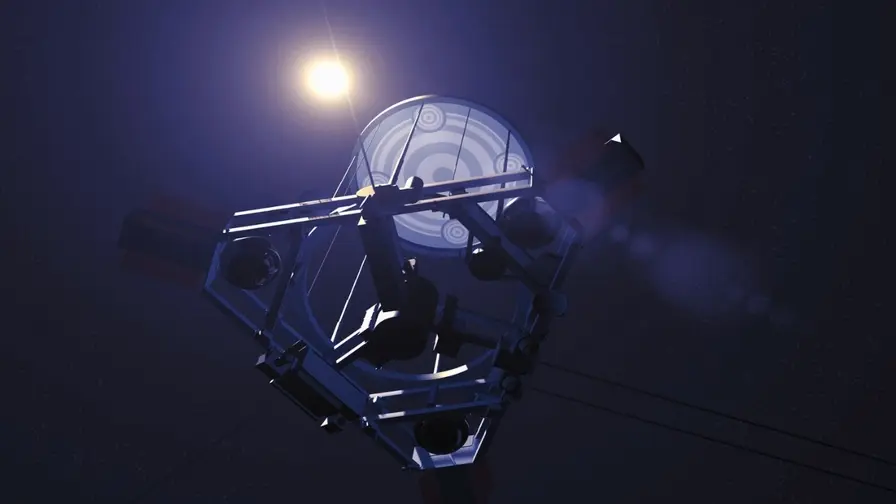
The Lucy encounter also served as a check on spacecraft operations and instruments ahead of the mission’s primary goal: visits to the Jupiter Trojan asteroids. Everything aboard Lucy performed as planned, providing confidence that the spacecraft can handle the long cruise and the tighter choreography required to study the Trojans, objects believed to be even older and better preserved than many main-belt fragments.
Expert Insight
"A tumbling, bilobate pebble may seem modest, but Donaldjohanson is a key chapter in a larger narrative about where the building blocks of planets came from," says Dr. Elena Vargas, planetary scientist at the Southwest Research Institute. "The iron-rich clays tell us a window of liquid water existed somewhere in its ancestry, even if briefly. That short wetness changes our hypotheses about how materials were altered and mixed in the early solar system."
"Lucy’s measurements let us compare surface textures, mineralogy, and spin states in ways we could only dream about a decade ago. Each difference we find between objects like Donaldjohanson, Bennu, and Ryugu tightens the constraints on models of planetary formation and migration."
What comes next
Lucy’s story is far from over. After its successful Donaldjohanson encounter, the spacecraft continues toward a suite of Trojan asteroids that orbit near Jupiter’s stable Lagrange points. These Trojans likely preserve material from the earliest epochs of the solar system and could dramatically refine theories about planetary migration and the delivery of volatiles to the inner planets.
Lucy is named after an iconic fossil, and the analogy fits: both reveal fragments of an origin story written long ago. By combining rotational dynamics, surface morphology, and mineral chemistry, scientists can reconstruct sequences of events—collisions, reassembly, heating, transient watery episodes, and the gentle but relentless influence of sunlight.
Small bodies are not simple. They are chronicles.
Conclusion
Donaldjohanson is modest in size but rich in information. Its bilobate shape, tumbling rotation, and iron-rich clays provide a compact record of collisional formation, YORP-driven spin evolution, and brief aqueous alteration. When placed alongside Bennu, Ryugu, and the upcoming Trojan sample of knowledge from Lucy, this single peanut-shaped rock helps to fill gaps in our picture of solar system history—showing how differences in time, location, and thermal history produce the diverse family of small bodies we see today.
Lucy has turned a brief flyby into long-lived insight. The mission’s data will be mined for years, and each new analysis will refine the story this wobbling peanut has to tell about water, collisions, and the slow hand of sunlight.

“My work centers on sustainability, energy, and environmental science — examining how innovation can lead to a greener future.”

Discussion
Leave a Comment
Comments (4)
Cool find, but feels a tad overhyped. one flyby snapshot and spectra = promising, not definitive. hoping the Trojan work gives broader cont...
i modeled YORP in grad school, and yeah the timescales here check out. still, the idea that sunlight can flip a peanut is delightfully absurd lol
Iron-rich clays from a flyby? sounds compelling but is the spectral signature unambiguous? could be mixed surface material or calibration quirks, no?
wow, a wobbling peanut in space? that's wild. sunlight literally nudged it into a drunk spin over millions of years... kinda poetic, kinda sad for the poor rock