
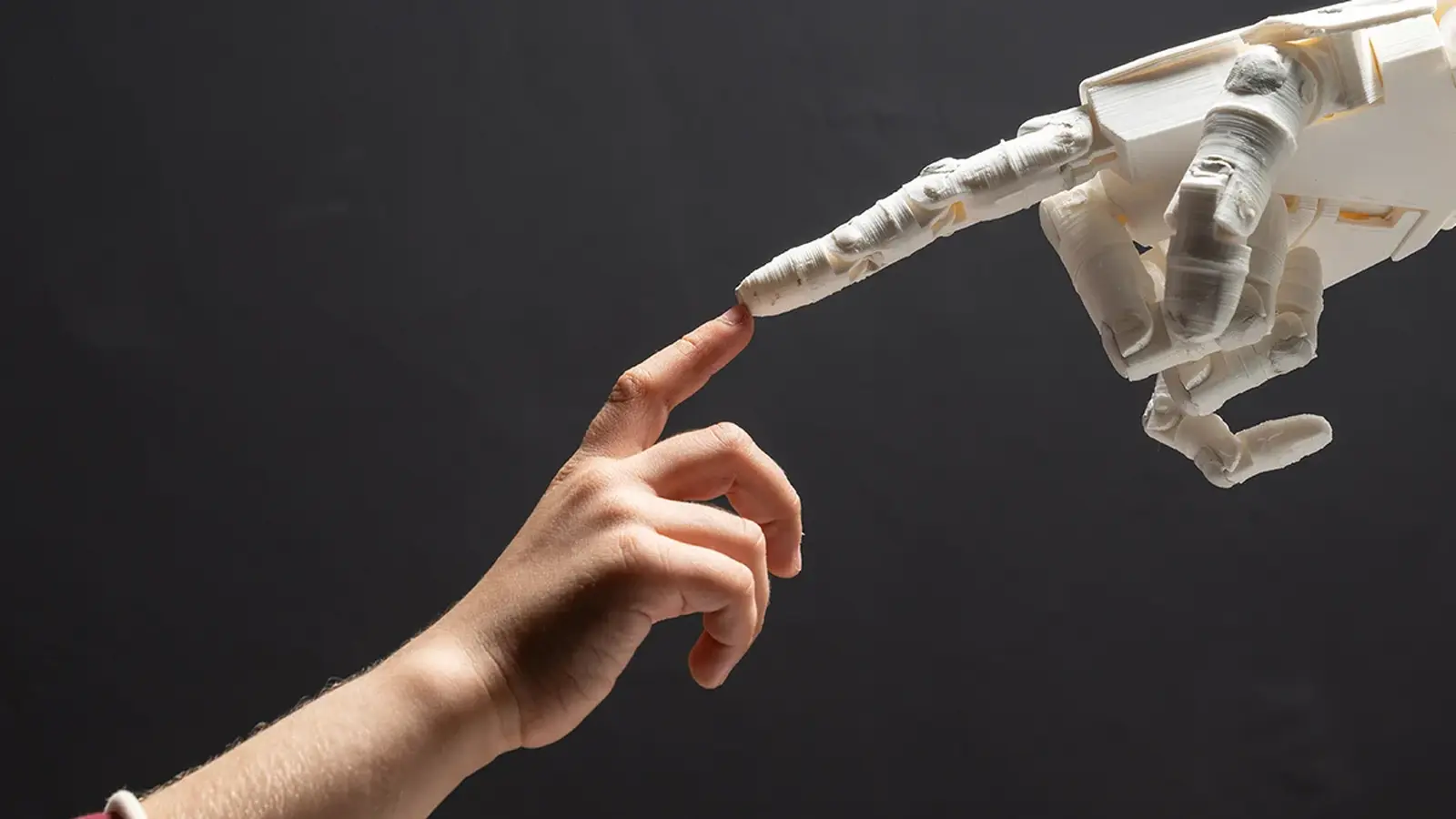
How Chatty Bots Are Quietly Shaping Our Behavior and Speech
Imagine explaining a complicated problem to a customer support agent and, after dozens of similar exchanges, finding your own replies shorter, calmer, and oddly predictable. You do not notice the shift at first. Then someone points it out. You pause. That nudge is the kind of slow change a new theoretical study calls attention to.
Why customer-support AI matters for how we express ourselves
Researchers writing in AI & Society argue that frequent interactions with customer-service bots can nudge people toward language and behavior that these systems process more easily. The team has coined a term for the effect: "robotoid humanness." It captures the idea that, as artificial agents learn to imitate conversational cues, people may start to imitate the agents in return.
On paper this is simple. Social robots and chat systems are optimized to produce clear, predictable responses. They mirror politeness, structure replies, and personalize follow-up questions. That design improves efficiency. It also creates a feedback loop where the machine responds best to a version of the human that is itself less idiosyncratic.
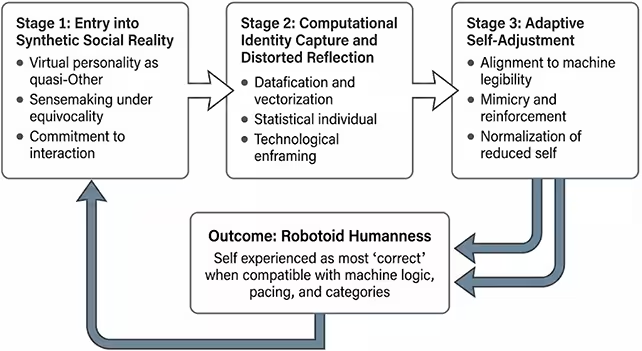
"Social robots for customer service settings are designed to mimic gestures, speech, and emotional cues to elicit cognitive and emotional responses from customers," says Inci Toral-Manson, a marketing researcher at the University of Birmingham. "Our research explores how dealing with these anthropomorphized robots can create a bidirectional influence, where robots become more like people, and people become more like robots, which we call 'robotoid humanness'."
How the mechanism might work
The study is theoretical rather than experimental, so it offers a framework rather than definitive evidence. Still, the mechanism the authors describe ties together familiar concepts: mirroring, reinforcement, and algorithmic personalization. Human beings naturally mirror social partners. Machines can reward certain speech patterns by responding faster, more accurately, or with more empathy when prompts follow a preferred format. Over time, the authors suggest, people might internalize those favored formats.
Mirroring and algorithmic rewards
When a person mirrors another, they build rapport. Machines exploit that by adopting consistent, readable behavior. Machine learning systems then adapt to user inputs, amplifying behaviors that produce desirable outcomes, such as faster problem resolution. The more predictable the conversation, the better the system performs. That predictability can encourage people to prune the quirks from their own communication.
Selcen Ozturkcan, a management engineer at Linnaeus University, frames the cycle succinctly. "The consumer acts, the robot responds, and with repeated exposure, in time the consumer internalizes the exchange," he says. “Machine learning and AI can amplify this process, adjusting robot behavior based on user input, enabling more personalized and human-like mimicry from the robot.”

What this might mean for identity and conversation
Picture two kinds of feedback. One is messy human feedback: surprising, contradictory, sometimes abrupt. The other is algorithmic feedback: consistent, statistic-driven, oriented toward an optimal outcome. The research team argues that repeated exposure to the latter could narrow the range of ways people present themselves, because algorithms reward certain signals and ignore others.
That is where concern emerges. The human brain is not an AI. Individuality, indirectness, or emotional overflow are part of how people communicate, interpret, and invent. If large-scale, everyday interactions increasingly favor streamlined, algorithm-friendly behavior, certain modes of expression could fade from routine use. The authors caution that such an effect would change not only style but potentially the informational richness of conversations.
Jean-Paul de Cros Peronard, a business development scientist at Aarhus University, emphasizes the practical stakes: "Robots and AI are now commonplace in customer service. So it is important that we understand how people interact with them for businesses to use the technology at their disposal to best effect, whilst remaining ethical."
Expert Insight
Dr. Maya Karim, a cognitive scientist who studies language and technology, offers this perspective: "We should think of this as a cultural shift, not a technological glitch. Tools change habits. The question is which habits we want to encourage. If convenience wins every time, we risk narrowing conversational diversity. Designing systems that tolerate, and even reward, unpredictability could preserve the richness of human speech."
The comment is hypothetical but grounded in observable patterns from other domains where technology shapes behavior, such as search engines prioritizing concise queries or social platforms privileging short, repeatable content.
Implications and next steps
The authors underline that testing is needed. Longitudinal experiments, cross-cultural comparisons, and metrics that capture expressive range would help move the idea from theory to evidence. For businesses and policymakers, the findings suggest a need to balance efficiency with diversity. For designers, the message is to consider what conversational styles AI systems reward and to explore designs that preserve human nuance.
In practice, that could mean building chat systems that accept a wider range of phrasing, training models on diverse conversational samples, or offering deliberately playful or nonstandard interaction modes to counterbalance efficiency-optimized responses.
Conclusion
We are already steeped in AI-mediated conversations. This theory asks us to pay attention to small, cumulative effects. The machines shape behavior by rewarding it. The choice is whether we spot that influence early and design our systems and policies to protect the messy, surprising, and inventive parts of human communication.

“My work centers on sustainability, energy, and environmental science — examining how innovation can lead to a greener future.”

Discussion
Leave a Comment
Comments (2)
Worked helpdesk for years, yup this. Customers get clipped, polite, boring, and we adapt too. weird but true
Wait so we're literally training ourselves to sound like bots? seems plausible, but where's the hard data, and who's policing this shift lol