
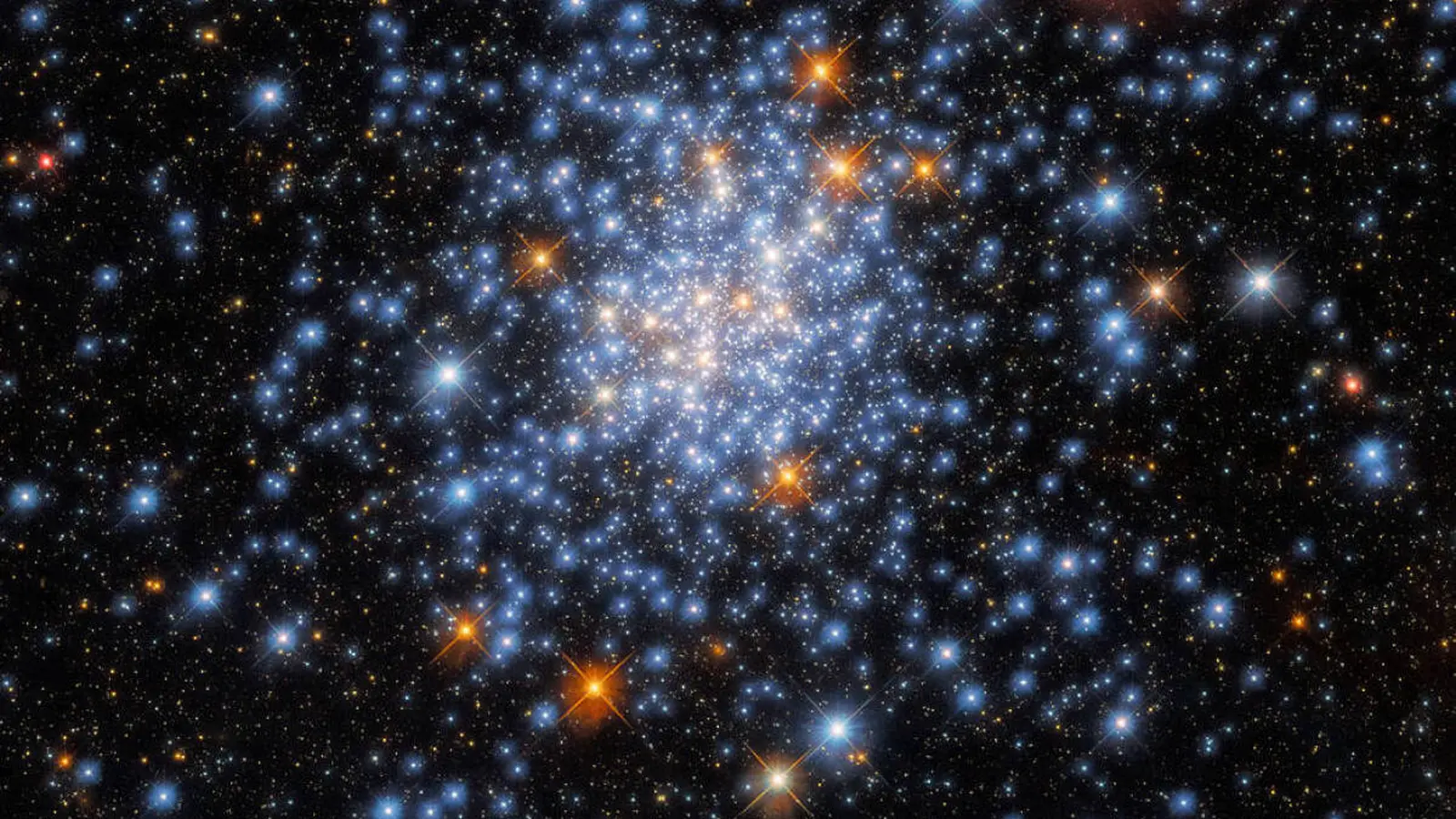
A burst of color from the outer reaches of our galaxy looked for a moment like a patriotic firework: blistering blue points, softer red embers, and a tight, glittering cluster that has been orbiting the Milky Way for almost the entire history of the cosmos.

Ancient stars shine in red, white, and blue from a globular cluster almost as old as the universe itself in this image from NASA’s Hubble Space Telescope.
That cluster, NGC 6426, sits in the Milky Way’s halo and was released by NASA’s Hubble Space Telescope as a visual salute to a national milestone. The image is attention-grabbing on its own terms, but its real value lies in the story it helps tell about how stars—and entire galaxies—came to be.
Why one picture can change how we see the past
Globular clusters are dense, spherical gatherings of stars bound together by gravity. Ours contains roughly 150 such clusters, relics of the early universe. NGC 6426 is one of the oldest of the bunch. At roughly 13 billion years old, its stars formed when the universe was still in its youth. Think of it as a living fossil: a concentrated archive of conditions from an era when hydrogen and helium dominated and heavier elements were rare.
Star color in the Hubble image is not decoration. It is information. Blue stars are hotter. Red stars are cooler. Filters on the telescope pick out different wavelengths, and those selections get translated into the palette you see. But color also hints at composition. The stars in NGC 6426 have low metallicity, which means they contain only trace amounts of elements heavier than hydrogen and helium. That low metallicity is what astronomers expect for objects that formed near the dawn of time.
Low metallicity is a cosmic fingerprint. It tells us these stars were born before generations of supernovae seeded the galaxy with iron, oxygen, silicon, and other heavier elements. When massive stars exploded, they scattered those elements across space and made later-born stars more chemically complex. But here, in NGC 6426, we see predominantly the simpler chemistry of the early universe.
Two populations in one cluster
There’s another complexity hiding in the light: evidence for two chemically distinct groups of stars inside NGC 6426. That suggests the cluster did not form in a single, instantaneous burst. Instead, a first generation of massive stars may have lived fast and died young, exploding as supernovae and enriching the cluster’s gas, which then went on to form a second generation. It is a compact, accelerated replay of stellar recycling—the same process that, on a grander scale, builds up the elements necessary for planets and life.
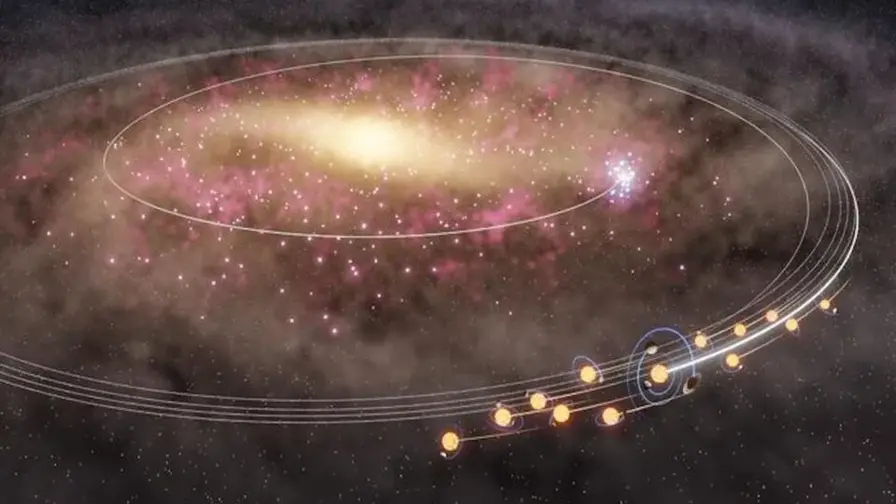
Why does this matter for galaxy formation? Because globular clusters like NGC 6426 are fossils preserved in the halo. By dating them precisely and mapping their chemical signatures, astronomers can reconstruct which parts of the Milky Way formed in place and which arrived as the remnants of smaller galaxies that merged over time. Each cluster becomes a data point in the galaxy’s family tree.
Hubble’s role and what comes next
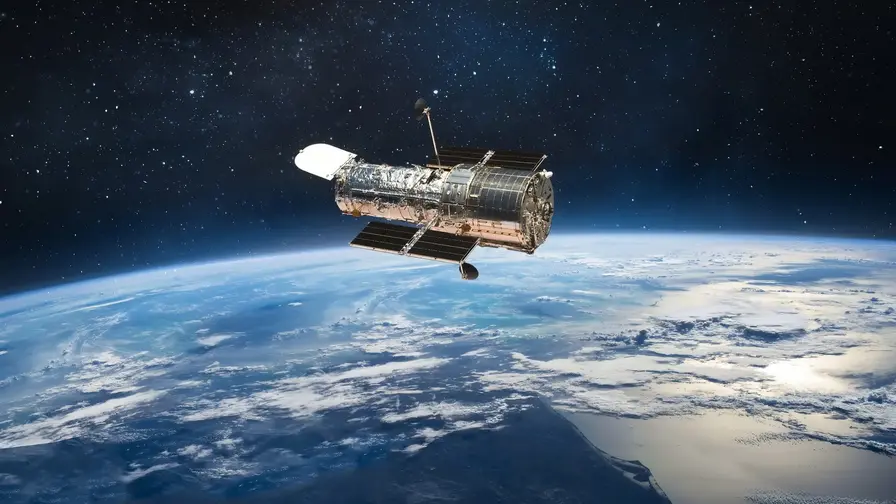
Hubble took this image as part of a wider survey of halo globular clusters. The telescope has operated for more than three decades, repeatedly rewriting textbooks with sharper views and unexpected discoveries. Its work is now complemented by the James Webb Space Telescope, which probes longer wavelengths, and by the upcoming Nancy Grace Roman Space Telescope, scheduled to launch this summer. Together, these observatories form a toolkit for peeling back galactic history at different scales and in different colors.
Observations of clusters like NGC 6426 do more than satisfy curiosity. They refine stellar evolution models, constrain the timeline of element formation, and help calibrate distance measurements that underpin cosmology. Every precise age estimate for a globular cluster tightens the constraints on how and when the Milky Way assembled its mass.
Expert Insight
"NGC 6426 is a small but crucial timestamp in the galaxy’s history," says Dr. Laura Mendes, a fictional astrophysicist specializing in stellar populations. "When we see two chemical populations inside such an old cluster, we are watching chemical evolution happen in miniature. That tells us the processes that shaped the early Milky Way were already active and efficient, even in compact systems."
Her point captures why astronomers return to these images. A single snapshot can reveal formation pathways, internal dynamics, and the chemical recipes that led from simple gas to complex worlds. The fireworks are pretty. The science is deeper.
Where this leads
Hubble’s image of NGC 6426 is both a public-facing celebration and a scientific asset. The colors draw attention. The spectra and photometry provide the data. As telescopes refine ages and chemistries, the Milky Way’s story will come into sharper focus: not as a single formation event but as a layered, messy process of births, deaths, and mergers. NGC 6426 is one of the earliest pages of that history, still readable in light that has traveled for billions of years.

“The cosmos has always fascinated me. I write about space missions, astronomy, and the technologies pushing humanity beyond Earth.”

Discussion
Leave a Comment
Comments (2)
is this even true? two chemical populations in such a small cluster.. could observational limits fool us, or do supernovae explain it? ppl smarter than me pls explain
wow that cluster is like a cosmic time capsule. colors pop, but the chemistry bit blew my mind. 13 billion years?! makes me feel tiny, and curious.