
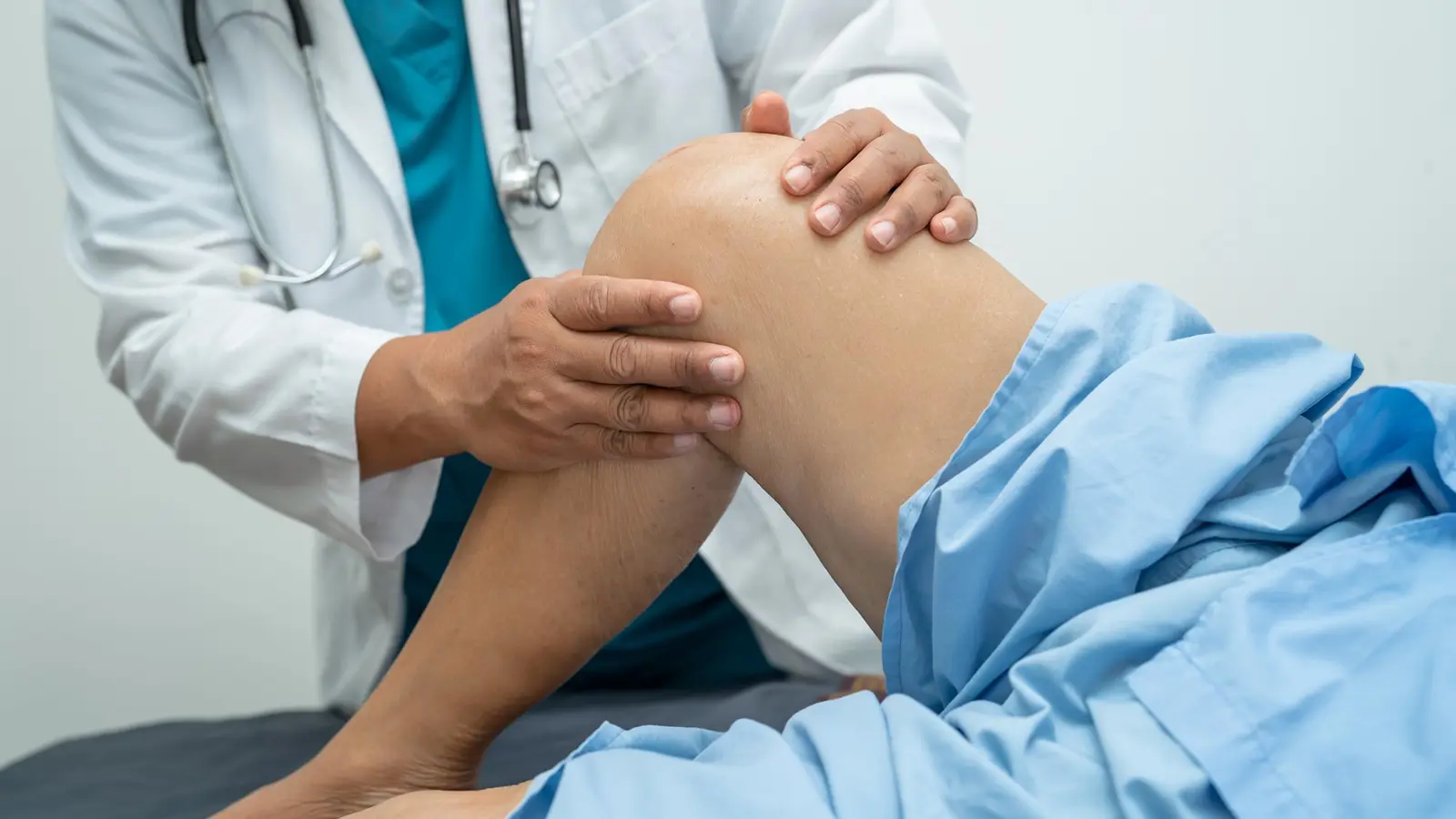
The image is striking. A robotic arm hovers with millimetre-level accuracy while a surgical team watches intently. Precision looks like progress. Yet the largest randomized trial to date found that extra accuracy did not translate into less pain or better movement for patients one year after knee replacement.
Robot-assisted knee replacement can place implants with greater precision, but the largest randomized trial of its kind found that accuracy alone did not improve pain, mobility, or recovery after one year.
When accuracy outpaces results
RACER-Knee, a UK-wide randomized controlled trial, set out to test a simple idea: if a robotic arm helps surgeons place implants more precisely, patients should feel the benefits. The study answered part of that question. It showed that robotic assistance does allow surgeons to hit their planned positions with higher fidelity, but that technical advantage did not produce measurable improvements in pain, mobility, or the subjective experience of the joint after 12 months.
The trial was coordinated by the University of Warwick together with University Hospitals Coventry and Warwickshire NHS Trust, and published in The Lancet. It compared conventional total knee replacement with surgery assisted by the Stryker Mako system, a robotic-arm platform used in many centres worldwide. The randomized, double-blind design included 339 patients treated by 33 surgeons across 10 hospitals in the UK, making RACER-Knee the largest study of its type to date.
Mako robotic system in use. Credit: UHCW NHS Trust
What did the researchers measure? The primary endpoint was the Forgotten Joint Score, a patient-reported metric that estimates how often someone is aware of their artificial knee during daily life. Secondary outcomes included walking ability, pain in the early postoperative months and at one year, complications, and rates of reoperation.
After 12 months the story was consistent. Patients who had robot-assisted surgery and those treated conventionally reported similar Forgotten Joint Scores. Walking tests showed no meaningful differences. Pain levels in hospital, during the first three months, and at one year were comparable across groups. Serious adverse events were not more common with the robotic approach, which supports a safety profile on par with traditional techniques.

Why precision alone might not change how a knee feels
On the surface the result is puzzling. Surgeons can place components more precisely with a robotic arm and can vary cutting angles and depths to better match a patient’s anatomy. Why does that technical win not produce clinical gains within the first year?
One reason is biology. Recovery from knee replacement depends on tissue healing, muscle strength, neural adaptation, and pain processing. Implant position matters, but it is one factor among many. Small improvements in alignment may take years to affect wear patterns, implant longevity, or the need for revision surgery. In the short term, patient outcomes are heavily influenced by rehabilitation, pain control, and preoperative condition.
Another factor is what surgeons still do. Even with robotic guidance, decisions about soft tissue balancing, implant sizing, and the final placement rest with the surgeon. The robot is an assistant, not an autonomous clinician. If a given alignment philosophy or surgical target is not optimal for long-term function, more precise execution of that same target will not magically produce better patient satisfaction.
Mako system being prepped for surgery. Credit: UHCW NHS Trust
Cost, time, and the question of value
The trial also tracked procedural time and cost. Robot-assisted procedures took on average 10.5 minutes longer than conventional operations. The additional cost of using the robotic system evaluated in the study was about €1,120 per case. Under current NHS thresholds for cost-effectiveness, that extra expense was not justified by improved outcomes during the first year.
That finding does not condemn robotic platforms outright, but it forces a clear question on scale and investment. Health systems must weigh the capital and running costs of new technologies against measurable benefits for patients. If better implant positioning leads to fewer revisions 10 or 15 years down the line, the economics could shift. If it does not, the extra time and cost will be harder to justify.
Long-term monitoring and what comes next
RACER-Knee will continue to follow participants for up to ten years to see whether differences emerge over the long term. Longer observation could reveal whether robot-assisted alignment reduces wear, lowers revision rates, or produces other late advantages that are invisible at 12 months.
Researchers emphasized that the current results are not a dismissal of robotic systems. Professor Andrew Metcalfe of Warwick Medical School noted that completing a large, randomized trial is an important milestone that will prompt further studies. Professor Edward Davis from the Royal Orthopaedic Hospital suggested that we need a better understanding of the optimal implant position for each patient so that robotic precision can be matched with the right target. Anthony Gordon of the NIHR highlighted that rigorous evaluation at scale is crucial to make intelligent decisions about deploying new health technologies.

Mako robotic system assisted surgery.
Scientific context: how knee replacement outcomes are judged
Total knee arthroplasty is one of the most common elective operations worldwide, typically performed for end-stage osteoarthritis. Surgeons aim to restore joint alignment, relieve pain, and allow patients to return to normal activities. Success is measured by patient-reported outcomes, objective function tests, complication rates, and implant survival. Precision in implant placement has long been assumed to influence these measures, but precision is only useful if it is targeted to an outcome-relevant goal.
Technologies such as navigation systems, patient-specific instruments, and robotics all try to reduce variability. What RACER-Knee shows is that reducing variability alone is not always sufficient. The next step is to define the patient-specific alignment or soft tissue strategy that will convert technical accuracy into better lived experiences for patients.

Expert Insight
Dr. Claire Hammond, an orthopaedic surgeon and clinical researcher not involved in RACER-Knee, comments: "Robotics gives us a scalpel with a ruler. That is valuable. But a ruler does not tell you where to draw the line. We now need trials that test not just the tool, but the surgical philosophy it is executing. Which alignment strategy, when executed precisely, actually improves pain or function? Those are the questions that will determine the clinical value of these systems."
Conclusion
RACER-Knee delivers a clear, cautious lesson. Robotic assistance improves surgical accuracy, but accuracy by itself did not produce better patient outcomes at one year and added time and cost to the procedure. The technology remains promising, especially if future work can pair precision with personalized surgical targets that matter to patients. For health systems and surgeons the priority is now twofold: follow outcomes over the long term, and design studies that test not just whether robots are more precise, but whether that precision can be harnessed to deliver measurable, meaningful improvements in patient lives.


“The cosmos has always fascinated me. I write about space missions, astronomy, and the technologies pushing humanity beyond Earth.”

Discussion
Leave a Comment
Comments (3)
Feels overhyped tbh. Extra €1,100 and 10 mins, for no 1yr gain? maybe longterm payoff but skeptical 🤔
Not convinced, is this study missing something? 10 years maybe, short term isn't everything but still... weird that no pain benefit
wow, robots hit their marks but patients feel the same? kinda shocking. precision without the right target seems useless, we need smarter goals not just gadgets