
Imagine standing beside a stove that never quite cools. The burner flicks on and off, but the pan keeps getting hotter—slowly, quietly, cumulatively. That image captures a subtle but consequential finding from researchers at William & Mary’s Virginia Institute of Marine Science and the Batten School of Coastal & Marine Sciences: marine heatwaves are often embedded in broader, persistent warming episodes that traditional metrics miss.
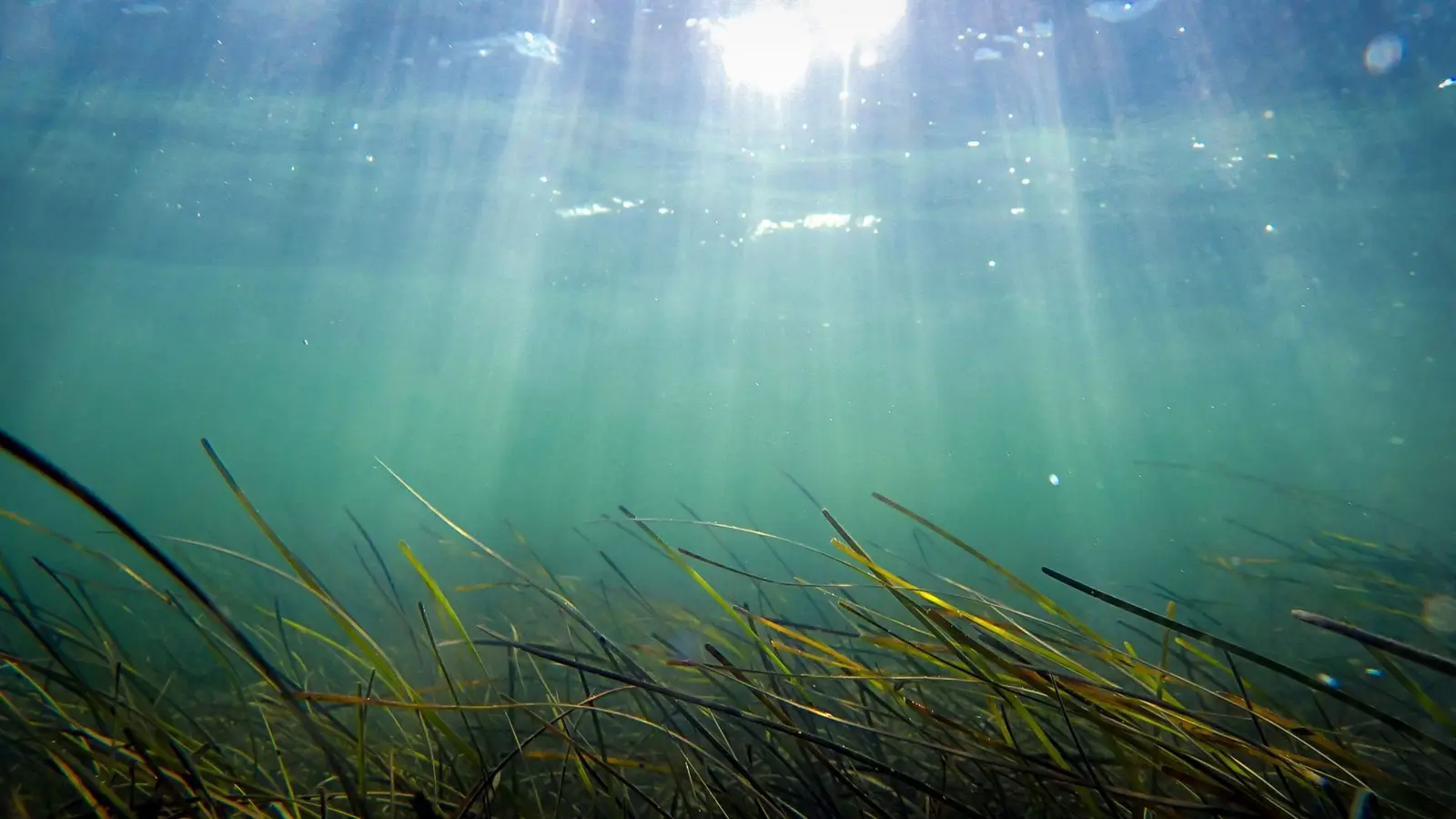
Periods of sustained warming can last for weeks to months at a time, with a distinct marine heatwave embedded between them and significant implications for estuarine ecosystems and habitats like seagrass beds.
The team analyzed long, high-frequency temperature records from 20 U.S. estuaries and tracked more than 2,500 formally identified marine heatwave events across two decades. Their key move was to stop treating each heatwave as a self-contained spike and instead to measure the warm intervals that bracket it. The result is a metric of cumulative heat exposure that captures the full thermal history organisms actually experience.
Why does that matter? Because biological stress is a function of intensity and duration. A short, sharp rise in temperature can be dangerous on its own. But prolonged, moderate warming can be equally damaging—or worse—when it compounds other stressors such as low oxygen or nutrient shifts that favor harmful algal blooms. If monitoring and experiments only look at the narrow heatwave window, they can understate total exposure by a large margin.

Overall sea surface temperature (SST) anomaly reflects the pre- and post-event cumulative heat exposure outside of MHW events.
When a heatwave is part of a longer fever
Lead author Ricardo Utzig Nardi found that many marine heatwaves sit inside longer stretches of anomalously warm water. The formally defined event—the period when temperatures exceed a regional threshold—may begin in the middle of an upward trend and end while temperatures remain elevated. In other words, the heatwave is not the full story; it is one chapter in a longer season of heat.
"We noticed warm-water anomalies on either side of the heatwaves and realized they were embedded within larger warm intervals," Nardi said. The analysis demonstrated that the pre- and post-heatwave phases often add as much cumulative thermal load as the heatwave window itself. Across their dataset, traditional methods that count only the formal event understated total heat exposure by roughly 150 percent on average—a gap with major ecological consequences.

Think of marine organisms like sun-sensitive swimmers. You do not judge sunburn risk by the noon hour alone; you look at the whole afternoon spent in the sun. For fish, seagrasses, and invertebrates, the biological response depends on both peak warmth and how long the water stays warm. Extended exposure can weaken resilience, change metabolic rates, alter species interactions, and tip habitats toward collapse.
Patterns that stretch ocean warming
Not all extended warm periods look the same. The researchers separated events into two categories based on how warming was organized in time. About two-thirds of marine heatwaves were "individual" events: they occurred within roughly 60 days of surrounding elevated temperatures. The other roughly one-third were "compound" events, where warming stretched approximately 90 days before and after the formal heatwave window.
Compound events are the extreme case. They produced more than three times the cumulative heat exposure of the heatwave alone. That matters for laboratory work, for models, and for managers. Many experimental studies mimic heatwaves by raising temperatures for days or a few weeks. Those protocols capture acute responses, but they do not reproduce the drawn-out thermal burden that organisms face in nature when pre- and post-warm phases are included.
What the numbers imply
- More than 2,580 marine heatwaves were evaluated across 20 estuaries and 20 years of records.
- Standard event-based metrics underestimated cumulative exposure by roughly 150 percent on average.
- Compound events, though less frequent, delivered disproportionately higher cumulative heat.
These patterns encourage a shift in how researchers design experiments and how managers interpret monitoring data. If the objective is to estimate vulnerability or forecast die-offs, it is essential to account for extended warming, not just the headline heatwave.

Lead author Ricardo Utzig (right) conducted the study as part of his master’s thesis at W&M’s VIMS & Batten School of Coastal & Marine Sciences under academic advisor Piero Mazzini (left).
Why this changes risk assessments and responses

Longer thermal exposure amplifies the risk of compounding ecological stress. Low dissolved oxygen, shifts in salinity, and blooms of toxic algae can all become more likely or more intense when waters remain warm for extended intervals. Habitats such as seagrass meadows—which provide nursery grounds and carbon sequestration—and shellfish beds are especially vulnerable to prolonged warmth because recovery windows shrink and cumulative metabolic strain mounts.
The research also points to the value of sustained monitoring. Much of the study's insight came from long-term, high-frequency temperature records provided by NOAA's National Estuarine Research Reserve System. Those datasets allowed scientists to detect multi-week and multi-month trends that short records or sparse sampling would have missed. Robust observational networks make it possible to ask bigger, more consequential questions.
Marine heatwaves are tied to larger climate variability. Earlier and parallel work by the same team linked increases in East Coast heatwaves to climate patterns such as El Niño and the Pacific Decadal Oscillation. Other research from the group defined so-called vertical marine heatwaves—where subsurface layers heat independently of the surface—adding layers of complexity to how warming manifests in bays and estuaries.

Marine heatwave events can occur distinct from or embedded within pre- and post-event phases, closely spaced MHWs forming compound events.
Expert Insight
'Extended warming changes the playing field,' says Dr. Elena Ramirez, a marine ecologist who studies coastal habitat resilience. 'When models or lab experiments omit the pre- and post-heat phases, they can underestimate mortality rates and misjudge recovery times. This study gives us a practical framework for measuring what organisms actually endure and for redesigning experiments to reflect reality.'
Dr. Ramirez points out that management responses—temporary fishery closures, seagrass restoration timing, or early-warning advisories for aquaculture—depend on accurate exposure estimates. 'Policy must follow the science,' she adds. 'Accurate cumulative metrics sharpen both risk assessment and operational decisions.'
Conclusion
Reframing marine heatwaves as embedded episodes within longer warm intervals changes how scientists, managers, and communities should think about ocean warming. The cumulative-heat framework developed by the William & Mary team offers a more faithful measure of thermal exposure and exposes how much we may have been undercounting risk. That matters for experimental design, for ecological forecasting, and for decisions that affect fisheries, protected habitats, and coastal economies.
As marine heatwaves grow more frequent and intense under climate change, measuring the full burden of warming will be essential. Not just the peak. Not just the headlines. The slow, lingering heat matters too. It is the difference between a single bad season and a long-term shift in ecosystem health.

“My work centers on sustainability, energy, and environmental science — examining how innovation can lead to a greener future.”

Discussion
Leave a Comment
Comments
No comments yet. Be the first.