
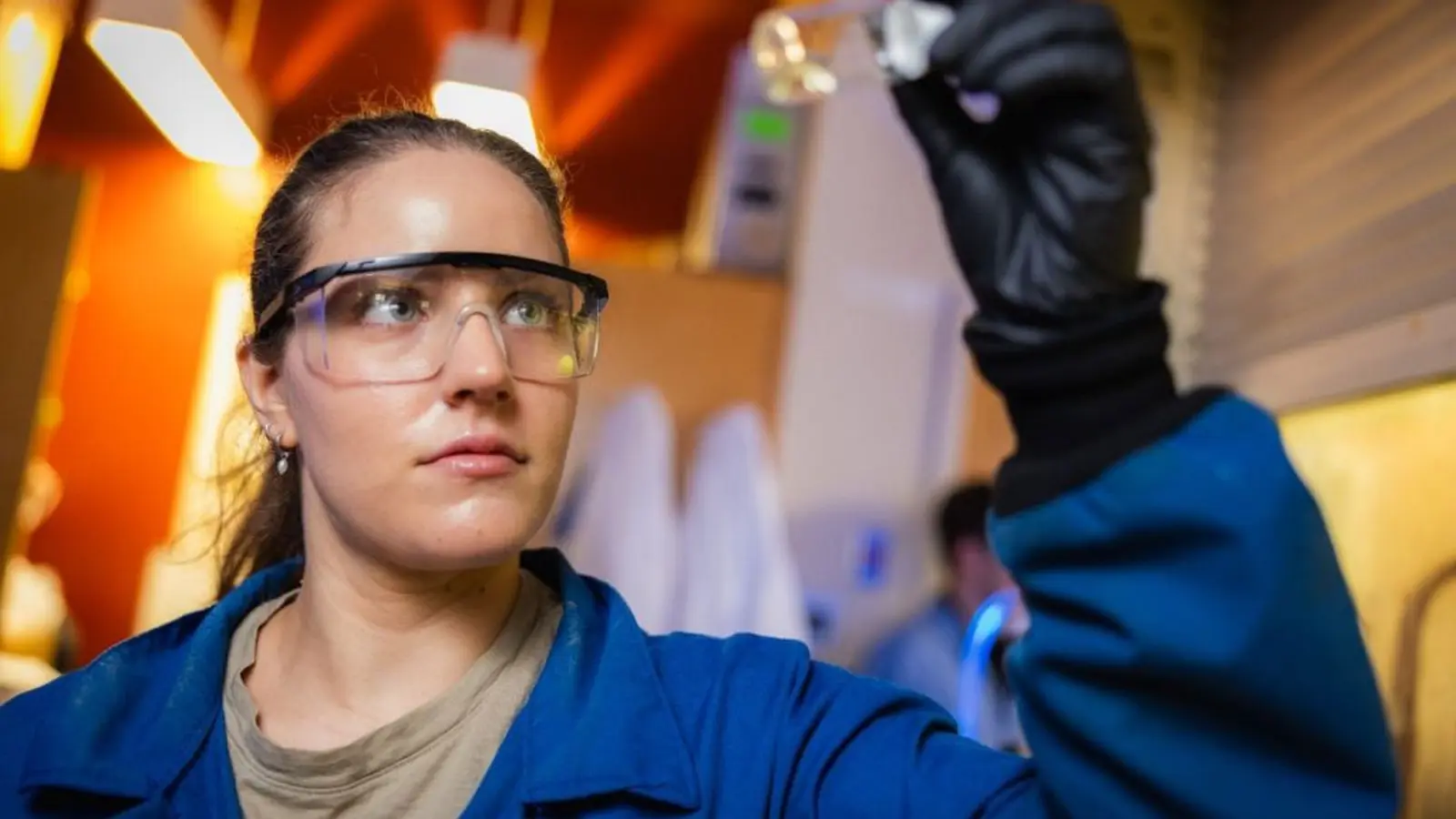
A credit card, a length of PVC pipe, and a lab beaker walk into a room. It sounds like the start of a joke, until you learn those objects can become a high-value industrial oil. That transformation—taking one of the planet's hardest-to-recycle plastics and turning it into a synthetic lubricant component—now has a working proof of concept from a team at Virginia Tech.
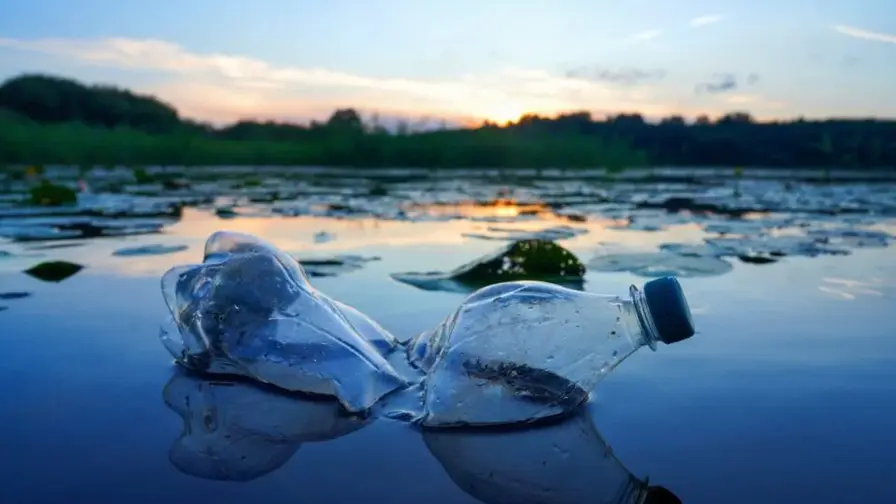
Polyvinyl chloride, or PVC, is everywhere: background plumbing, window frames, flexible credit cards, cable jackets. It is also chemically stubborn. PVC contains chlorine atoms and a cocktail of additives that vary by manufacturer, and that variability makes conventional recycling difficult, costly, or both. The result is mountains of PVC that often end up in landfills or incinerators.
From soft, gooey scraps to useful oil
What the Virginia Tech team discovered sounds simple only after you see the work behind it. They dissolved discarded PVC in a solvent, added aluminum trichloride and alpha-olefins, and heated the mix to about 158 degrees Fahrenheit, or roughly 70 degrees Celsius, for a few hours. The chemical steps replace chlorine atoms and progressively shorten polymer chains. The output is a viscous, polyalphaolefin-like oil—an ingredient widely used in synthetic lubricants, including engine oils.
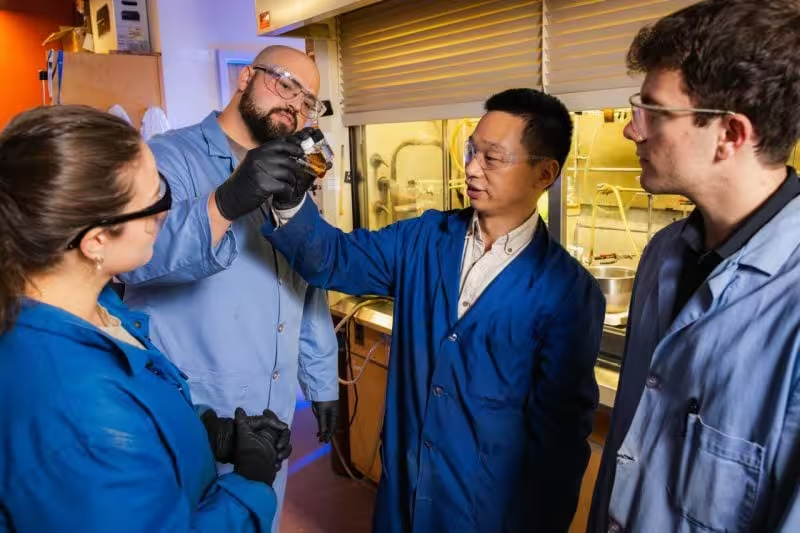
Researchers in the Liu Lab examine samples of engine oil created from upcycled plastic waste.
There were blind alleys. Early attempts yielded a soft, tacky material that felt like a failure. Rather than discard the idea, the team changed perspective: instead of trying to engineer a polymer with the right properties, they deliberately reduced chain length further until the goo became a liquid with useful lubricating characteristics. That pivot turned a setback into the central insight of the project.
How the chemistry actually works
The process uses Lewis acid catalysis to remove chlorine and graft new hydrocarbon segments. Aluminum trichloride acts as the catalyst, alpha-olefins provide hydrocarbon fragments, and heat accelerates the transformations. Over roughly three hours the long, chlorine-rich PVC chains break into shorter, saturated molecules that resemble polyalphaolefins, known in industry jargon as PAOs.
Why PAOs matter
PAOs are prized in lubricants for thermal stability, low-temperature flow, and consistent viscosity under stress. These properties matter not for glamour but for reliability: the same chemistry keeps lawn mowers quiet, passenger-car engines protected, and jet turbines running smoothly. Producing PAO-like molecules from waste plastic could reduce demand for petrochemical feedstocks and divert hard-to-recycle PVC from disposal routes.

Graduate student Connor Thompson examines a sample of engine oil created from upcycled plastic waste in Greg Liu’s lab. In his left hand, he holds toy plastic frogs similar to those that were used in the process.
Testing and external validation
A lab-made oil is not enough. The team sought independent testing and simulation to assess performance and commercial potential. Samples were analyzed by tribologists at Texas A&M University to measure friction and wear properties. Computational chemistry support from Caltech helped map reaction energetics and predict which molecular fragments would dominate the product. At Virginia Tech, collaborators built simple economic models to estimate what scaling up might look like.

Those tests showed promise: the upcycled oil performed comparably to established PAO basestocks in several key metrics. That does not mean the product is market-ready. It does mean the approach could become a bridge between plastic waste management and lubricant manufacturing.

Graduate student Adrian DiMarco prepares a sample of engine oil created from upcycled plastic waste in Greg Liu’s lab.
Implications and next steps
Two problems intersect here. First, PVC is difficult to recycle at scale. Second, lubricant production carries an environmental footprint and depends on petrochemical inputs. Turning PVC into lubricant components addresses both: it creates a higher-value stream from waste, and it reduces reliance on virgin hydrocarbon feedstocks for certain lubricant grades.
The immediate challenges are practical. Can the chemistry tolerate the wide variety of additives found in real-world PVC waste? Can the solvent and catalyst be recovered and recycled efficiently? How do emissions and lifecycle impacts compare with existing options? Virginia Tech researchers are tackling these questions by refining reaction conditions, improving catalyst recovery, and modeling supply-chain scenarios for industrial adoption.
Expert Insight
"This work links two stubborn problems—PVC waste and lubricant sourcing—in a creative way," says Dr. Elena Márquez, a chemical engineer at the University of Cambridge who studies polymer upcycling. "If the team can demonstrate robust feedstock flexibility and low-energy recovery of catalysts, the approach could scale. The environmental payoffs depend on lifecycle details, but the concept moves recycling beyond mere material recovery to true value creation."
Conclusion
The Virginia Tech study is not a finished product, but a clear demonstration that chemistry can reroute difficult waste streams into industrially valuable molecules. Converting PVC to PAO-like lubricants won’t solve plastic pollution alone. Still, it offers a new toolbox item: a method that finds value in what industry and consumers often consider refuse. With further optimization—especially around catalyst reuse and feedstock variability—this route could become a meaningful component of both circular plastics strategies and more sustainable lubricant supply chains.


“The cosmos has always fascinated me. I write about space missions, astronomy, and the technologies pushing humanity beyond Earth.”

Discussion
Leave a Comment
Comments (2)
Is this even true? scaling costs, solvent loss, catalyst reuse... neat on paper, but full LCA pls before we hype it
wow PVC to engine oil? mind blown. If they can recover catalyst and solvents this could be huge but real PVC waste is a nightmare, additives galore...