
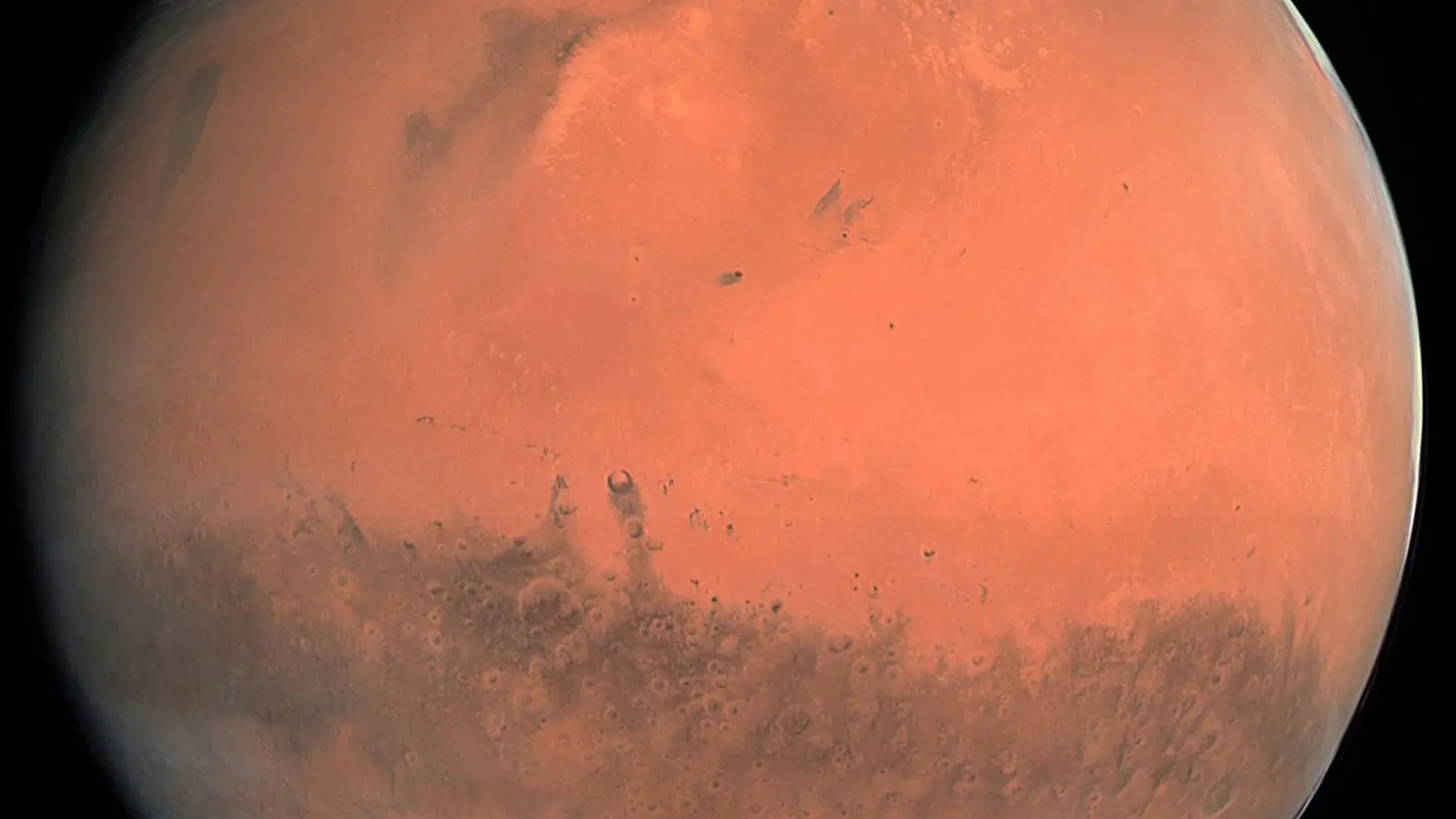
Imagine finding a single chemical fingerprint that could separate a lifeless rock from the remains of a vanished microbial world. That is the kind of high-stakes detective work waiting for the Rosalind Franklin rover when it reaches Mars.

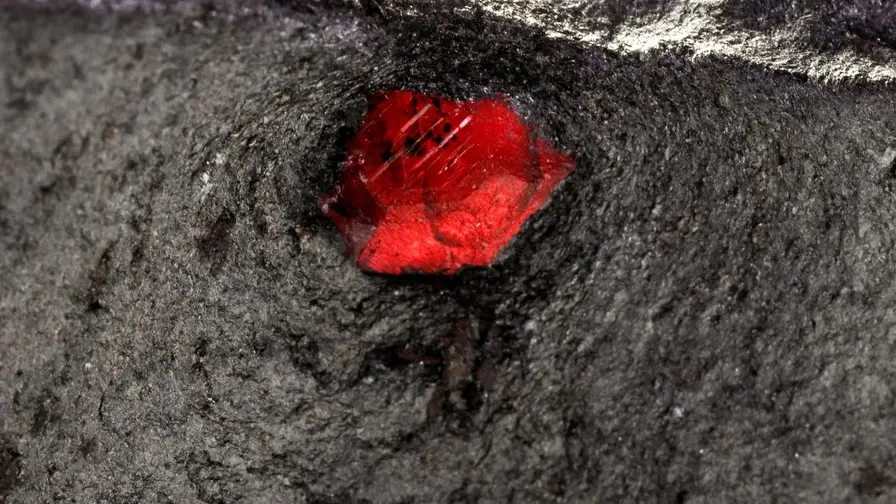
The Murchison meteorite fell in Australia in 1969, breaking into numerous fragments. It belongs to the carbonaceous chondrite group of meteorites. These meteorites are considered to be particularly pristine.
Why chiral molecules matter in the hunt for ancient life
Mars today is a brittle, sunburnt desert. But billions of years ago, it was different: warmer, wetter, and capped by a thicker atmosphere. Those early conditions may have allowed simple life to flourish. The problem is that organic molecules can arise in two very different ways: through biology, or through ordinary chemistry. How do we tell the two apart?
A promising answer lies in chirality. Some organic molecules exist in two mirror-image forms called enantiomers, like left and right hands. Living systems on Earth prefer one hand over the other. That handedness persists in biological remains and, crucially, can act as a biosignature. If we find a large excess of one enantiomer on Mars, that would be a powerful hint that life once steered chemistry there.
ESA’s Rosalind Franklin rover will use MOMA to search for ancient Martian life by analyzing chiral organic molecules.
How MOMA will read Mars’ chemical language
The ExoMars Rosalind Franklin rover carries the Mars Organic Molecule Analyzer, or MOMA, an instrument designed to sniff, separate, and identify complex organics. MOMA is not a single tool but a suite: a gas chromatograph, a mass spectrometer, microfurnaces to vaporize rock samples, and a laser for excitation. Together they let the instrument extract volatile compounds from heated samples and then separate molecular twins by their interactions with a specially coated column.
Separation of enantiomers is subtle. Each mirror-image form interacts slightly differently with the column coating, so they elute at different times. Detecting those differences for molecules that are large, chemically robust, and rare on Mars is technically demanding. That is where recent work from teams in Göttingen, Nice, and at the Max Planck Institute matters: they tested MOMA-style columns on real meteoritic material and succeeded in isolating two stubborn hydrocarbons, pristane and phytane.
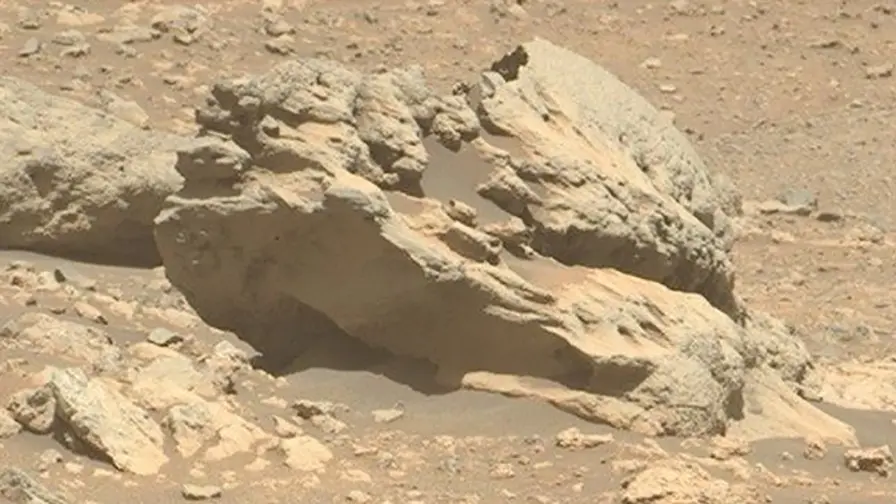
Testing MOMA on a familiar visitor from space
To simulate Martian samples, the research team turned to the Murchison meteorite, a carbon-rich space rock that fell to Earth in 1969 and has long been prized for its organic inventory. Meteorites like Murchison carry a cocktail of ancient compounds that formed in the early solar system; they also collect contamination after landing on Earth. That mix makes the meteorite both a useful proxy and a complicated test case.
The scientists focused on pristane and phytane, two long-chain hydrocarbons often associated with biological decay on Earth. On our planet, these molecules commonly show a dominance of one chiral form when derived from living organisms. In nonbiological syntheses, or when strong geologic alteration has erased biological signals, enantiomers usually appear in roughly equal amounts.
Using laboratory replicas of MOMA’s separation capillaries, the team achieved chiral separation of pristane and phytane — a significant technical milestone because these molecules are chemically inert and difficult to coax apart. The experiments demonstrated both the sensitivity and precision MOMA will need to examine Martian rocks.
But the data contained a twist. The Murchison fragments showed pristane and phytane in equal proportions across their enantiomers. That symmetric mix did not match expectations for biomass-derived contamination at the meteorite’s landing site. Instead, the balance pointed to a different contaminant pathway.
Contamination, atmosphere, and an unexpected signal
The team proposed that atmospheric aerosols — tiny particles produced by burning fossil fuels and other modern industrial processes — deposited additional organics on the meteorite as it fell through and then lay exposed on Earth's surface. In other words, some of the organics in Murchison may have arrived via interaction with Earth's air long after the rock formed in space.
Comparison measurements strengthened this view. Pristane and phytane preserved in oil shales and petroleum-related materials tend to lose any original biological handedness after long burial and thermal processing. Heat and pressure in the Earth’s crust scramble chiral signals. If aerosols from combustion carry petroleum-derived molecules, they could add racemic (balanced) pristane and phytane to meteorite surfaces and obscure any ancient asymmetry.
That finding is not just a footnote for laboratory work. It sounds a cautionary note for Mars exploration: contamination pathways matter, even for rocks from space. Instruments must detect not only molecules, but their context and history. MOMA’s ability to resolve enantiomers — and to do so with the sensitivity shown in these experiments — will be critical for interpreting any chiral imbalance in Martian samples.
What this means for Rosalind Franklin and ExoMars
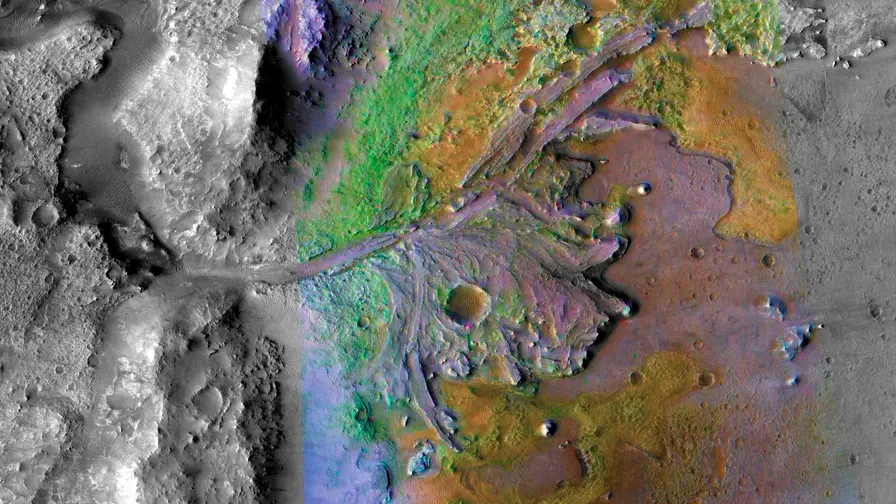
The upcoming Rosalind Franklin mission, now scheduled for a 2030 Martian landing in the clay-rich Oxia Planum region, intends to collect and analyze sediments that once saw flowing water. Clay minerals preserve organics well. If life ever left a chemical trace, clays are among the best places to look.
MOMA’s validated technique offers a clear advantage: it can separate and quantify enantiomers of molecules that survive harsh conditions. If Rosalin Franklin detects a strong chiral excess in pristane, phytane, or related compounds, that result would be a high-priority signal suggesting biological processing. Conversely, a racemic distribution would point toward abiotic origins or extensive post-depositional alteration.
There is another practical takeaway. The Murchison study highlights that contamination from modern terrestrial sources is real and can mimic or mask ancient signatures. For planetary protection and sample handling, the lesson is simple: cleanliness protocols and contamination-aware interpretations must be part of any claim about life beyond Earth.
Expert Insight
Dr. Elena Moreno, planetary chemist and former instrument scientist for a Martian mission, offered a pragmatic view: 'Chirality gives us one of the best chances to distinguish life from chemistry, but it is not a magic bullet. It is the combination of context — the rock, its mineral setting, thermal history — and precise chiral measurements that will let us make a convincing case.' She added that cross-checks with independent techniques will be essential before any extraordinary claim is made.

Starting in 2030, the ESA rover Rosalind Franklin is set to search for traces of life on Mars.
Implications beyond Mars
These results ripple outward. If aerosol-borne organics can alter the surface chemistry of meteorites on Earth, similar processes could affect samples collected on other worlds and returned to Earth, unless stringent containment is used. And the study underscores why in-situ analysis matters: instruments like MOMA can analyze samples in their native environment, reducing some contamination risks inherent in sample-return workflows.
Finally, the experiment reorients part of the research agenda: not only should missions search for organic compounds, they should measure molecular handedness and be designed to interpret racemic versus non-racemic mixtures. That dual focus increases the chance of detecting a reliable biosignature.
Conclusion
Proving that life once existed on Mars remains one of modern science’s toughest challenges. The Murchison meteorite tests are a step forward: they show that MOMA-style instruments can separate fragile chiral signals even for difficult molecules. They also remind us that contamination — whether terrestrial or extraterrestrial in origin — can confuse the story if not accounted for. When Rosalind Franklin rolls into Oxia Planum, it will carry not just hardware but a refined set of questions and lab-proven methods to read Mars’ chemical history.

“The cosmos has always fascinated me. I write about space missions, astronomy, and the technologies pushing humanity beyond Earth.”

Discussion
Leave a Comment
Comments (3)
I used to work in clean labs, and yep, contamination is a nightmare. Nice to see real tests, but sample context is everything
Is the Murchison result really that conclusive? aerosols messing things up seems plausible, right? idk
Wow, chiral signs as life-clues?! If MOMA pulls this off that'd be insane. But contamination scares me...