
Some butterflies refuse to live on a two-week timetable. One species in a closely related group stretches life into nearly a year, while its cousins fade in days. That contrast forced researchers to rethink how diet and heredity shape insect aging.
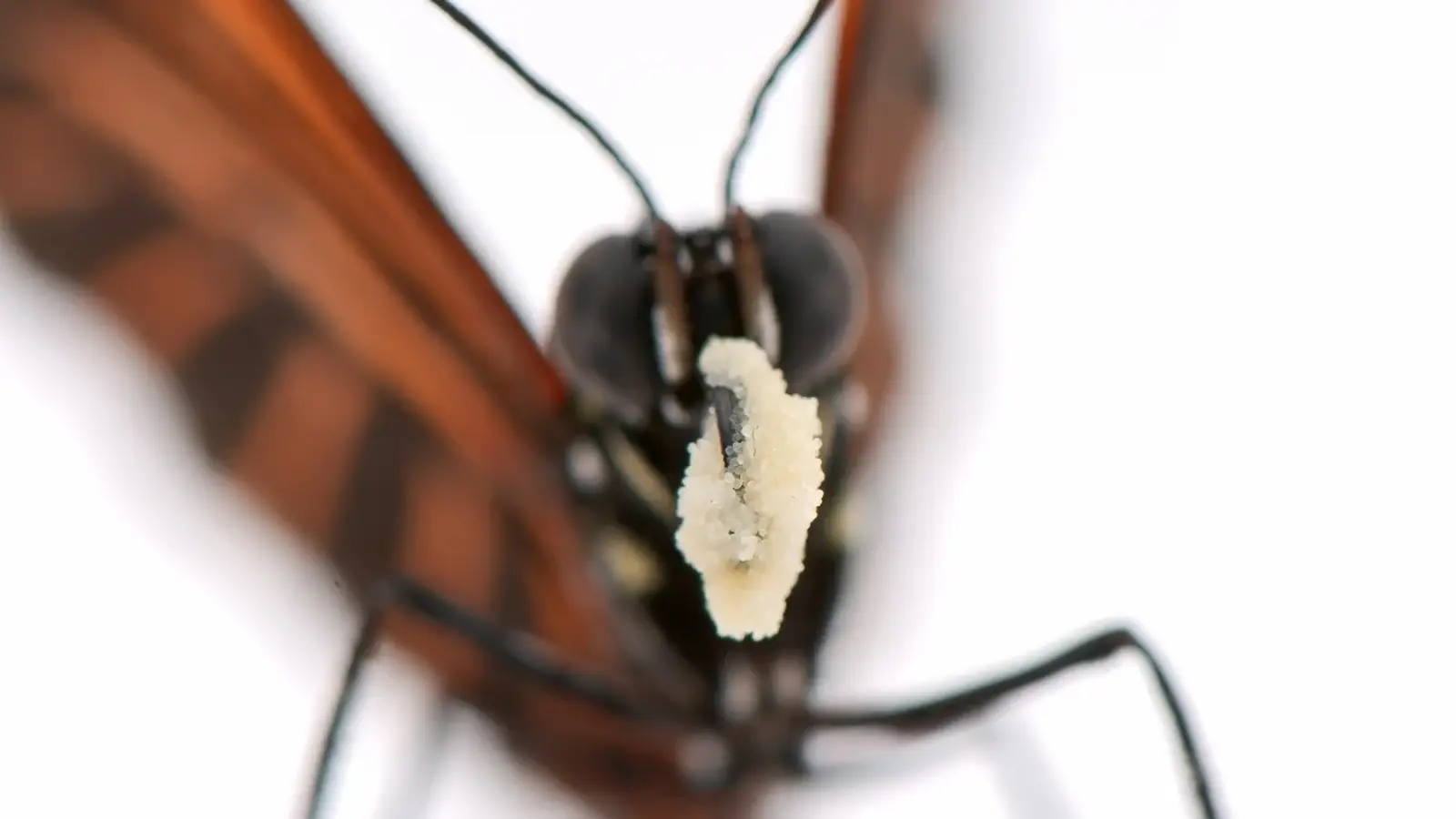
A Heliconius erato butterfly snacking on some of its favorite fare, pollen loaded with immunity-boosting healthy fats and nutritious amino acids.
An unexpected lifespan gap
Field records, captive observations and mark-release-recapture programs were assembled to compare maximum reported lifespans across ten members of the Heliconiini tribe. The result was startling: lifespans ranged from as little as 14 days in Dione juno to 348 days in Heliconius hewitsoni. That degree of variation among such close relatives is unprecedented outside of fish, and it raises immediate questions about why some butterflies age slowly while others race through life.
A Heliconius melpomene, or postman butterfly, with a partly digested load of pollen grains. Butterflies of the Heliconius genus are the only ones known to consume pollen. (Louise Bestea)
Patterns emerged fast. Members of the Heliconius genus, the only adult butterflies known to routinely consume pollen, dominated the long-lived end of the spectrum. On average, pollen-eaters showed maximum lifespans near 177 days. Non-pollen consumers averaged roughly 58 days. Beyond raw numbers, Heliconius showed lower baseline mortality, slower rates of aging and, intriguingly, greater flight-muscle grip strength—an odd correlate but one that suggests overall robustness.
Pollen, genes, or both?
Diet seems a promising explanation at first glance. Pollen is nutrient-dense: it supplies long-chain fats, amino acids and compounds that can bolster immune function and energy storage. Could this super-food be the secret to longevity?
To separate diet from heredity, researchers ran a pollen-manipulation experiment. Individuals of Heliconius hecale were denied pollen and still outlived Dryas iulia, a non-pollen species. Conversely, Dryas given pollen did not gain the extended lifespan seen in Heliconius. The implication is clear: adaptations built into Heliconius biology allow these butterflies to exploit pollen in ways that translate into longer life. Pollen helps, but it is not the whole story.
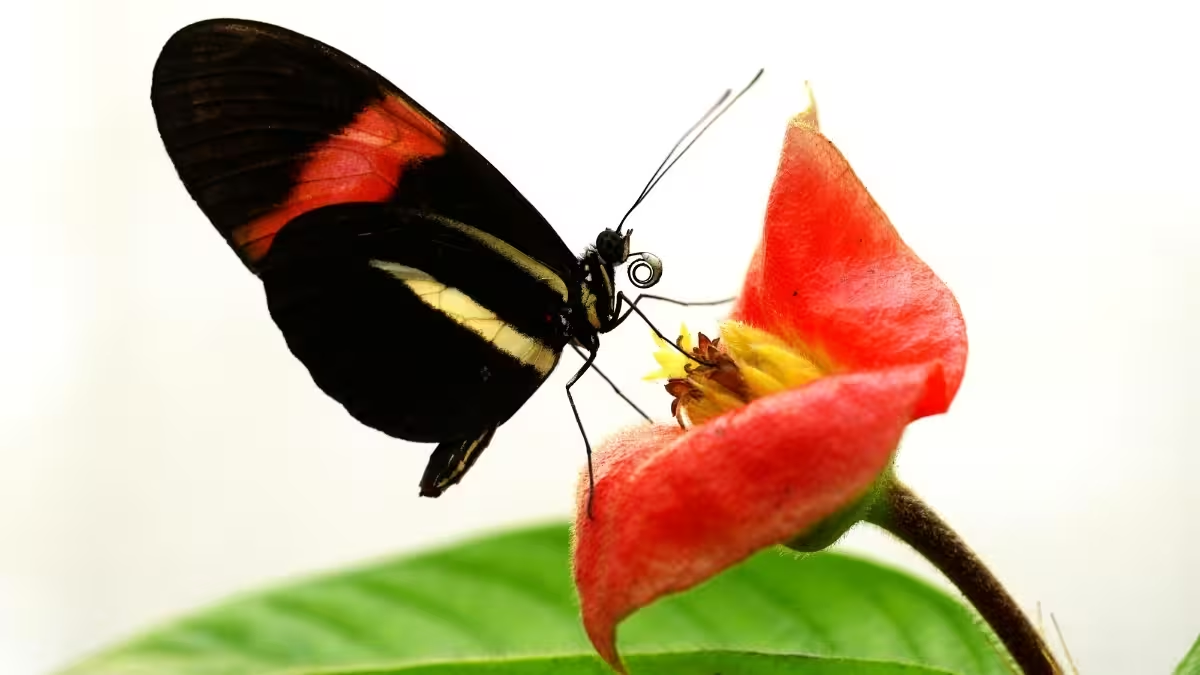

A Heliconius erato, or red postman, with a proboscis full of nutritious, fat-and-amino-acid-laden pollen.
Those adaptations might include digestive modifications, metabolic pathways tuned to pollen nutrients, and immune responses that better convert dietary inputs into somatic maintenance. Behavioral specializations—longer-lived individuals can learn complex foraging routes and defend nutrient-rich territories—could also reinforce longevity through ecological feedback.
Methodological caveats remain. Maximum lifespan is a blunt metric influenced by sampling effort and rare outliers. A single unusually long-lived individual can skew the record. Still, repeated patterns across field and captive data, plus experimental crosses, build a persuasive case that Heliconius longevity is not just an artifact.
Broader significance
This study speaks to core questions in life-history evolution: why do species trade off between rapid reproduction and maintenance, and how do novel diets open evolutionary pathways to different life schedules? Insects are valuable models because their life cycles are short and their ecology is tractable, so discoveries here can illuminate general principles about aging and adaptation.

Applied implications are speculative but intriguing. Understanding how specific nutrients and genetic changes combine to slow aging in a wild animal could point to biochemical pathways worth studying in other organisms. That does not mean a simple translation to humans, but the logic of nutrient-driven maintenance versus reproductive investment is conserved across vast evolutionary distances.
Expert Insight
"What surprised me most was how consistent the pattern was across data types," said Dr. Elena Marques, an evolutionary ecologist who studies insect life histories. "When the field notes, captive records and manipulation experiments all point in the same direction, it suggests a real biological axis: pollinivory unlocked a suite of traits that extend lifespan. The next step is to pin down the genes and physiological mechanisms behind that shift."
Conclusion

Butterflies teach a simple lesson: tiny changes in diet and biology can open dramatic alternatives to a species' life script. For the Heliconius lineage, pollen eating appears to be both a key and a scaffold—providing nutrition that supports longevity while selecting for genetic and physiological changes that turn those nutrients into years. The work reframes how we think about diet-driven evolution of lifespan and sets a clear agenda for molecular follow-up and broader comparative studies on aging.

“My work centers on sustainability, energy, and environmental science — examining how innovation can lead to a greener future.”

Discussion
Leave a Comment
Comments (2)
interesting but hmm, how much of the lifespan record is sampling bias? one long outlier could skew results, need more populations tested, right?
wow, butterflies living almost a year? mind blown. pollen seems magic but genes matter too, curious how they evolved, if that’s real then…