
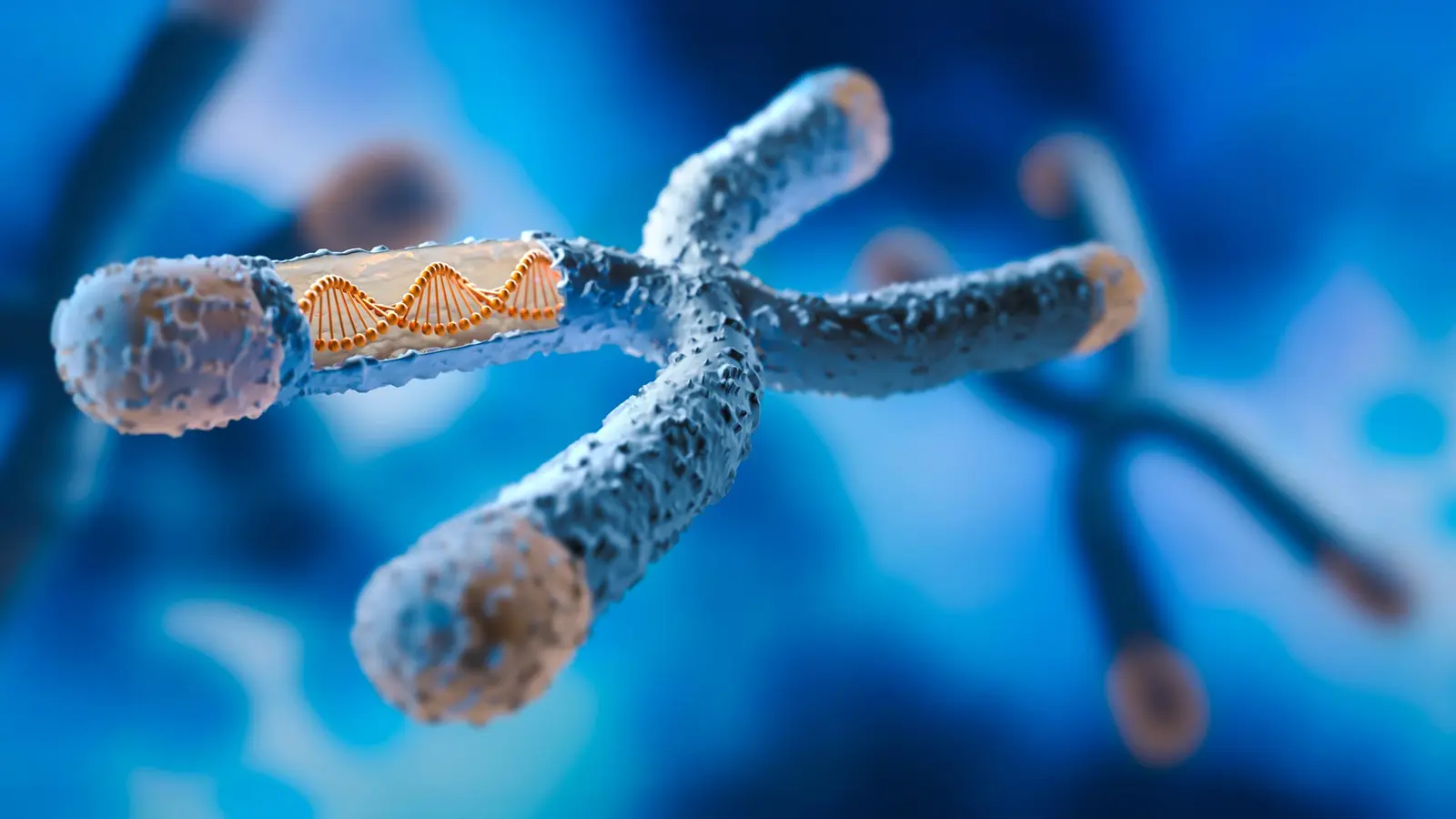
Imagine a single letter in a 2.8 billion letter manual deciding whether an embryo becomes male or female. That tiny change — one DNA base — is all it took in a new set of experiments to flip sexual development in mice.
A microscopic edit with outsized consequences
Researchers at Bar-Ilan University used CRISPR to introduce minute changes into a regulatory sequence called Enh13, a non-coding stretch of DNA that supervises the activity of Sox9, the gene that drives testis formation. When Enh13’s normal balance was disturbed by an insertion of just one base pair, XX mice that would normally become female developed testes and male anatomy instead.
The mutation was not inside a protein-coding gene. It was in regulatory DNA — the genomic circuitry that tells genes when and where to switch on. For decades large portions of this regulatory landscape were dismissed as genomic “dark matter.” These experiments underline that non-coding regions can act like critical switches: tiny tweaks, big outcomes.
In male development, pro-testis factors bind Enh13 and boost Sox9 activity. In female development, opposing factors bind the same region and keep Sox9 quiet so ovaries form. The Bar-Ilan team showed that disrupting that repression removes the brake on Sox9 in XX embryos, and the developmental program for testes proceeds.

The figure depicts the Enh13 regulatory region alongside the Sox9 gene as a “battle site” between the sexes. Pro-female factors act to repress Sox9 via binding to Enh13, while pro-male factors activate it. The balance between these opposing forces ultimately determines whether male or female development occurs.
How they proved causality
The group used targeted genome editing to make precise one- and three-base alterations in Enh13, then tracked outcomes in live animals. Both the single-base insertion and a three-base deletion produced the same surprising result: XX mice developed testes and male external features. Cell-based reporter assays helped explain the mechanism: the small changes altered how regulatory proteins bind the Enh13 sequence, shifting the molecular tug-of-war in favor of Sox9 activation.
These findings build on the team’s earlier 2024 work, which showed that other tiny mutations within Enh13 could push development in the opposite direction, causing XY animals to develop as females. Together the two studies portray Enh13 not as a one-way switch but as a bidirectional control hub that must be precisely balanced for normal sex determination.
Dr. Nitzan Gonen of Bar-Ilan’s Goodman Faculty and Institute of Nanotechnology and Advanced Materials says the result underscores that regulatory DNA can have profound developmental and disease consequences. The lead PhD researcher, Elisheva Abberbock, emphasizes that looking only at protein-coding genes misses many potential causes of Differences of Sex Development.
Clinical and scientific implications
Differences of Sex Development, or DSD, occur in roughly 1 in 4,000 births worldwide. Clinicians can identify a genetic cause in many cases by sequencing protein-coding regions, but more than half of DSD cases remain unexplained. This study argues that regulatory mutations — hidden in non-coding DNA — may account for a subset of those mysteries.
Practically, the work points toward new diagnostic avenues: genome sequencing that includes non-coding regulatory elements, functional assays to test suspected variants, and curated maps of enhancers like Enh13 that influence key developmental genes. On the research side, scientists will likely broaden searches for regulatory variants that affect other developmental pathways.
There are also ethical and communication challenges. Diagnostic identification of a regulatory mutation brings questions about prognosis, counseling, and the limits of intervention. The presence of a variant in a regulatory region does not always predict the severity or exact phenotype; context matters.
Expert Insight
“This is a clear example of how genome control regions can act as decision points during development,” says Dr. Lena Kovacs, a hypothetical developmental geneticist speaking as an independent commentator. “We used to think of genes as the whole story. Now we see that the surrounding switches — the enhancers and silencers — can change a developmental fate with a single base change. That rewrites how we think about genetic diagnosis and raises the bar for functional validation of clinical variants.”
Looking ahead, the team plans to map additional enhancers that influence sex determination and test how naturally occurring human variants in comparable regions might contribute to DSD. The broader lesson is clear: the genome’s control architecture deserves the same scrutiny we have long given to protein-coding genes.
Conclusion
One base pair, one decision. The Bar-Ilan findings make a compelling case that regulatory DNA is not background noise but a force that can reshape development. For researchers and clinicians alike, the study is a reminder to look beyond genes when seeking the roots of congenital conditions.


“My work centers on sustainability, energy, and environmental science — examining how innovation can lead to a greener future.”

Discussion
Leave a Comment
Comments (2)
Is this even true? If one bp flips sex in mice, what about humans? sounds huge, but I want replications and more data, not jump conclusions
Wow, one base flipping sex fate? wild.. science is nuts. Feels awesome and kinda creepy, not gonna lie So powerful.