

Picture a cluster of machines under an unblinking lunar sky, welding and assembling components while Earth hangs low and blue on the horizon. That image is no longer only science fiction. SpaceX has begun sketching a very real road map toward manufacturing on the Moon.
At a recent quarterly earnings briefing, SpaceX chief executive Elon Musk reiterated an ambitious plan: deliver heavy equipment and large volumes of cargo to the lunar surface, then use robotic systems to assemble production facilities in situ. "We will land heavy equipment and large volumes of cargo on the lunar surface. We will build factories on the Moon, and robots will help a lot in that effort," he said, according to a Space report. The comment renews emphasis on off-Earth construction as a strategic priority for the company.
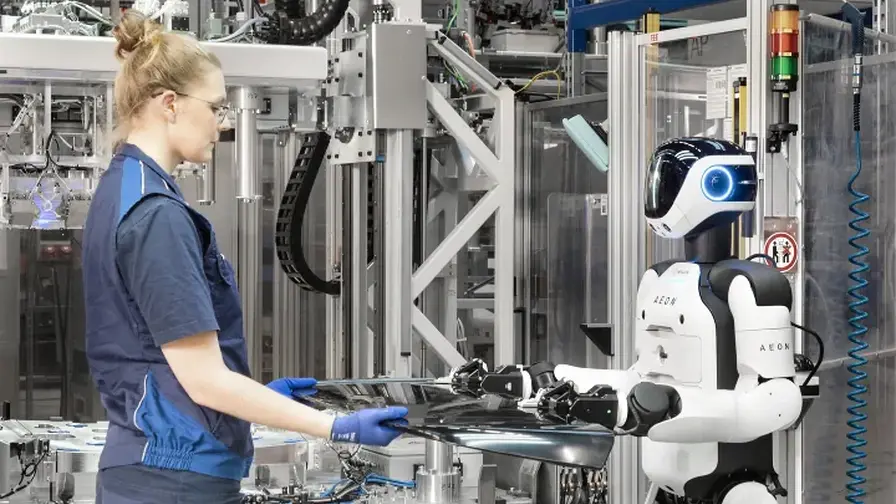
Musk did not outline an exhaustive blueprint for the robotic workforce, but the implication points toward Tesla’s humanoid robot, Optimus, as a likely candidate. SpaceX has already suggested that future Optimus units could support preliminary settlement work on Mars; retooling similar humanoid platforms for lunar manufacturing would be a logical next step. Think of robots that can operate in reduced gravity, manage heavy payloads, and run continuous, automated production lines where astronaut presence is limited and costly.

From orbit to factory floor: hardware and logistics
Central to this vision is Starship, SpaceX’s fully reusable heavy-lift vehicle. Starship is slated to haul the bulk of materials and robots to the Moon. The vehicle is approaching its fourteenth test flight milestone and has become the backbone of SpaceX’s orbital and beyond-orbit ambitions. Company leadership says Starship will expand cargo capacity roughly fourfold and cut launch costs by about ten times compared with Falcon 9, a shift that would fundamentally change what is economically feasible in space.
To support thousands of Starship launches per year, SpaceX plans a major scale-up on Earth: increased Raptor engine production, large assembly halls, and multiple active launch pads at its Starbase facility in southern Texas and at Cape Canaveral. This ground-side industrial buildup is as crucial as robotics; shipping mass to the Moon demands both cheaper lifts and high launch cadence.
Once in place, lunar factories would have immediate customers: one proposed role is building a new generation of AI-enabled satellites, dubbed StarMind, on the Moon itself. SpaceX envisions eventually deploying a constellation of around one million StarMind satellites in Earth orbit and then extending their services deeper into space. Lunar manufacturing could reduce the need to launch every satellite fully assembled from Earth, easing mass and cost constraints.
What does this mean for space exploration and industry? Potentially everything. Manufacturing off Earth could lower mission costs, enable larger and more complex infrastructure in space, and shift resource extraction and processing closer to where they are needed. It also raises practical questions: how to supply power reliably on the lunar surface, how to protect delicate equipment from lunar dust, and how human crews will oversee mostly autonomous operations.
SpaceX’s public statements do not yet offer a step-by-step timeline, but the pieces are visible: Starship development, robotic automation, and scaled Earth-side manufacturing capacity. If the company can synchronize those elements, the era of industrial activity on the Moon could be nearer than many expect. Will these plans redefine the economics of space? The next few years should tell.

“The cosmos has always fascinated me. I write about space missions, astronomy, and the technologies pushing humanity beyond Earth.”

Discussion
Leave a Comment
Comments (2)
Pretty epic vision, but feels a bit overhyped. Robots on the Moon sounds cool, yet reliability, dust and power are big ol problems. Show timeline pls
So SpaceX wants lunar factories? cool idea but is this even realistc with dust, power and maintenance? Starship cadence sounds insane, but where do spare parts come from…