
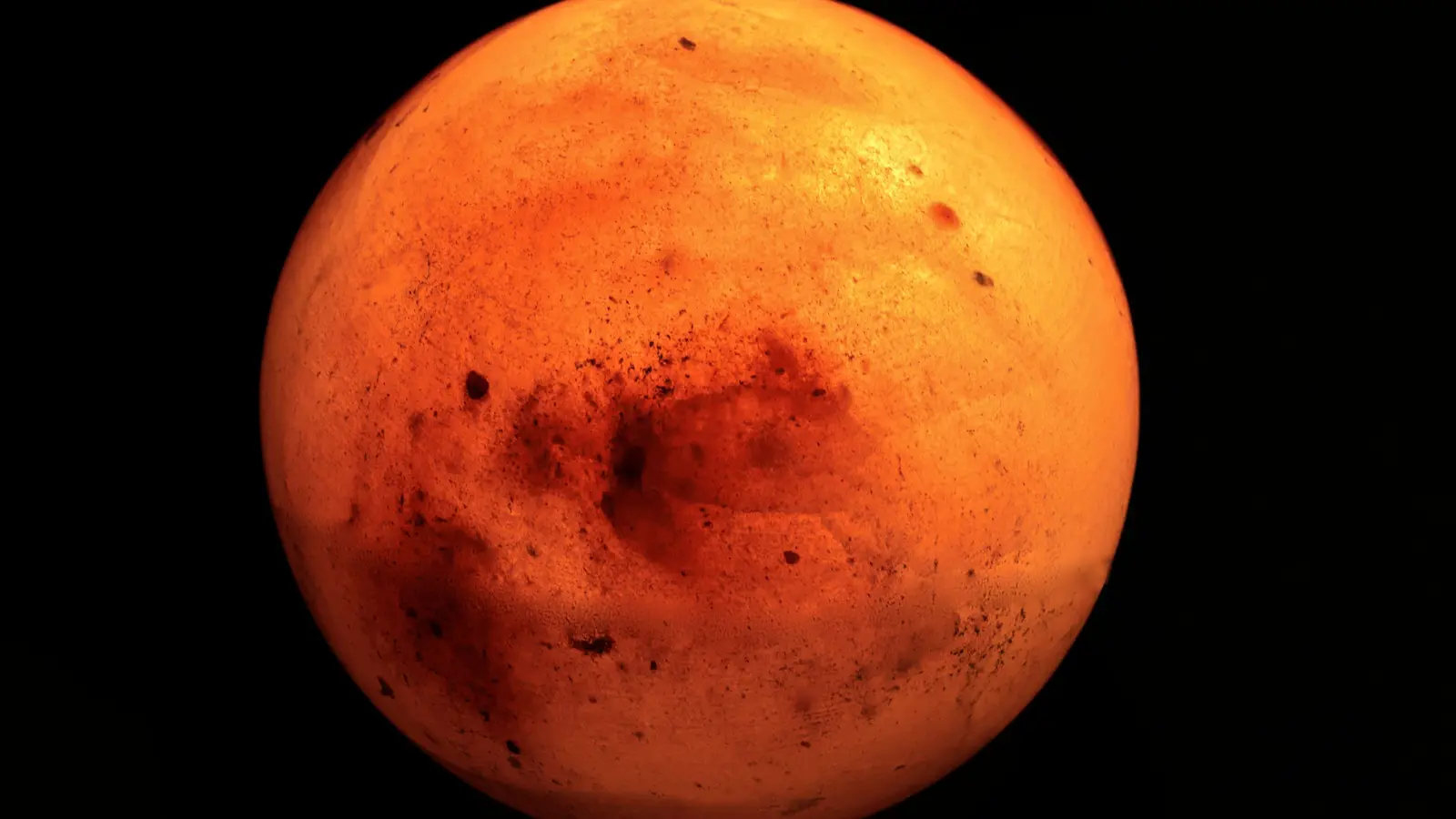
On the northern slopes of Alba Mons, something is quietly leaking into the thin Martian air. Not lava. Not ash. A handful of molecules that, when found on Earth, usually point to hot rock beneath the surface.
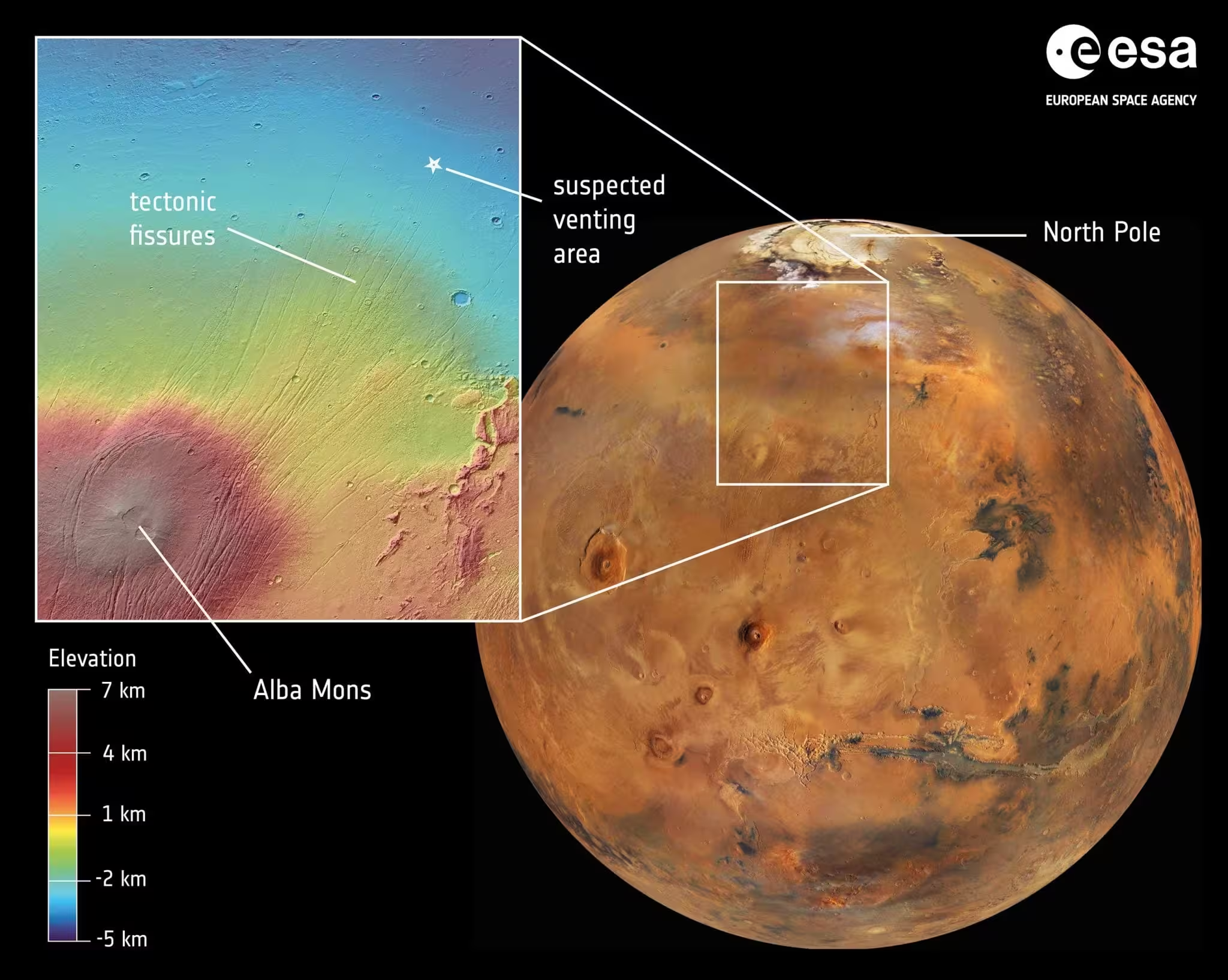
This image shows the northern flanks of the Alba Mons volcano on Mars in a wider context. The white icon shows the location of the close-up image featured in this story.
Small molecules, big implications
Hydrogen chloride, HCl, is a minor constituent in planetary atmospheres but a telling one. On Earth it is commonly released by active magmatic systems. When the ExoMars Trace Gas Orbiter, TGO, first reported localized spikes of HCl over Alba Mons, the signal was tiny and fleeting. It reappeared, though, at roughly the same season in successive years. That repetition is what turned curiosity into a scientific puzzle.
Why care about a few parts per billion of a halogenated gas? Because on Mars, context matters. The detections line up with freshly opened fissures on the flank of a volcano, and with the timing of seasonal ice loss. Put the clues together and a plausible narrative emerges: subsurface heat, trapped gases, and a seasonal valve that opens as frost evaporates.
How the discovery was made
TGO carries a suite of infrared spectrometers built to sniff trace species in Mars’ thin atmosphere. Two instruments, ACS and NOMAD, use solar occultation methods. They watch sunlight pass through the atmosphere at sunrise or sunset and read the chemical fingerprints left in that light. That technique produces extremely sensitive vertical profiles but samples only along narrow beams as the orbiter moves.
In the case of Alba Mons, the Atmospheric Chemistry Suite returned a localized HCl signature soon after winter frosts sublimated in early northern summer. Simultaneously, images from TGO’s CaSSIS camera showed narrow, fresh fissures and patches of surface discoloration close to the gas detections. Taken together, the orbital spectroscopy and high-resolution imaging gave the team both atmospheric and geological evidence to weigh.
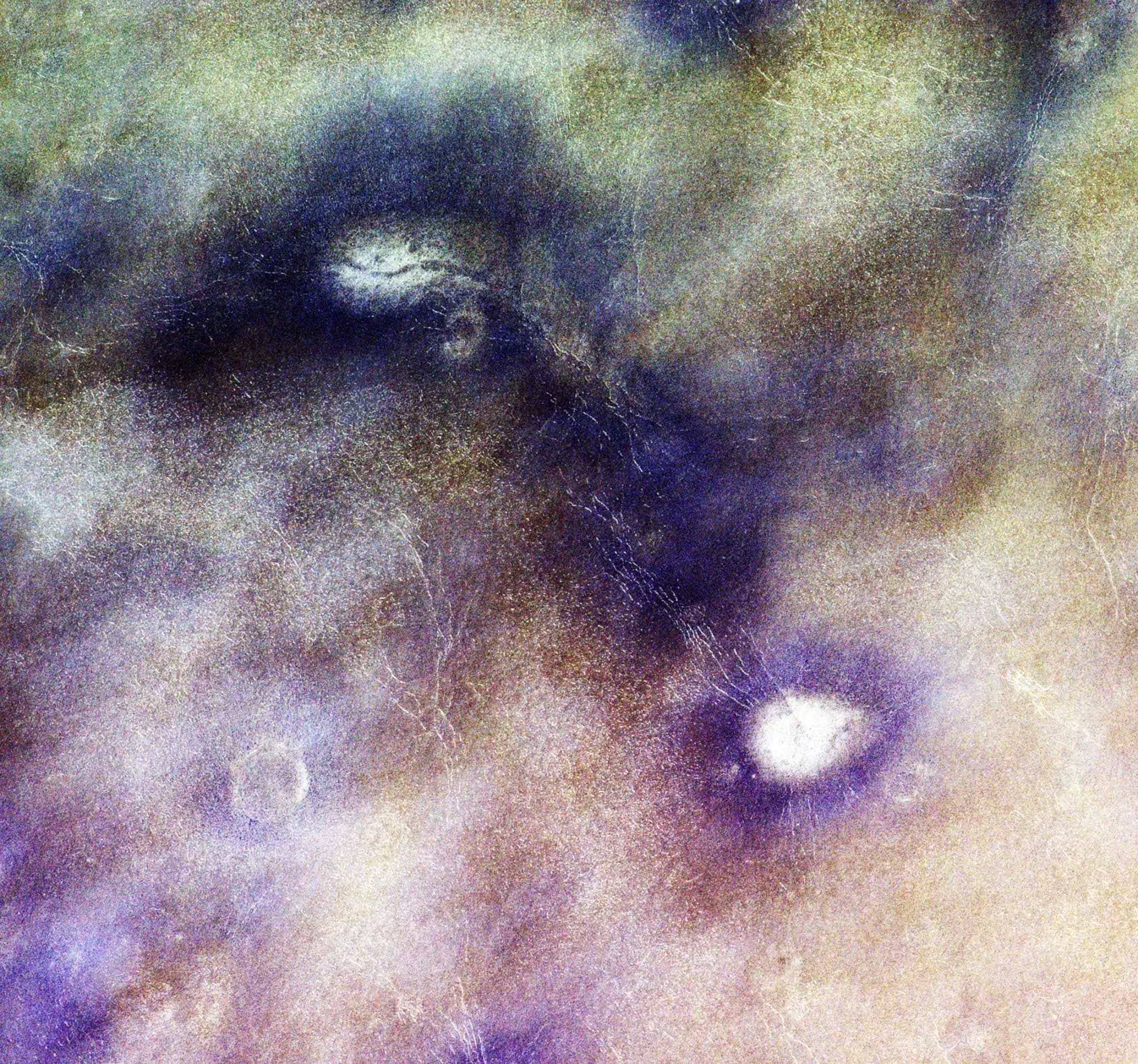
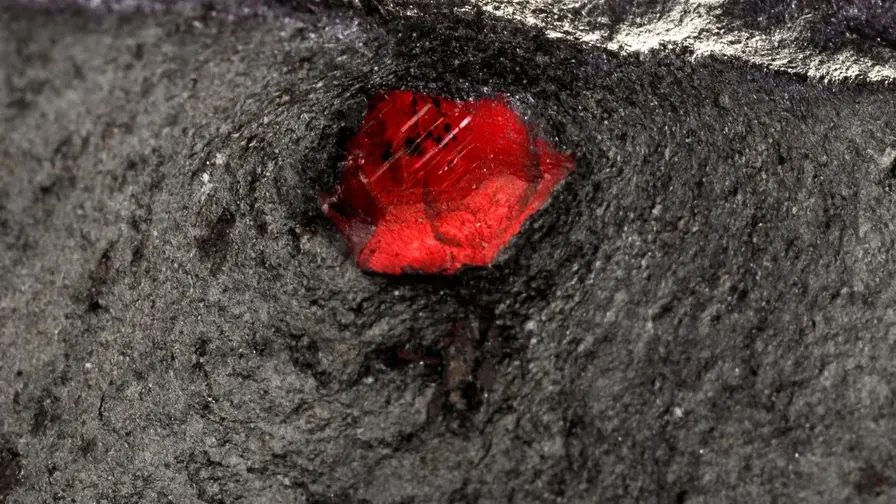
This image shows a region of Mars lying on the northern flanks of the Alba Mons volcano. The white spots may be caused by deposition around vents where magmatic gases may be escaping from Mars’s interior. The image, taken on February 3, 2023, is approximately 20 km by 20 km in size and is centered at approximately 64.6°N/274.4°E.
What the team tested, and what they ruled out
Detecting HCl is one thing. Explaining it is another. The research group led by Alexander Trokhimovskiy and co-led by Daniel Mège walked through alternative scenarios. Could atmospheric chemistry driven by dust and water explain the spikes? On Mars, salty dust and water vapor can react to make chlorine compounds. Yes. But those global processes should produce distributed, seasonal HCl that follows dust activity. They would not, in principle, re-create a sharp, spatially fixed hot spot that turns on just after local frost loss.
The team also considered photochemistry initiated by solar ultraviolet light, reactions on icy surfaces, and transport from distant sources. The spatial coincidence with fresh fissures, the timing with local sublimation, and the observed discoloration around vents made a subsurface origin the simplest explanation that fit all the observations.
How fissures, frost, and magma could work together
Picture a shallow pocket of warm or molten rock, a dormant magma chamber or a partially molten sill. Over time it degasses: chlorine-bearing species, water vapor, sulfur compounds and others migrate upward. In winter, the vent mouths freeze shut as frost and snow deposit. Gases accumulate below. When spring arrives, sunlight warms the surface, ice sublimates directly into vapor, and small conduits reopen. Gases then vent into the atmosphere in short-lived pulses.
On Earth, fumaroles behave in similar ways but on a much larger scale. On Mars, the same mechanism operating at smaller fluxes could still leave telltale chemical and surface signatures: discoloration from salt deposits, fresh fracture networks, and seasonally timed gas releases detectable by sensitive orbital spectrometers.
New chemistry in a dusty world
The study also highlights a broader Martian chemistry cycle. Sodium chloride locked into dust is widespread on Mars, remnants of ancient brines and evaporated bodies of water. Wind lifts that salty dust into the atmosphere. When water vapor rises, it can react with suspended salt to liberate chlorine atoms. Those atoms then find hydrogen and form HCl. The result is a complex interplay of geology, climate, and surface composition that can mimic or mask subsurface signals.
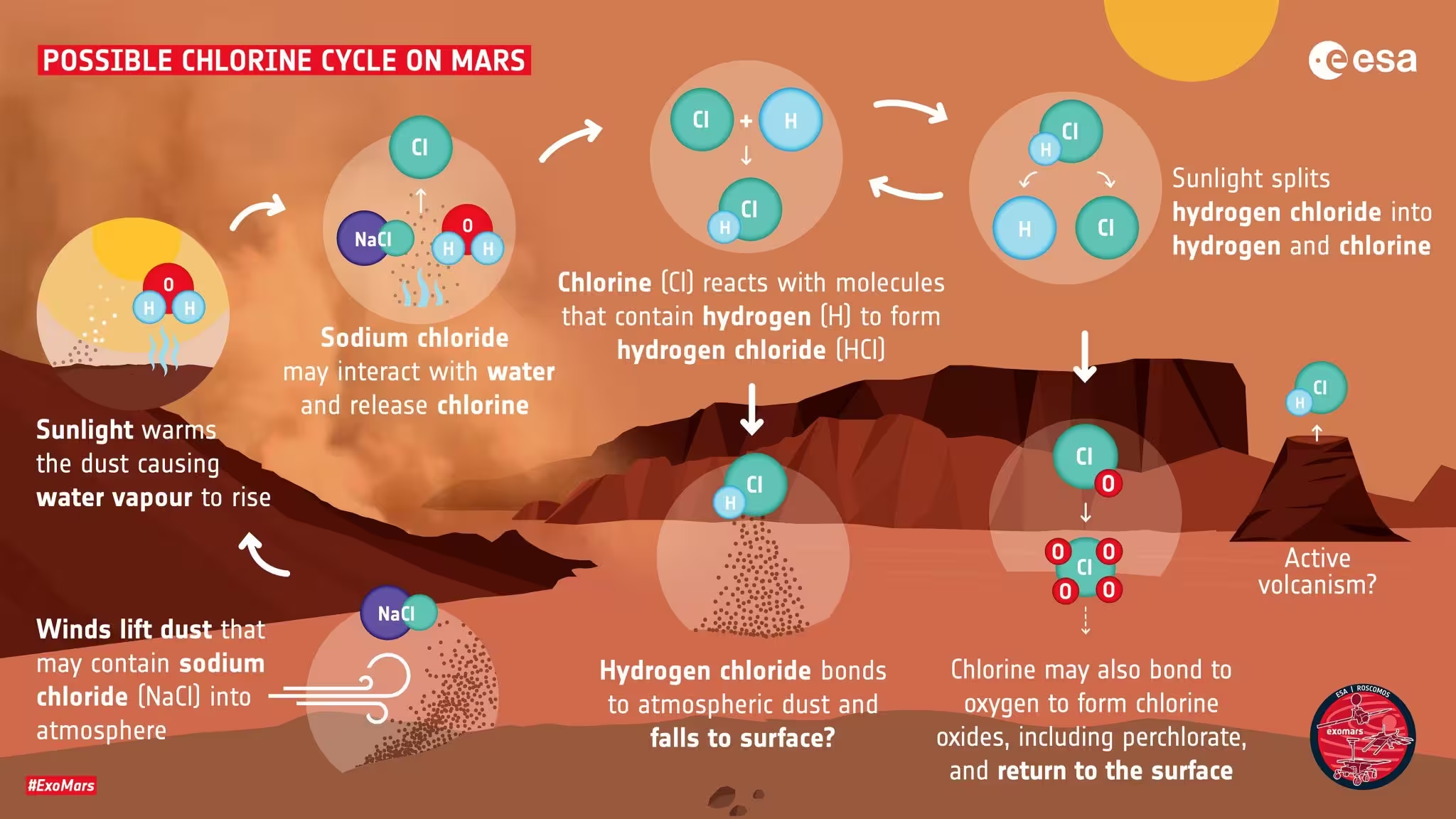
This graphic describes a possible new chemistry cycle on Mars following the discovery of hydrogen chloride in the atmosphere by the ESA-Roscosmos ExoMars Trace Gas Orbiter. Salts in the form of sodium chloride (NaCl) – remnants of evaporated oceans and embedded in the dusty surface of Mars – are widespread on the surface of Mars. Winds lift this salty dust into the atmosphere. Sunlight warms the dusty atmosphere, causing water vapor released from ice caps to rise. The salty dust reacts with atmospheric water to release chlorine (Cl), which itself then reacts with molecules containing hydrogen (H) to create hydrogen chloride (HCl). A similar process takes place on Earth: sea salt is blown into the air, and if it mixes with water vapor, chlorine becomes available for chemical reactions that form HCl.
Implications for Martian heat and habitability
We do not yet have direct proof of molten rock at Alba Mons today. No fresh lava flows have been observed. Seismometers on Mars have detected marsquakes, and crater counts plus mineral mapping suggest volcanic activity may have occurred within the past few million years. The presence of episodic volcanic gases would add weight to the idea that Mars retains pockets of internal heat.
Why does that matter? Because heat plus water equals opportunity. If rising magma or hot rock encounters subsurface ice or brines, localized hydrothermal systems could appear. Those environments are prime locations to search for life, as they supply liquid water, chemical nutrients and energy while offering shielding from the harsh surface radiation and oxidation conditions.
Expert Insight
Dr. Rachel Kim, a planetary geochemist not involved with the study, commented: "A single trace gas can be a beacon. On Mars, where processes run slowly and signals are faint, repeated, localized detections of a species like HCl are hard to dismiss. The combination of spectroscopy and high-resolution imaging is powerful. It does not prove active volcanism beyond doubt, but it moves subsurface heat from speculation into testable science."
Mission context and next steps
TGO continues to survey the atmosphere and surface, and its long, repeating observations are crucial for catching intermittent phenomena. Future investigations will combine further orbital monitoring with targeted high-resolution imaging and, ultimately, in situ exploration. A lander or rover equipped to analyze gas emissions, mineral salts, and subsurface structure could settle the question of whether Alba Mons hosts an active or recently active magmatic system.
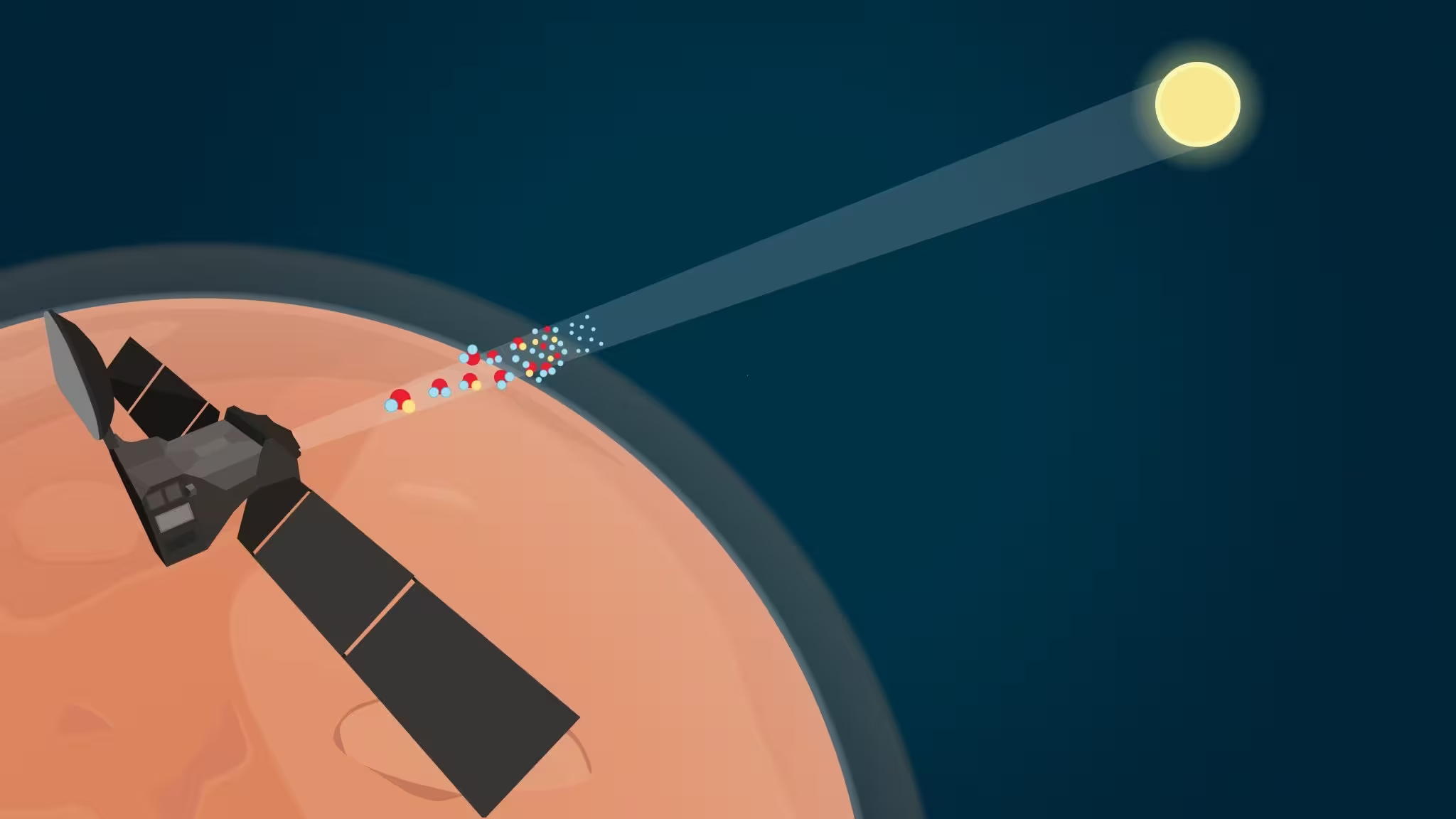
Artist impression of the ExoMars Trace Gas Orbiter (TGO) analyzing the Martian atmosphere. The solar occultation method is depicted: the onboard spectrometers – ACS and NOMAD – look at the way sunlight is absorbed in the atmosphere to reveal the chemical fingerprints of its ingredients.
Technologies that could help include ground-penetrating radar to map subsurface interfaces, thermal mapping to spot warm anomalies, and mobile mass spectrometers to analyze vent deposits. International collaboration will be essential: combining spectral sensitivity, imaging resolution, and surface sampling capabilities offers the best path to a definitive answer.
Conclusion
The HCl detections at Alba Mons are a nudge, not a slam dunk. They remind us that Mars is not a frozen tomb but a complex world where geology, climate, and chemistry interact in surprising ways. If hidden pockets of heat persist beneath the surface, they could reshape how we think about Mars’ evolution and its capacity to host habitable environments underground.

“My work centers on sustainability, energy, and environmental science — examining how innovation can lead to a greener future.”

Discussion
Leave a Comment
Comments (2)
is this even true? localized HCl sounds cool but dust+salt chemistry could mimic it. we really need a rover or lander to confirm, right
Wait, Mars venting HCl? wow, that gives me chills. If true this could mean hidden heat and maybe subsurface water. also curious about sulfur signals…