
.webp)
Imagine closing your eyes and feeling the texture of a fabric that your hand no longer senses. That is the small, profound promise this research advances: targeted electricity to a specific patch of cortex can recreate localized hand sensations for people with spinal cord injuries.
A decade of signals to the sense of touch
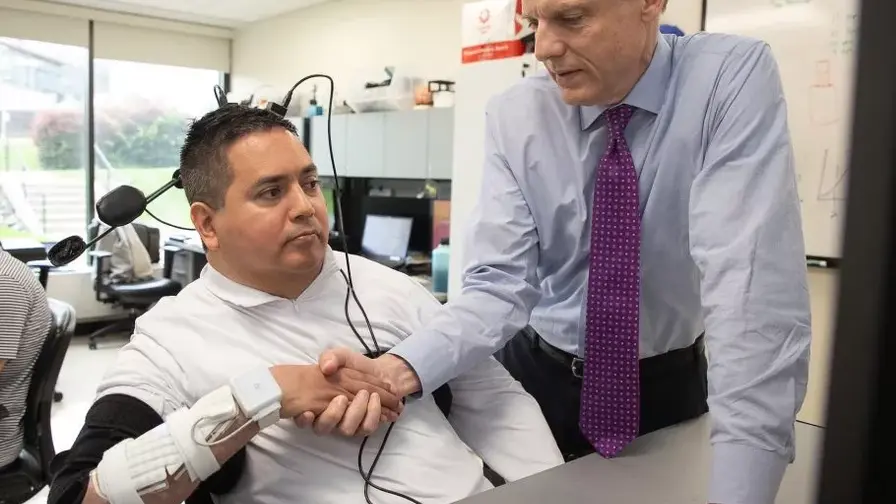
Researchers at the University of Pittsburgh and the University of Chicago report the longest human study to date of intracortical microstimulation, showing that artificial touch delivered directly to the somatosensory cortex can be safe and remarkably stable over years. Five volunteers with chronic spinal cord injuries received implanted brain-computer interface devices. Between them, the implants were active for a combined 27 years and delivered roughly 168 million electrical pulses to the brain, with no serious adverse events recorded.
Why does this matter? Because touch is not an optional luxury. It is how we judge pressure, sense slip, adapt grip force, and interact with objects without staring at them. Modern neuroprosthetic limbs can be controlled by decoding motor signals from the brain. But without feedback, control is slow and cognitively demanding. Sending tactile signals back into the brain closes that loop.
The study, published in Science Translational Medicine, asked practical, long-term questions short lab trials cannot: Do sensations drift to the wrong body region over time? Do repeated pulses cause harm? Do percepts fade or change their character after years?
.avif)
Stable sensations, rare side effects
The answer, largely, is encouraging. Pulses targeted to the hand representation in the somatosensory cortex consistently evoked hand-centered sensations even after years of stimulation. Sensations did not systematically migrate to unrelated body parts. Persistent sensations, where a feeling lingered after stimulation ended, were rare: about one occurrence per 23,000 stimulation trials on average. When they did occur, most faded within 10 seconds. There were no reports of pain that required treatment.
Those outcomes matter for clinical translation. As Robert Gaunt, senior author and associate professor at Pitt, put it, this research "plants a flag in the ground for the safety and utility of using brain-computer interfaces to deliver sensory stimulation in clinical settings and, eventually, in people’s homes." For assistive devices to be life-changing, they must work reliably for years, not just for the length of a lab visit.
Where the technology struggles
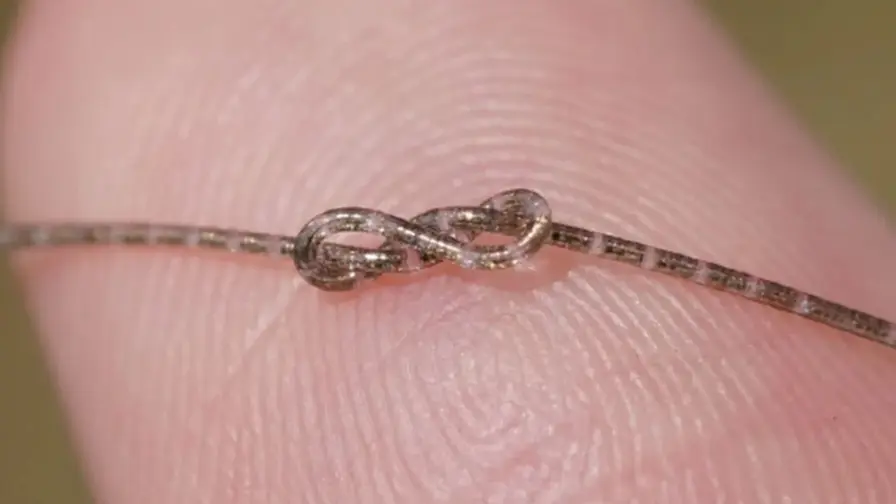
No technology is without limits. The main challenge observed was electrode longevity. Across participants, about 64 percent of implanted electrodes remained functional over time. In one person, 60 percent of electrodes were still working after 10 years, although the decline rate accelerated later in the study. Maintaining durable, high-quality neural interfaces is the engineering bottleneck if these systems are to become long-term, at-home solutions.
Lead author Charles Greenspon, from the University of Chicago, emphasized that the data shift this field from early feasibility toward engineering and industry development. If devices can be made more robust, companies can design long-term, take-home neuroprosthetic systems for people with paralysis.
Broader context and next steps
This work builds on more than a decade of advances. In 2012, teams began implanting electrodes in the motor cortex so a paralyzed person could control a robotic arm. By 2015, sensory cortex stimulation had been used to add a sense of touch. The University of Chicago implanted a participant with both motor and sensory electrodes in 2020, enabling simultaneous control and feedback studies.
Researchers are also exploring microstimulation in brain regions tied to vision and hearing. In other words, the same basic approach could, in principle, be adapted to restore multiple senses. But each system has its own hurdles: electrode design, power and packaging for long-term implants, and demonstrating meaningful benefits in everyday tasks.
Expert Insight
"This study delivers a rare set of long-term human data that engineers and clinicians need," said Dr. Elena Morales, a neuroengineering researcher not involved with the work. "It shows that the brain can accept and interpret artificial tactile input for years, but also reminds us that materials science and interface durability are the immediate hurdles. Solving those will be the difference between a lab demonstration and a daily-use clinical device."
Conclusion
The study establishes that intracortical microstimulation can produce safe, repeatable hand sensations over many years in people with spinal cord injuries. The sensory percepts remain localized and mostly stable. The pressing engineering task ahead is improving electrode longevity and device reliability. If those challenges are met, sensory-enabled brain-computer interfaces could make neuroprosthetic limbs far more natural to use and could expand to support other lost senses.

“The cosmos has always fascinated me. I write about space missions, astronomy, and the technologies pushing humanity beyond Earth.”

Discussion
Leave a Comment
Comments (2)
Sounds promising but 168M pulses? where's the longterm tissue data, any microglia or inflammatory issues? curious, a bit skeptical
Wow this actually gives me chills. The idea of feeling a fingertip again?? Incredible. But electrode longevity sounds like the real blocker. Hope they nail the materials, asap