
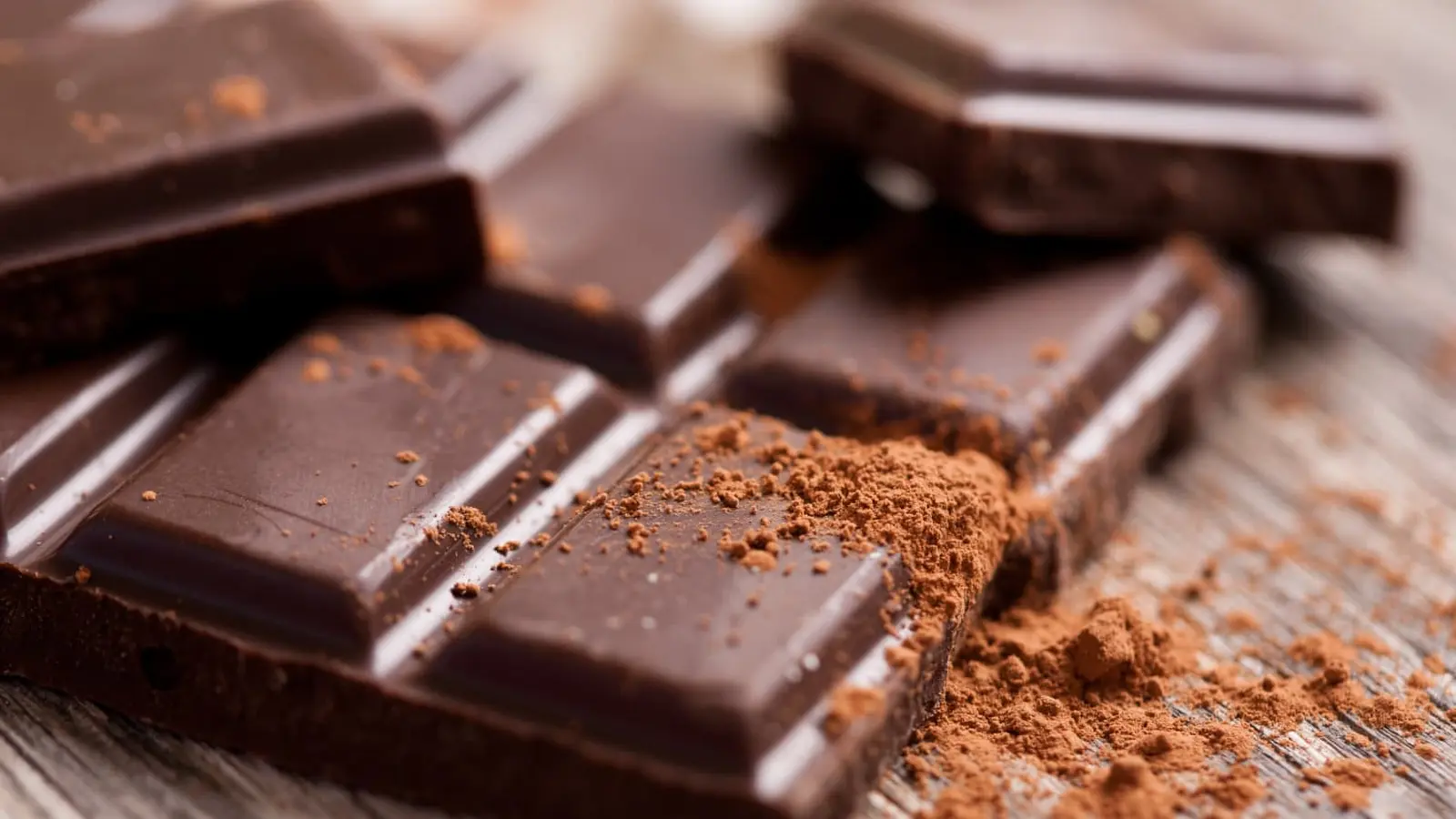
Halfway through a tough set, the last thing you expect is that a whiff of chocolate might help you squeeze out extra reps. Yet researchers testing familiar food aromas found precisely that: the smell of dark or milk chocolate, when inhaled before and between sets, appeared to raise resistance training volume without making the effort feel harder.
How the experiment unfolded
The study tested 23 healthy men in their early to mid-20s who had moderate experience with resistance training. Each volunteer came to the lab after at least ten hours without food. That fasting target was deliberate: it sharpened appetite signals and made appetite-related shifts easier to detect.
Participants were assigned to one of three scent conditions. One group inhaled a liquefied 90 percent cocoa dark chocolate sample, another sampled a 60 percent cocoa milk chocolate aroma, and a control group sniffed odorless water. During a leg-extension protocol—repeated seated knee extensions against weight—researchers recorded total repetitions and asked participants to rate hunger and desire to eat at key points. Perceived exertion was also tracked, so the team could tell whether extra reps came at the price of greater effort.
Results were clear in direction if not yet definitive in mechanism. Compared with the water control, smelling the dark chocolate scent increased total repetitions by roughly 18; the milk chocolate scent produced an increase of about nine repetitions. Crucially, participants did not report higher perceived exertion despite the added work.
What the findings suggest
The two chocolate aromas did not act the same. Dark chocolate tended to suppress hunger and raise fullness ratings before exercise, consistent with a satiety-like response. Milk chocolate was rated as more pleasant but did not notably change hunger scores. The investigators propose two complementary ideas: learned associations and anticipatory physiological responses.
Olfaction is tightly linked to the limbic system, the set of brain regions that mediate emotion, memory, and reward. Familiar food smells can trigger conditioned expectations about nutrient content and reward. In fasting volunteers, the bitter, high-cocoa scent of dark chocolate may have signaled a satiating, nutrient-dense food, nudging appetite-related systems into a state similar to early digestion. The sweeter milk chocolate odor may have acted more like a hedonic cue, enhancing mood or reward signals and making the training environment more pleasant.

Those mechanisms would explain why exercise volume rose without a matching rise in perceived effort. Anticipatory, or cephalic phase, responses—brain-driven preparation for eating—can alter hormonal and autonomic activity before any food is ingested. The present study did not measure hormones or neural activity, so these explanations remain plausible but unproven.
Limitations matter. The sample was small and restricted to moderately trained young men, which limits generalizability. Odor intensity may have differed between samples. The odorless water control could have unblinded some participants. Most importantly, there were no direct measures of hormones such as ghrelin or leptin, nor of brain activity that would demonstrate pathway-level change.
Potential implications and next steps
If replicated, the findings raise both practical and scientific questions. Athletes and coaches might consider scent as a low-cost, noninvasive cue to alter perceived appetite or mood before training. From a research perspective, follow-up trials should include diverse populations, different types of exercise, and objective biomarkers: blood hormones, autonomic readouts, or neuroimaging to map olfactory-reward circuits in action.
The broader implication is that familiar food odors can act as psychological and physiological triggers—tiny environmental nudges that reshape internal state. Whether chocolate is special remains open. The investigators suspect not: other strongly associated satiety cues might produce similar effects if they are meaningful and familiar to the individual.
Expert Insight
"This study is a neat example of how sensory cues can interact with performance," says Dr Elena Marquez, an exercise physiologist at the University of Barcelona. "We know scent influences appetite and emotion. The logical next step is to measure circulating hormones and neural markers so we can see whether this is a psychological trick, a physiological priming effect, or both. If it’s real across sexes and age groups, scent cues could become a useful, low-risk tool in training settings."
Conclusion

Smelling chocolate before and between sets appears to increase resistance exercise volume in a small, specific sample of young men—dark chocolate reducing subjective hunger and milk chocolate creating a pleasant, reward-like effect. The findings are intriguing but preliminary. They highlight a broader principle: the brain’s relationship with smell and expectation can influence behavior in measurable ways. To move from curious result to practical guidance, larger trials with objective biomarkers and diverse participants are essential.

“The cosmos has always fascinated me. I write about space missions, astronomy, and the technologies pushing humanity beyond Earth.”

Discussion
Leave a Comment
Comments (2)
Is this even true? 23 guys, fasted, smells maybe not equal. No brain or hormone data, hard to know mechanism. Rep boost sounds cool but needs more work.
wow, chocolate smell boosting reps? wild. If true, imagine scent stations in gyms... curious about hormones tho, sample's tiny so i'm skeptical but intrigued