
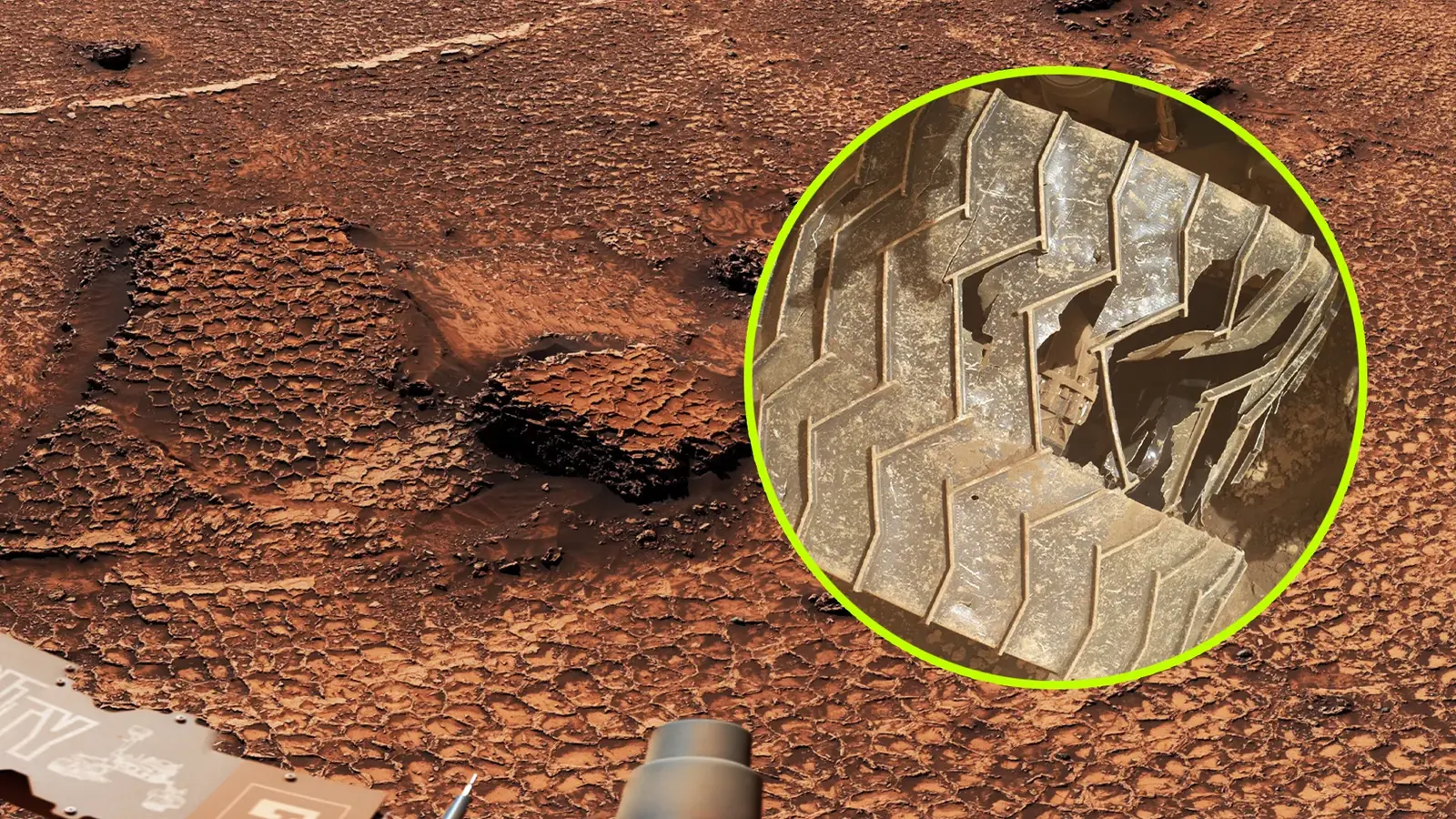
Sand and geometry, locked together over time. That image leapt from Curiosity's panoramic views on sols 4,930 and 4,931, when the rover climbed through a stretch of Gale Crater called Valle Grande and revealed an expanse of polygonal fractures that look almost deliberate: a honeycomb stitched across the ground in every direction.
The individual polygons are small, each roughly 1.5 to 3 inches (4 to 8 centimeters) wide, yet their sheer abundance and continuity make them striking. Curiosity has photographed similar patterns before, but never over such a broad, uninterrupted sweep. The formations lap up the slopes and wrap around a nearby butte named Miraflores, which rises about 20 feet (6 meters) above the plain and wears a sand cap like a weathered hat.
Why this pattern matters
Patterns in rock and soil are not just pretty; they are records of environment. On Earth, polygonal networks can form when mud dries and contracts, when ice wedges the ground through repeated freezing and thawing, or when compression expels water from buried sediments. Which of those processes left this geometric fingerprint on Mars? That question is central because each cause implies different histories for water, climate, and surface stability.
Curiosity's cameras captured the scene in a 360-degree mosaic, and the mission team has measured the shapes and chemistry of the polygons. "We’ve seen a lot of fascinating landscapes through Curiosity’s eyes, but this sea of polygons took our breath away," said Ashwin Vasavada, the mission project scientist at NASA's Jet Propulsion Laboratory. His team is combing the datasets for clues that could tie the textures to a formation mechanism.

A close-up of the polygon fractures discovered by NASA’s Curiosity Mars rover highlights their honeycomb-like textures.
Reading the ground like a diary
Think of the Martian surface as a palimpsest: layers of processes overwritten on older records. On Mount Sharp's lower slopes, where Curiosity has been driving since 2014, ancient lakes and streams left behind sediments and chemical residues. Those deposits later experienced burial, heating, cooling, and erosion. Each episode can leave telltale marks.
In previously studied sites, Curiosity identified polygons clearly linked to drying mud. But the Valle Grande field could be a more complex story. Repeated thermal cycling could fracture the crust into geometric blocks. Alternatively, compression of once-water-laden sediments might have squeezed fluids out and produced a reticulated surface texture. Mineral chemistry and microscopic textures will help discriminate among these scenarios.
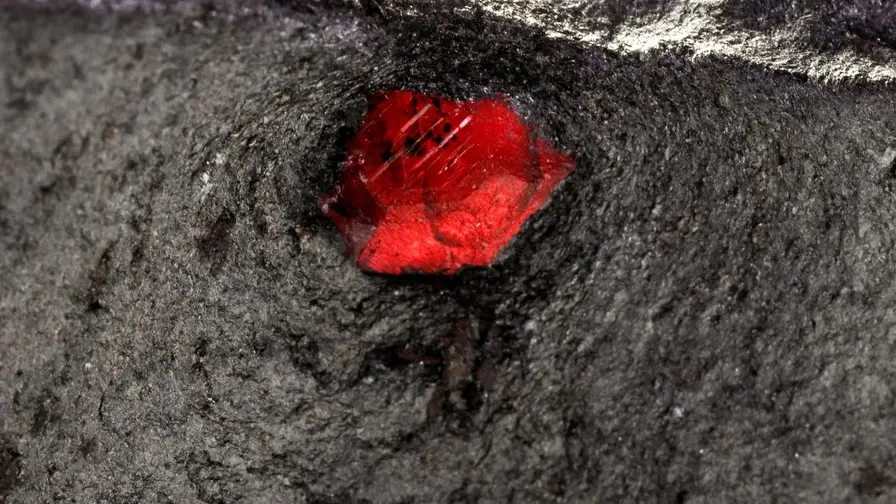
Curiosity's broader record strengthens the stakes. Since touching down on Mars on August 5, 2012, the rover has found sulfur crystals, reflective meteorites, and organic molecules that resemble carbon-based precursors to RNA and DNA. Those findings do not prove life, but they do show that ancient Mars had the chemicals and aqueous environments that could have supported microbes.

NASA’s Curiosity Mars rover captured this sand-capped butte, nicknamed "Miraflores," estimated to be about 20 feet (6 meters) tall, on June 11, 2026. The surrounding area includes an expanse of terrain covered in surface features called polygons.
What scientists will look for next
Interpretation hinges on detail. If the polygons contain minerals associated with evaporating lakes or mudstones, a drying-mud origin becomes more likely. If the fractures cut through layered sediments and show patterns consistent with thermal contraction, that points toward freeze-thaw cycles or long-term temperature swings. Grain-size distribution, cementation, and the presence of salts or clay minerals will be decisive.
Curiosity is not a stationary laboratory; it can climb, sample, and target features for close inspection. The team can direct instruments to analyze the composition of the fracture walls and adjacent material, and to image textures at microscopic scale. Those efforts will provide context for how water, if present, moved through and altered the sediments.
Beyond immediate scientific interest, these polygons are a reminder of Mars' environmental complexity. They add nuance to a picture already shaped by discoveries of ancient lakes, flowing channels, and organic chemistry. Each new feature refines models of climate evolution and surface processes on the Red Planet.
Expert Insight
Dr. Elena Marquez, a planetary geologist who works on analog studies of terrestrial polygons, offers a practical perspective: "Small polygons like these often hide big stories. Their scale suggests surface processes rather than deep-seated deformation, but chemistry can overturn that expectation. On Earth, similar textures are produced by both desiccation and thermal cracking, so we must let the mineralogy speak. Curiosity's measurements will let us read the environmental conditions at the time those surfaces formed."
The rover's detection of organic compounds elsewhere in Gale Crater keeps the broader question alive: did these environments simply host favorable chemistry, or could they ever have supported life? For now the evidence favors habitability in Mars' past, but not proof of biology. The polygons in Valle Grande are a fresh chapter in that inquiry, and Curiosity is turning the pages one sol at a time.

“My work centers on sustainability, energy, and environmental science — examining how innovation can lead to a greener future.”

Discussion
Leave a Comment
Comments
No comments yet. Be the first.