
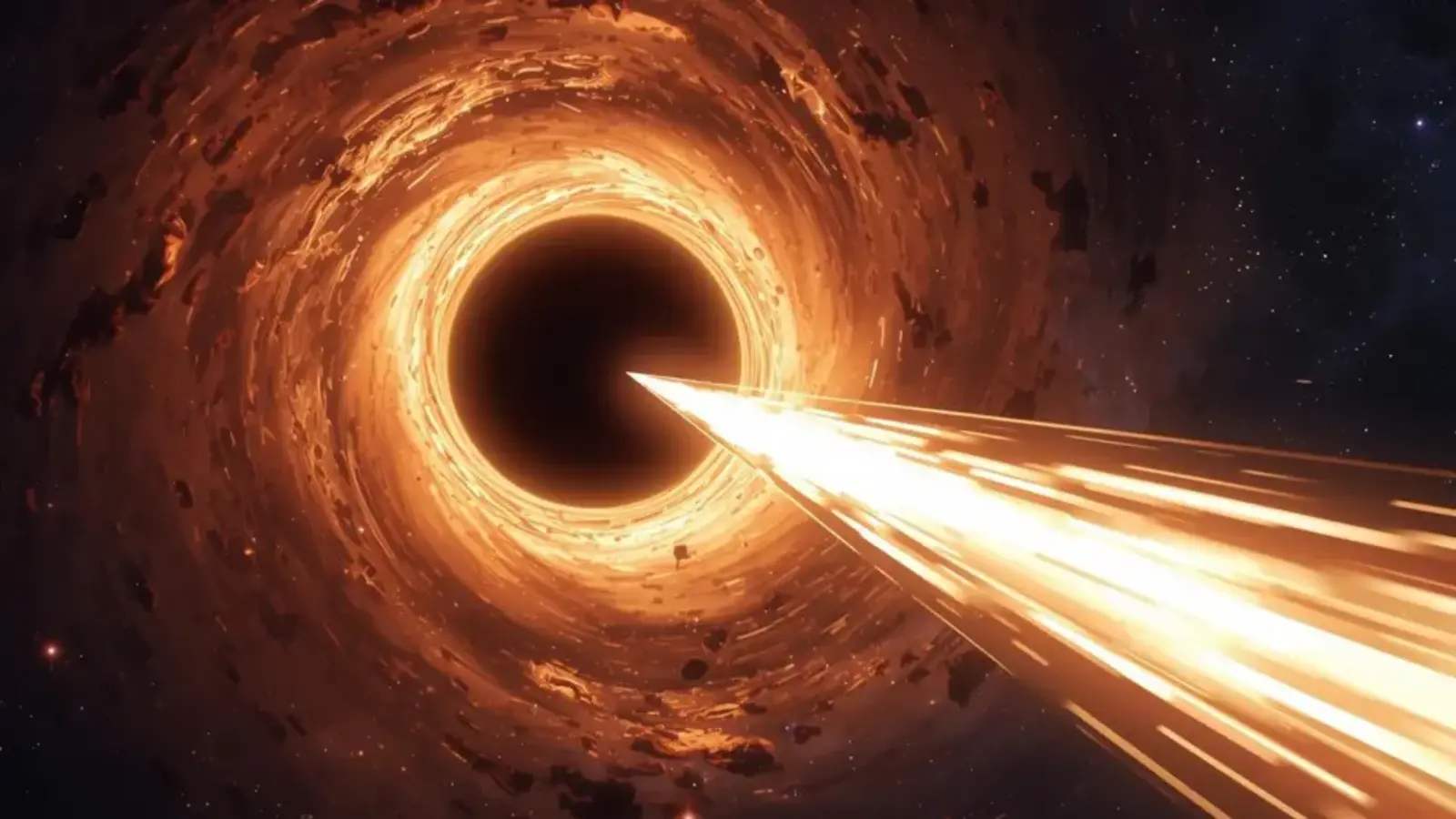
Imagine a beacon switched on when the Universe was still a child, flickering from the depths of space for more than 13 billion years before its light reached us. That beacon is a quasar, and in recent months the European Space Agency's Euclid mission has more than doubled the count of these ancient lighthouses known to astronomers.

This artist’s impression shows a quasar, a brief, brilliant phase when matter spirals into a galaxy’s central supermassive black hole. In March 2026, ESA’s Euclid telescope found 31 of the oldest known quasars, more than doubling the previous total. Two are record-breakers, shining with the light of a trillion Suns when the Universe was just 670 million years old.
Euclid’s tally rewrites the early-Universe ledger
Euclid was designed to map the large-scale structure of the Universe, but its reach extends into cosmic archaeology. Launched in 2023, the telescope sees faint infrared light across huge swaths of sky. That combination of sensitivity and coverage is what allowed it to pick out 31 previously unknown quasars from an era when the cosmos had used up only about 5 percent of its current age.
Two of those quasars stand out. Catalogued as EUCL J172902.75+641018.1 and EUCL J125308.55+705432.3, they lie at redshifts of 7.77 and 7.69, respectively. Translated into time, that means their light began its journey roughly 670 million years after the Big Bang. Each object blazed with the power of about a trillion Suns, a luminosity that dwarfs the starlight of their host galaxies.
Why does this matter? Because quasars are powered by supermassive black holes gulping gas. Detecting such enormous engines so early forces us to confront how quickly black holes and galaxies grew in the cosmos’ first billion years. Were seeds unusually massive? Did growth proceed at rates higher than current theories allow? Euclid gives us enough new examples to ask those questions with statistical weight, not just anecdote.
This is what Euclid sees, and why it matters
Searches for the earliest quasars have always been a needle-in-a-haystack problem. These objects are intrinsically rare. They live at extreme distances, so their light is faint and shifted well into the infrared by cosmic expansion. And their spectra can mimic those of ordinary stars, making automated surveys prone to confusion.
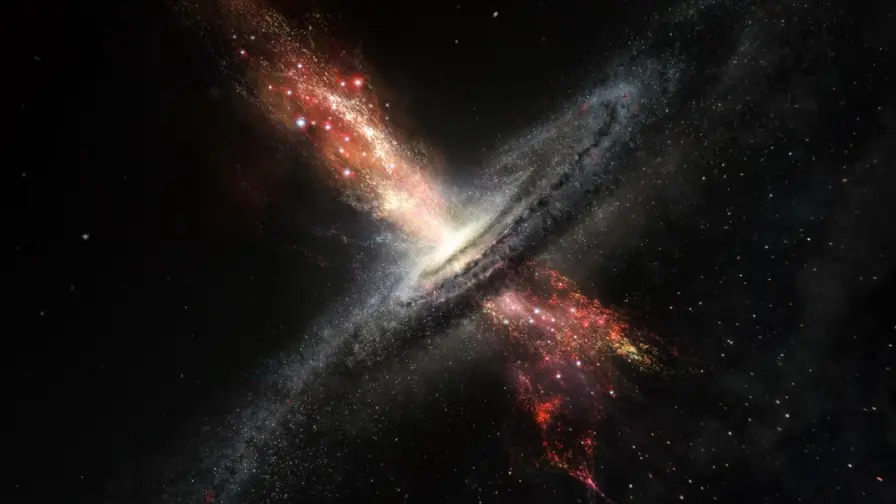
Euclid changes the game because it pairs wide-area coverage with deep infrared sensitivity. Instead of sifting tiny patches of sky for only the brightest, most obvious sources, astronomers can now assemble a more representative sample of early quasars. That improved census reduces a key observational bias. Rather than studying only the extremes, researchers can probe the typical behavior of quasars at the dawn of time.

This collage shows 15 of 31 quasars discovered by ESA’s Euclid telescope, labeled with their names and redshifts. The two oldest, at upper left, are EUCL J172902.75+641018.1 (z = 7.77) and EUCL J125308.55+705432.3 (z = 7.69). They shone with the light of a trillion Suns when the Universe was just 670 million years old.
The discovery set includes 12 quasars with redshift values of 7 or higher. A redshift of 7 corresponds to the Universe when it was roughly 770 million years old. Pushing beyond that threshold gives astronomers a direct window into the epoch of reionization, the time when the first luminous sources ionized the pervasive neutral hydrogen left over from the Big Bang.
Before Euclid, assembling even a few quasars at these distances required years of targeted searches. Now the mission has effectively accelerated that process, delivering a population in a single year that used to take decades to compile.
What these quasars reveal about early growth
Discovering ancient quasars is only the first step. The next, crucial phase is follow-up: obtain higher-resolution spectra, measure black hole masses, evaluate the host galaxy environment, and search for signatures of rapid star formation. Early results from follow-up work are already intriguing.
Detailed study of one of the second-oldest quasars shows it sits inside a galaxy rich in gas and dust, with vigorous star formation underway. That tells a simple, yet profound story. The black hole was being fed plentiful fuel while the galaxy itself was producing stars at a high rate. The two components may have grown in tandem, each influencing the other through feedback processes that regulate gas supply.
These quasars also illuminate the fabric of reionization. Energetic light from early stars, galaxies and quasars gradually ionized the cold, neutral hydrogen that dominated the Universe after recombination. By locating and characterizing luminous sources in this period, scientists can refine models of how, when and where the cosmic fog lifted to reveal the transparent sky we observe today.

This graphic maps 31 quasars discovered by ESA’s Euclid telescope (yellow), its August 2025 survey area (blue), and the two farthest quasars (red): EUCL J172902.75+641018.1 (z = 7.77) on the right and EUCL J125308.55+705432.3 (z = 7.69) on the left. The background is ESA Planck’s 2014 all-sky map, with the bright band marking the Milky Way’s star-filled plane.
There are theoretical tensions. Forming billion-solar-mass black holes within a few hundred million years requires either unusually large initial seeds or prolonged, near-Eddington accretion. Both options strain standard galactic-evolution scenarios. Adding dozens more robust data points alters the balance of possibilities. It narrows the viable explanations for how the first supermassive black holes assembled.
On the technical side, Euclid’s success underscores how space-based infrared imaging complements ground-based spectroscopy. Euclid pinpoints promising candidates across massive fields. Then, ground telescopes equipped with high-resolution spectrographs step in to confirm redshifts, measure line widths, and probe the chemical composition of the surrounding gas. Together, they form a discovery pipeline that scales.
Expert Insight
"Finding this many quasars from the Universe's infancy is like discovering a fossil bed instead of a single bone," says Dr. Elena Morales, a theoretical astrophysicist at the Institute for Cosmic Origins. "With a population we can test growth scenarios statistically. Are these black holes rare outliers, or representative of a broader, previously hidden class? Euclid is finally giving us the numbers we need to answer that."
Dr. Morales continues, "The interplay between star formation and black hole feeding in these systems is particularly revealing. When gas inflows are abundant, both processes accelerate. Observationally separating cause from effect remains a challenge, but high-redshift quasar samples change the terms of the debate."
Conclusion
Euclid’s growing quasar census does more than add objects to a catalog. It reshapes questions about the early Universe. With 31 new high-redshift quasars, including two that shine as if a trillion Suns were packed into a single galactic core, astronomers now have the leverage to test how supermassive black holes and galaxies reached enormous mass so rapidly.
Work will continue. Euclid’s Wide Survey will eventually cover more than a third of the sky, and as the data accumulate, more faint and distant quasars should emerge. Follow-up campaigns with ground-based observatories and future space telescopes will refine masses, chemical signatures and the surrounding environments. Each new data point tightens the narrative of cosmic origins.
Who would have thought that a mission aimed at dark energy and dark matter would become a torch for cosmic dawn? That is the productive surprise of modern astronomy. Euclid is not just mapping emptiness. It is lighting the way to an era when the first giants took shape.

“The cosmos has always fascinated me. I write about space missions, astronomy, and the technologies pushing humanity beyond Earth.”

Discussion
Leave a Comment
Comments
No comments yet. Be the first.