
Imagine a river of stars braided around a galaxy, a long, luminous thread torn from a doomed star cluster and strewn across space. Astronomers have treated these stellar streams as delicate detectors: tiny bends and gaps could betray invisible encounters with dark matter. But what if the river itself is roiling? What if the galaxy that hosts the stream can sculpt the same fingerprints researchers attribute to exotic dark clumps?

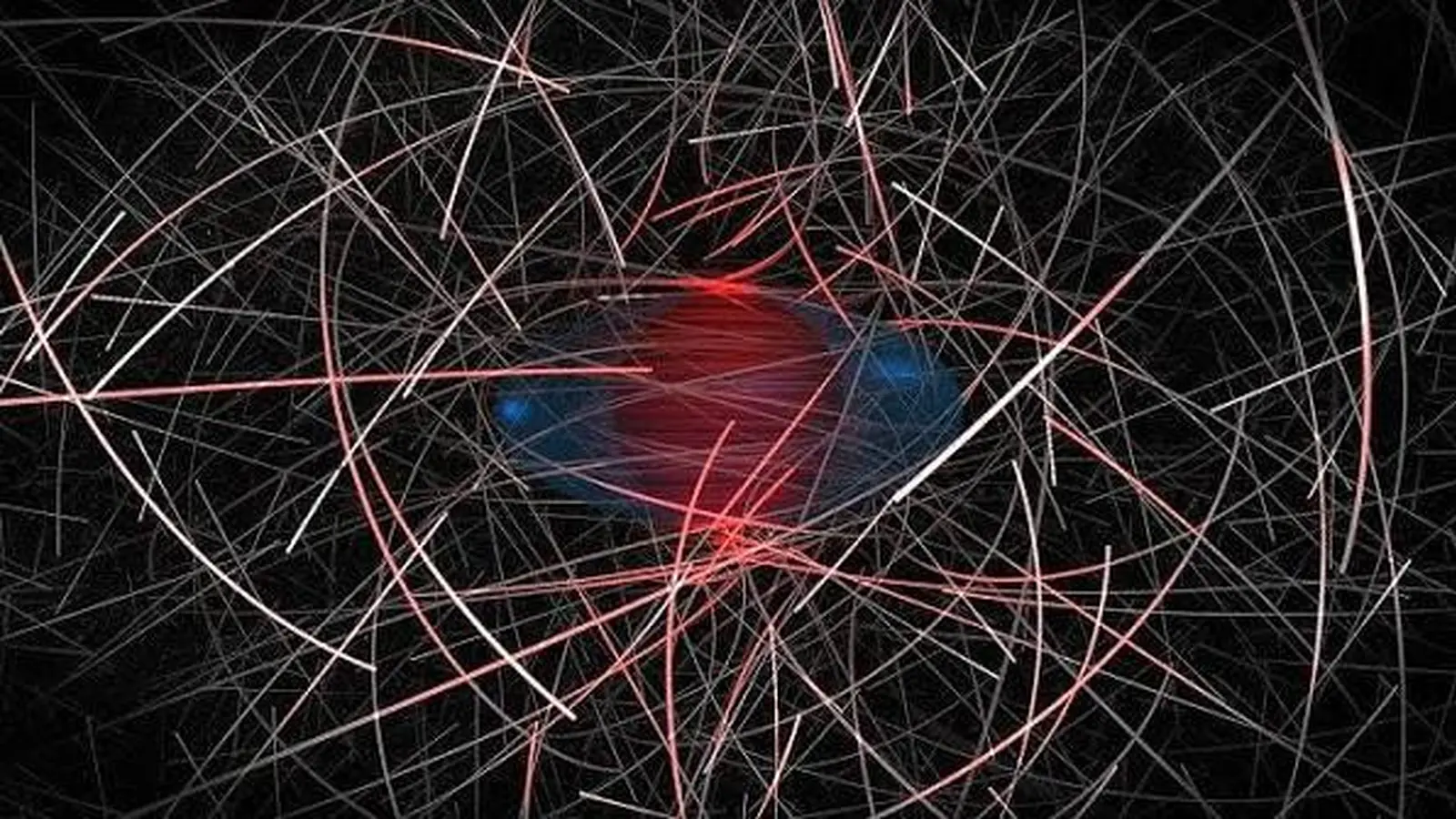
Most galaxies are likely surrounded by long filaments of orbiting stars known as stellar streams. In a new study from the University of Washington, astronomers simulated stellar streams — pictured here as multicolored streaks — as they orbited virtual host galaxies to test a leading theory about how dark matter might influence the streams’ shape. The results could help researchers separate true evidence of dark matter from false positives.
When the host galaxy starts to look like the suspect
Researchers at the University of Washington ran a controlled experiment in silico: roughly 15,000 simulated stellar streams orbiting four different Milky Way–like galaxies. Crucially, the models intentionally omitted the small dark matter clumps often invoked to explain stream distortions. The question was simple: can the galaxy itself make the same signatures that would otherwise be blamed on dark matter subhalos?
The answer was striking. After five billion simulated years, nearly every stream showed some irregularity. Wiggles. Kinks. Spurs. Branches. Gaps. Clumps. Only about 70 streams remained featureless out of the entire set. Some filaments were shredded almost entirely by the galaxy’s uneven gravitational field.
Arpit Arora, the study’s lead author and a postdoctoral scholar at UW, put it plainly: "In our simulations, the host galaxies alone caused the same kinds of irregularities that we observe in real stellar streams." That finding flips a working assumption: streams are not guaranteed to be thin, pristine testbeds for dark matter detection. They can be wild and noisy, shaped by the galactic disk and its internal structure.
What churns the streams?
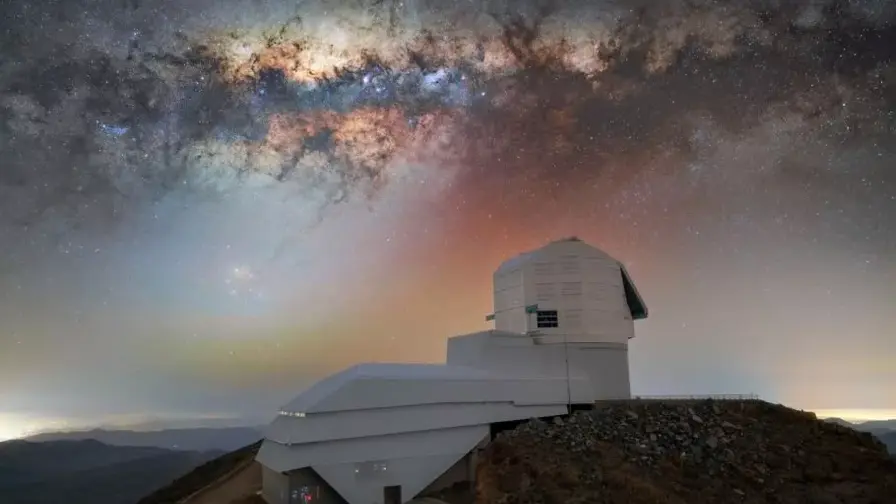
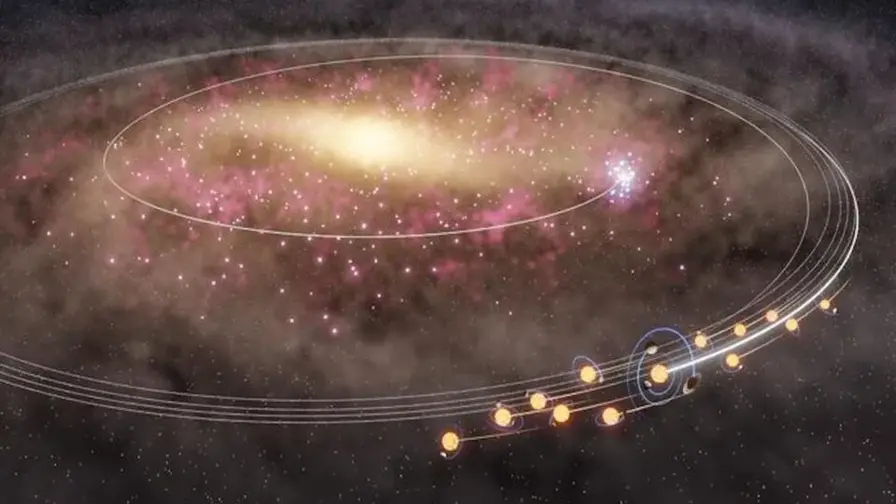
It turns out galaxies are messy. Stars in a galactic disk are not distributed perfectly smoothly. Dense regions, spiral arms, and clumpy stellar concentrations create a gravitational landscape that varies with position and time. As a stellar stream sweeps through those regions, tides and torques bend and tear the filament. Streams that pass closer to the galactic center experience more frequent encounters with these dense patches and therefore show a higher incidence of irregularities.
That mechanism produces many of the features previously attributed to dark matter subhalos. The simulated streams developed almost the full zoo of distortions researchers study in real data. Without accounting for this host-driven noise, observers risk assigning the wrong cause to observed gaps or bends.

A supporting illustration in the study highlights this diversity: a selection of virtual stellar streams shows the variety of bends, wiggles, kinks and gaps that the simulations produced. Out of roughly 15,000 streams, only 70 were featureless.
Implications for dark matter hunting
Why does this matter? Because stellar streams are among the sharpest tools astronomers have to probe dark matter on small scales. The prevailing idea: if a stream bears a gap or a sharp deflection, a passing dark matter subhalo might be the culprit. Those subhalos are an expected outcome of many dark matter theories, including the cold dark matter paradigm. Their abundance and mass distribution provide clues about dark matter’s nature.
But if the host galaxy can mimic the same effects, then distinguishing a true dark matter signature becomes far harder. The UW team’s simulations do not rule out subhalos. Instead, they change the analysis: observers must first subtract the galaxy’s own contribution to stream structure before claiming detection of dark matter perturbations.
Co-author Nora Shipp, an assistant professor of astronomy at UW, emphasized the stakes: "The Milky Way is one of the best laboratories we have for figuring out what dark matter is, and stellar streams are one of the sharpest tools inside it." The study says we must sharpen our tools by understanding the instrument — the host galaxy — better.
From simulation to observation: what comes next
Arora and his colleagues plan a second phase of work: re-run the simulations with dark matter subhalos added back in. The goal is to ask whether subhalo-induced patterns are statistically distinct from those the galaxy produces on its own. If so, observers can design discriminants to separate the two causes. If not, the road to small-scale dark matter constraints becomes steeper.
New survey data will help. The Simonyi Survey Telescope at the Vera C. Rubin Observatory is expected to reveal many more stellar streams in the Milky Way. A larger, deeper sample will provide the diversity needed to classify which features are common products of host dynamics and which are outliers deserving a dark matter explanation. In short: better data and better models must go hand in hand.
Expert Insight
Dr. Elena Vargas, an observational astrophysicist who works on galactic dynamics (not involved in the study), offered a practical perspective: "Streams are like forensic evidence at a very messy crime scene. You first map the environment — the disk, spiral arms, and known perturbations — and only then can you confidently point to an unfamiliar fingerprint. These new simulations are an essential step toward that baseline."
She added a note on method: "Combining precision astrometry from Gaia with deep imaging from the Rubin Observatory will let us trace stream morphology in unprecedented detail. That data will be the acid test for whether we can untangle host-driven features from genuine dark matter interactions."
Conclusion
The University of Washington simulations remind us that astrophysical context matters. Stellar streams remain valuable probes of the dark sector, but they are not solitary witnesses. The host galaxy can imitate many of the signatures once thought to be unique fingerprints of dark matter subhalos. Progress will require careful modeling of galactic structure, targeted simulations that include both baryonic complexity and dark matter substructure, and the large observational datasets soon arriving from next-generation surveys. Only then can astronomers hope to separate astrophysical noise from the subtle whispers of dark matter.

“My work centers on sustainability, energy, and environmental science — examining how innovation can lead to a greener future.”

Discussion
Leave a Comment
Comments (3)
Feels a bit overhyped, but fair, good reminder to model the galaxy first. Re-run with subhalos or we're just guessing. quick thought, messy but useful.
Is this even true? If the sims left out subhalos, how can we tell which gaps are host driven vs exotic... feels like a big caveat, no?
wow didnt see that coming... the galaxy itself can mimic dark clumps? mind blown, also kinda bummed. Makes me respect how messy real data must be. Tough job for observers!