
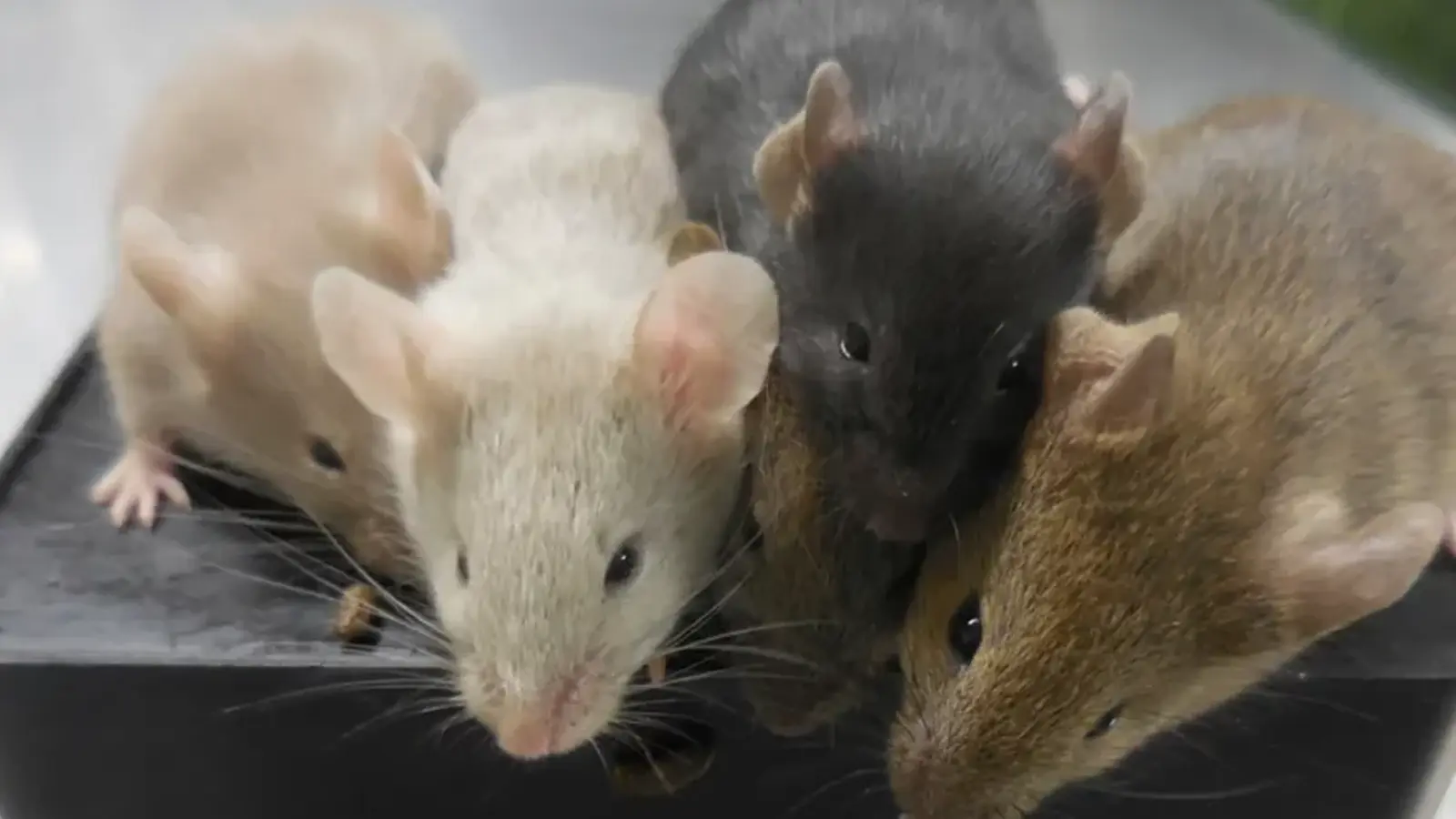
A single genetic edit produced a surprising result: healthy, fertile female mice that began life as male embryos. The work, led by researchers at Yamanashi University, uses a CRISPR-based strategy to remove the Y chromosome from developing cells and, in effect, rewrite sexual fate in mammals.
From tidepool fish to the lab bench
Biology offered the idea. Some fish, like the Okinawa rubble goby, can switch sex in response to social cues so their group survives. Japanese scientists borrowed that concept and built a molecular tool named Y-CUT. The goal: detect and excise the Y chromosome during early cell divisions so male (XY) embryos develop without their male-determining chromosome.
Why target the Y chromosome? In mammals, sex chromosomes come as XX for females and XY for males. The Y carries genes that trigger male development; remove it and the developmental program can shift. Y-CUT uses targeted CRISPR editing aimed at sequences that ensure the Y chromosome is transmitted during mitosis. When those sequences are disrupted, the Y is lost from daughter cells and the embryo proceeds on a female developmental trajectory.
How the experiment worked and what it produced
Researchers introduced Y-CUT into early-stage mouse embryos of XY genotype. After editing, embryos were implanted into surrogate mothers and allowed to develop. The pups that emerged were phenotypically female. Genetic analysis showed these animals carried a single X chromosome (XO), lacking both the Y and a second X.

Those XO females were not only anatomically female; they were fertile. Breeding tests produced healthy offspring, and the team reports the clones are genetically identical to the original males except for the missing Y chromosome. In short: a male genome, minus the Y, can produce fully functional female mice.
The paper frames this as more than a laboratory curiosity. It challenges an entrenched idea that both sexes must be present for mammalian reproduction to persist in a population. If the Y can be removed reliably, male-derived material might be repurposed to create females when needed.
Implications, limits, and future directions
Conservation biologists immediately spot the potential. Imagine a critically endangered species with only a few surviving males. Current cloning approaches often yield more males and do little to restore female numbers. A Y-removal approach could, in theory, help generate females from existing male tissue and rebalance breeding populations.
That said, there are caveats. XO physiology varies across mammals. In mice, XO individuals can be fertile; in other species, missing a second X may cause infertility or developmental problems. The Y-CUT team acknowledges this and is developing complementary methods to reintroduce a second X chromosome into edited cells, aiming to restore an XX complement rather than leave animals XO.
Technical hurdles remain too. Deleting an entire chromosome reliably in diverse species is more complicated than editing a single gene. Off-target effects, mosaicism, and ethical considerations about genome editing in wild or endangered animals will shape how—and whether—this approach moves from lab to field.
"This result forces us to reexamine what is strictly required for mammalian reproduction," the authors write, noting both the conceptual shift and the careful work still needed before translation to other species.
Longer-term, the Y-CUT strategy could open new avenues in developmental biology, reproductive genetics, and species recovery programs. It remains a powerful example of how an idea from nature, combined with precise genome editing, can yield unexpected and deeply informative outcomes.


“My work centers on sustainability, energy, and environmental science — examining how innovation can lead to a greener future.”

Discussion
Leave a Comment
Comments (2)
is this even true? Feels like sci fi but labs do crazy stuff. What about XO issues in other species, mosaicism, ethics — if they cant rescue 2nd X then no go
Wow that's wild, a male genome making fertile females? Mind blown, excited but also uneasy... conservation potential huge, but off targets worry me