
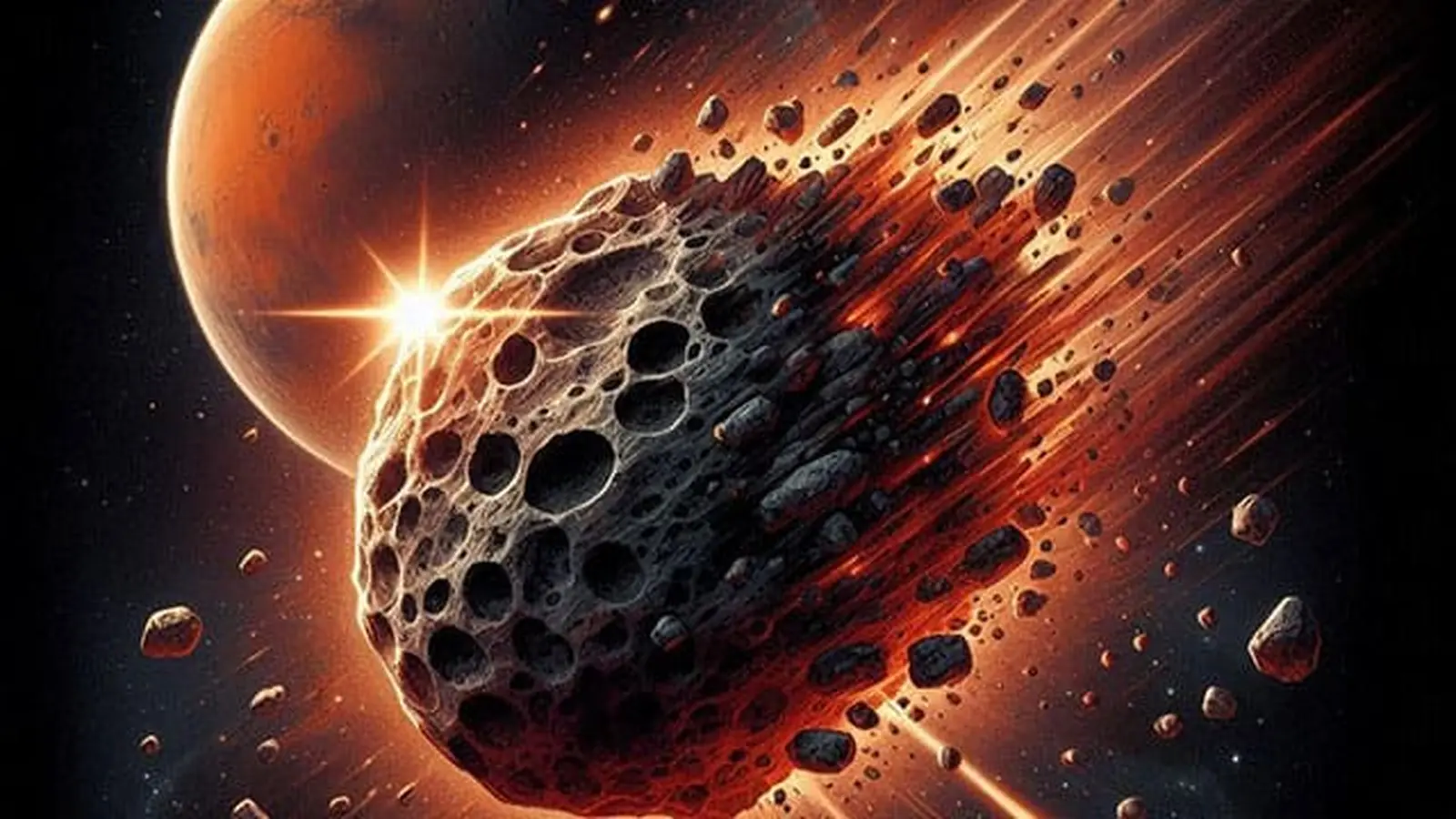
A battered stone found in the Algerian desert has threaded a needle through a yawning hole in Mars’ geologic memory.
Unexpected timekeeping
When researchers at Boston College analyzed Northwest Africa 13441, they expected another entry in the catalog of Martian igneous meteorites. Instead they opened a portal into a stretch of Martian history that had been effectively invisible. The rock crystallized about 1.273 billion years ago, placing it squarely in a nearly two billion year hiatus where shergottite samples were missing.
Shergottites are the most common Martian meteorites discovered on Earth. They are volcanic or intrusive igneous rocks that carry signatures of magmas generated inside Mars. But until this find, nearly all well-dated shergottites clustered in two age groups: younger than roughly 600 million years, or around 2.4 billion years old. That left a vast middle interval with almost no direct samples to study Martian volcanism and interior evolution.
"The characteristics of this meteorite were entirely surprising," said Ethan Baxter, a professor of Earth and Environmental Sciences at Boston College and founder of the university’s Center for Isotope Geochemistry. “No other Martian meteorite like this has an age of 1.27 billion years.”
More than an age: a chemical fingerprint
Age alone would have been noteworthy. The chemistry made NWA 13441 remarkable. High-precision isotope work focused on neodymium, a rare-earth element whose isotopic ratios act as tracers of mantle reservoirs. The initial neodymium signature in this meteorite is essentially chondritic. That word refers to chondrite meteorites, primitive material that dates back to the solar system’s origin and has not undergone the extensive melting and differentiation typical of planetary interiors.

No previously identified shergottite showed this broadly chondritic initial neodymium composition. Put another way, the magma that formed NWA 13441 appears to have tapped a deep Martian reservoir that preserved a primordial chemical memory. The finding suggests a portion of Mars’ interior remained comparatively untouched since near the start of the solar system.
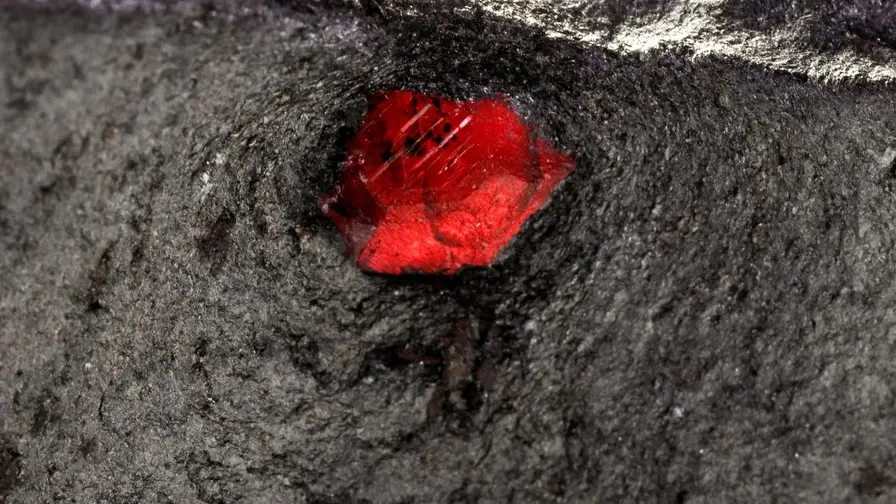
To validate the rock’s Martian origin, the team collaborated with specialists at Scripps Institution of Oceanography and The Open University in Britain. Their combined isotopic and petrological work confirmed the meteorite came from Mars, and not from another parent body, and then chased down its age and isotopic fingerprints using multiple state-of-the-art techniques.
Why Mars can keep secrets Earth cannot
Planets with mobile tectonic plates, like Earth, continually rework their surfaces and mantles. Crust is created, destroyed, subducted, and remade. That recycling erases or obscures chemical reservoirs formed in the planet’s earliest phases. Mars lacks Earth’s global plate tectonic machinery. It seems to have evolved under a largely stagnant lithosphere, which allowed some ancient chemical domains to survive for billions of years.
That difference matters. Martian meteorites are more than curious rocks. Some act as time capsules, preserving snapshots of planetary processes from eras that, on Earth, have been largely overwritten. NWA 13441 looks like one of the clearest examples yet. Petrographic observations show it crystallized near the crust-mantle boundary and that it is olivine-rich basalt. The sample also bears intense shock features consistent with ejection by a powerful impact, the same kind of event that launched many Martian meteorites on trajectories to Earth.
Finding a shergottite in the 1.27 billion year range fills a critical gap. It provides direct evidence that magmatic activity on Mars continued through the interval that we previously could not sample. It also raises the prospect that Martian mantle heterogeneity persisted on billion-year timescales.
Implications for Martian volcanism and internal structure
Beyond the headline age, the study offers two broad implications. First, it expands the timeline of Martian magmatism sampled by meteorites, connecting recent volcanic episodes to much older activity. Second, it demonstrates that parts of Mars’ interior remained chemically primitive. If a chondritic-like reservoir survived for more than four billion years, then early differentiation on Mars was incomplete or uneven. Some domains apparently resisted melting and mixing.
Those conclusions feed into wider debates. How heterogeneous is Mars’ mantle? How long did different volcanic provinces remain active? Which regions might spacecraft sample to retrieve rocks that record early planetary history? NWA 13441 suggests the answers will be richer and more complex than previously assumed.
What scientists did and how
The research combined traditional petrology with precise isotope geochemistry. The team received a cleaned, crushed portion of the meteorite and a thin section on glass from a colleague at Appalachian State University. Using mass spectrometry, they measured neodymium isotopes and other systems to derive an isochron age for crystallization. Shock textures and mineral chemistry were characterized under the microscope to link the isotopic data to processes such as mantle melting and surface impact.
These lines of evidence converged on two discoveries: the meteorite’s crystallization age at 1.273 billion years and its distinctive chondritic-like neodymium signature. Together, those results identify NWA 13441 as a shergottite from a previously unsampled interval and from a reservoir distinct from those recorded by other Martian meteorites.
Expert Insight
"This meteorite is a rare messenger," said Dr. Mira Han, a planetary geochemist at the Institute for Planetary Materials (fictional affiliation for commentary). "It tells us that Mars did not homogenize its interior quickly. Instead, pockets of primitive material survived long enough to be mobilized by later melting events. Those pockets are precious because they preserve information about the planet’s formation conditions."
Her brief assessment highlights how a single specimen can shift perspectives: not just by adding an age, but by revealing how the planet’s interior was structured and how that structure evolved.
Where this leads next
Baxter’s laboratory is not finished with NWA 13441. The team plans to analyze additional isotope systems to refine where this meteorite sits in the broader Martian family tree. By comparing radiogenic and stable isotope systems across multiple samples, researchers hope to map mantle domains, constrain source depths, and identify links between meteorites and known volcanic provinces on Mars.
Future sample-return missions will provide ground truth. Until those collections arrive, meteorites like NWA 13441 offer the best direct windows into Mars’ deep past. They can guide landing site selection and inform interpretation of rover and orbiter data by pointing to which regions might still preserve ancient mantle signatures.
Conclusion
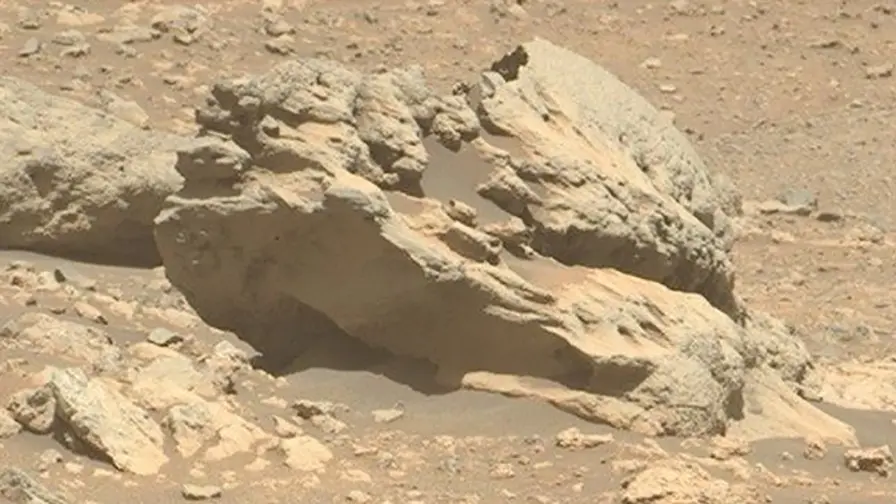
NWA 13441 is not the first Martian meteorite to spark excitement, but it is one of the few that alters how we think about long-term interior evolution. It closes a long-standing gap in the shergottite age record and offers the first direct evidence of a broadly chondritic mantle source in that middle interval. In short, the stone found in Algeria is more than a curiosity. It is a fragment of Mars’ deep memory, one that will shape models of Martian volcanism and guide future exploration for years to come.

“The cosmos has always fascinated me. I write about space missions, astronomy, and the technologies pushing humanity beyond Earth.”

Discussion
Leave a Comment
Comments (3)
Feels overhyped but ok, cool to fill a gap. one meteorite isnt a full story tho, need more samples and rover tie‑ins. still hoping for more data!
is this even certain? isotopic work sounds solid but one sample... could be contamination, or an exotic mix from impact ejecta? how do they exclude that
wow, didn't expect Mars to keep such old secrets. 1.27 billion yrs, that's wild. like a time capsule. where else are those reservoirs hiding?