
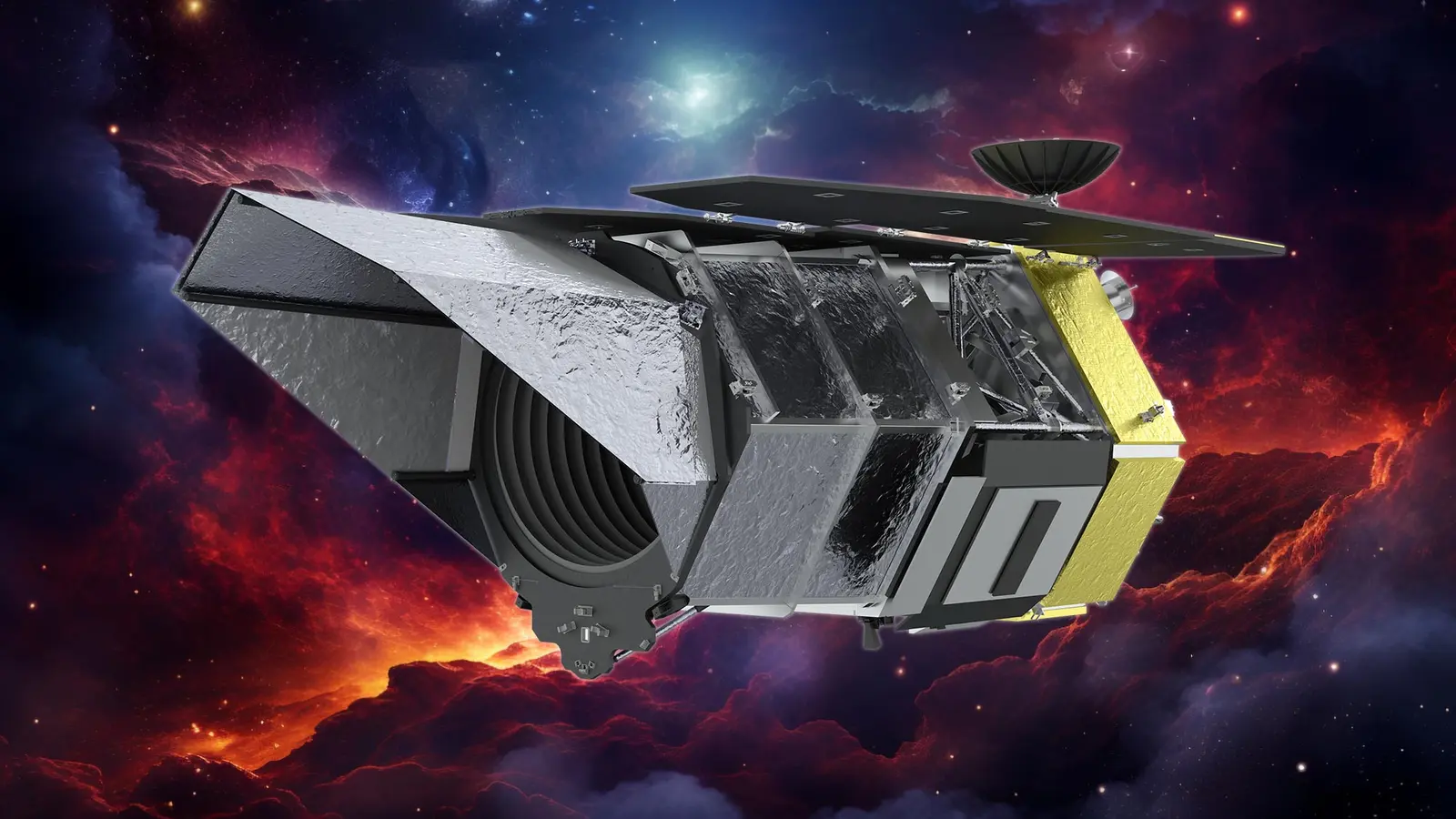
Imagine a 43 foot protective shell closing around one of the most ambitious space observatories built by NASA. The sound is muted in the hangar, but the stakes are loud. Teams at Kennedy Space Center have just finished sealing the Nancy Grace Roman Space Telescope inside the fairing of a SpaceX Falcon Heavy rocket, a milestone that moves the mission from assembly into the final cadence before liftoff.
Encapsulation and the last-mile choreography
Encapsulation is not a ceremonial gesture. It is protection, logistics, and a countdown all wrapped into one. The fairing is a two-piece shell towering 43 feet. It keeps the telescope in a tightly controlled environment while crews transport and prepare the vehicle for launch operations.
Why does that matter? Because launch subjects a spacecraft to some of the harshest conditions it will ever face. Vibrations from the rocket, turbulent aerodynamic pressures while punching through the atmosphere, and heating from friction all threaten delicate optics and electronics. The fairing shields Roman during those first minutes of ascent. When the rocket reaches thinner air and calmer conditions, the fairing halves separate and fall away, leaving the observatory exposed to space and on its path toward Sun Earth Lagrange point 2, commonly called L2.

Mounting, rollout, and the target window
Next steps are straightforward but exacting. Teams will move the encapsulated observatory to SpaceX’s hangar at Launch Pad 39A. There Roman will be mated to Falcon Heavy before the combined stack rolls to the pad for final checks. NASA and SpaceX are targeting no earlier than 7:26 a.m. EDT on Sunday, August 30, for launch.
Success depends on coordination. Ground systems, range safety, avionics checks, and weather forecasts all have to align. A scrub on one item can cascade into days of schedule changes. Still, the encapsulation itself is a sign that the hardware and interfaces have passed the rigorous ground testing required for flight.
What Roman will do once it leaves Earth
Roman’s mission reads like a roadmap of big questions. It will hunt for thousands of exoplanets, providing statistical depth that no previous mission matched. It will image distant planetary systems and conduct surveys that let scientists answer questions about how common Earth like planets might be.
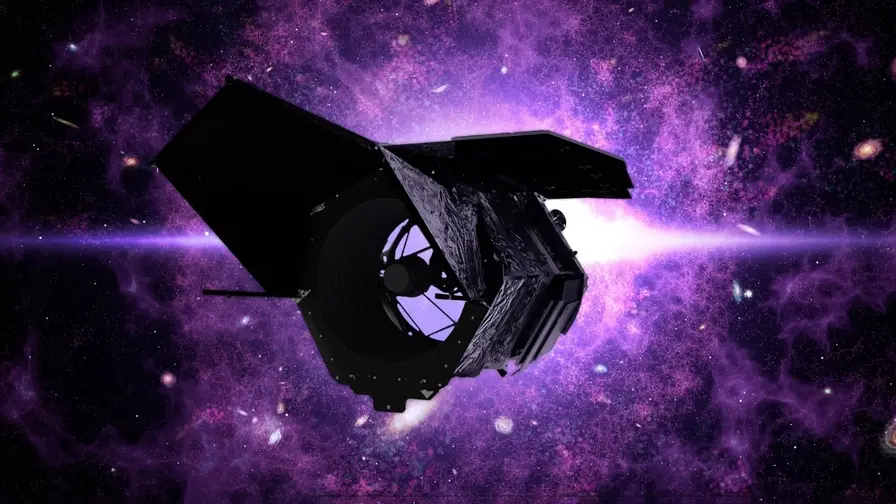
At the same time Roman will probe the invisible scaffolding of the cosmos. Dark matter betrays itself only through gravity, and Roman’s wide field of view and precise infrared measurements will allow astronomers to trace how mass is distributed across vast volumes of space. Dark energy, the enigmatic driver of accelerated cosmic expansion, will be studied by mapping the growth of structure over time. Those two goals—counting worlds and mapping the cosmos—complement one another. One looks at the small and nearby, the other at the grand architecture of the universe.
Key technologies on board
- Advanced infrared detectors optimized for faint, distant light
- A coronagraph instrument designed to block starlight and reveal nearby exoplanets
- Wide field imager to conduct surveys across vast sky areas with high sensitivity
These instruments together give Roman a unique combination: survey speed and the ability to study specific targets with high contrast imaging. That combination is why the mission is expected to reshape statistical studies of planetary systems and sharpen models of cosmic evolution.
Expert Insight
"Roman will change the questions we can ask about both planets and the universe at large," says Dr. Elena Vargas, an astrophysicist who works on space telescope instrumentation. "Its wide surveys will reveal populations we barely suspected, while targeted observations will help us test theories about planet formation and the role of dark components in structure formation. This mission ties together small scale and large scale cosmology in a way we have not had before."
Operationally, Roman will travel to L2, roughly 1.5 million kilometers from Earth. That point offers a thermally stable environment with uninterrupted views of large sky regions, ideal for the long, repeated observations the mission needs.
What success would mean
Finding thousands of exoplanets will fill in gaps in our census of planetary systems. Detecting subtle signatures of dark matter and tracking the history of cosmic expansion will constrain models that today have wide uncertainties. For scientists, Roman is both a surveyor and a microscope. It will point out promising targets for follow up with other observatories, and it will supply the statistical backbone needed to put small discoveries into cosmic context.
There are risks, as with any space mission. Launch anomalies, deployment issues, or instrument degradation could reduce return. But the careful preparations signaled by encapsulation are precisely the measures meant to reduce those risks.
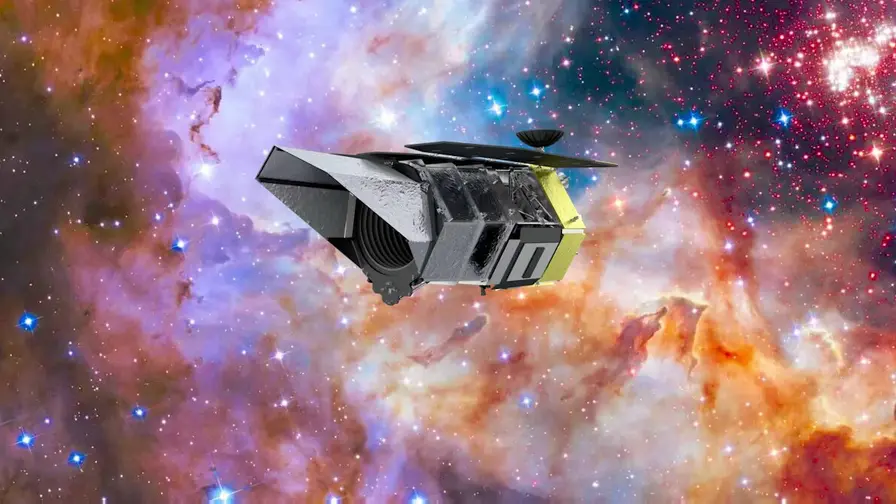
When the fairing opens a few minutes after liftoff, an observatory that has spent years in testing and assembly will finally begin its quiet voyage to L2. The data it returns will not arrive all at once. Instead, like most scientific revolutions, progress will be cumulative—subtle, steady, and profound.

“My work centers on sustainability, energy, and environmental science — examining how innovation can lead to a greener future.”

Discussion
Leave a Comment
Comments (2)
Is encapsulation really enough? I mean vibrations, heat, so many failure modes... feels risky, not trying to be paranoid but what if something pops later?
wow, chills reading that. folding a 43 ft shell around a telescope is wild... the L2 voyage feels kinda poetic. hope everything holds, so nervous lol