
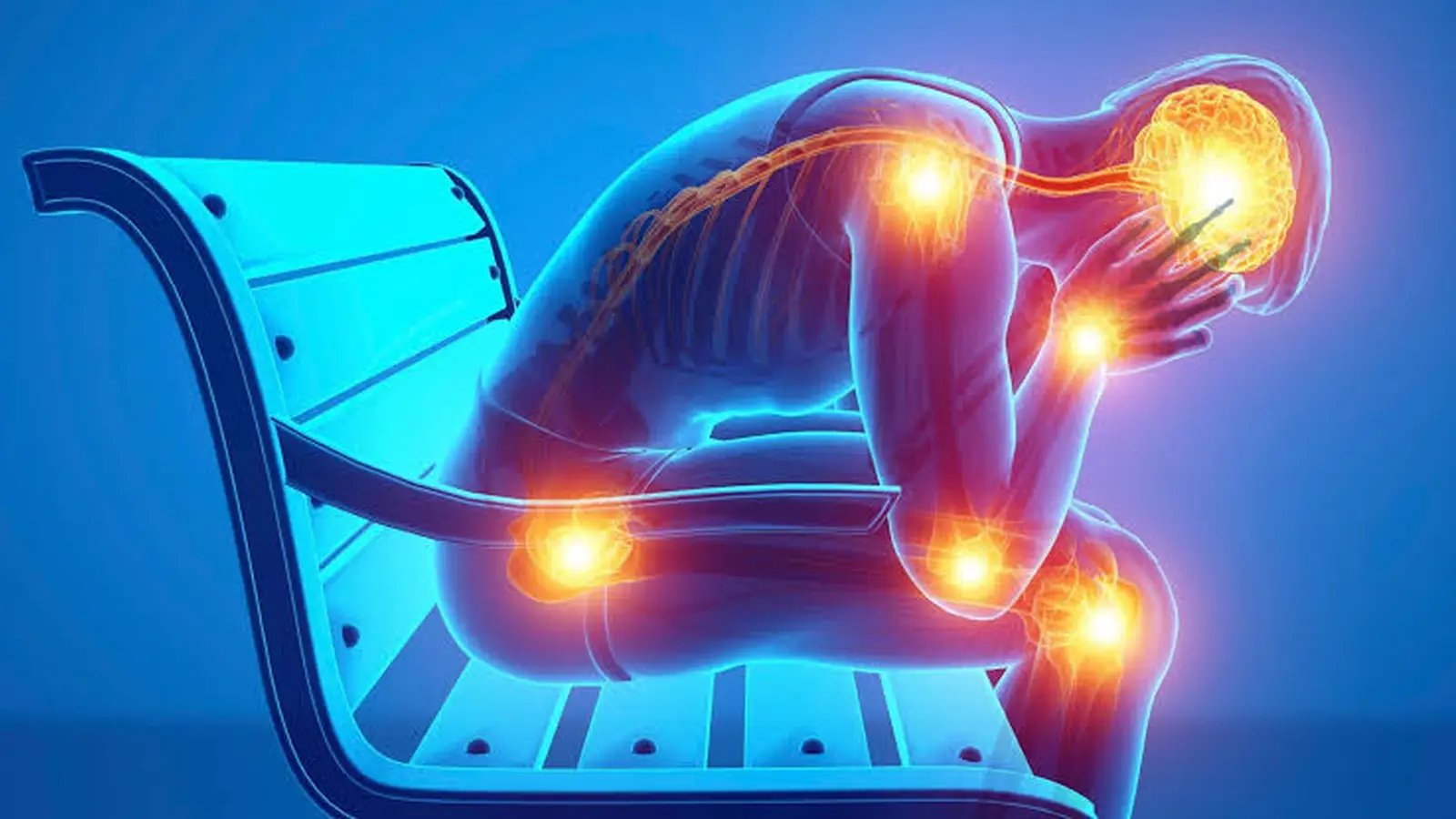
Imagine a treatment no bigger than a sesame seed, slipped through a needle, and switched on from outside the body. It sounds like science fiction. It is not. Researchers at NYU Abu Dhabi, collaborating with Cleveland Clinic Abu Dhabi, have published new results describing a seed-sized injectable device that can stimulate specific nerves without surgery, batteries, or wires.

Researchers have developed a seed-sized injectable device that can stimulate targeted nerves without surgery, batteries, or implanted wires.
How a tiny implant can change treatment choices
Neuromodulation, the practice of using electrical impulses to change nerve activity, already helps patients with chronic pain and movement disorders. But conventional approaches usually require open surgery to place electrodes and an implanted power source. That raises costs, lengthens recovery, and increases risk. What if those hurdles could be removed?
The injectable device is engineered to sit beside a target nerve after percutaneous delivery through a standard needle. Once in place, it receives power wirelessly from an external transmitter and delivers programmable electrical pulses to the nerve. Doctors can tune the stimulation in real time. Small. Precise. Adjustable.
According to Khalil Ramadi, the study's senior author and an assistant professor of bioengineering at NYU Abu Dhabi and NYU Tandon, this approach reframes the problem. "By creating a device that can be injected rather than surgically implanted, we are making these therapies simpler, safer, and more accessible, while still maintaining precise control over nerve activity," he said.
The system leverages standard clinical imaging tools, such as ultrasound and CT, to guide placement and to check positioning after injection. That makes it compatible with existing clinical workflows. In preclinical testing the device activated nerves reliably in vivo, and it tolerated realistic mechanical and electrical conditions encountered in tissue.
Why this matters for patients and clinicians

For patients with chronic pain or motor disorders the implications are practical and immediate. Less invasive procedures mean fewer complications and faster recovery. Hospitals may be able to offer neuromodulation without the operating room logistics required for full implants. For clinicians it opens a middle ground between external, noninvasive therapies and permanently implanted hardware.
"This technology has the potential to bridge the gap between noninvasive therapies and traditional implants," said Mohamed Elsherif, the study's first author and a research associate at NYU Abu Dhabi. "It opens the door to treatments that are both effective and easy to deliver, which could significantly improve patient care."
Still, translation to routine clinical use will require carefully designed human trials, device manufacturing scale up, and regulatory review. Questions remain about long-term stability in tissue, potential immune responses, and strategies for retrieval or replacement if needed. The team is aware of these hurdles and frames the device as a complementary option rather than a one-size-fits-all replacement for existing therapies.
- Key technical features: percutaneous delivery, wireless power transfer, programmable stimulation waveforms.
- Clinical advantages: reduced invasiveness, real-time adjustability, compatibility with imaging guidance.
- Open questions: durability, chronic safety, and pathway to human trials and approval.
Expert Insight
"Small form factors and wireless power are the future of neuromodulation," says Dr. Elena Park, a neuromodulation clinician scientist not affiliated with the study. "Devices like this could make targeted therapy available in outpatient clinics rather than operating suites. But we must be rigorous about long-term outcomes. Short-term efficacy is promising, but chronic implantation brings biological challenges that we learn to manage only through longitudinal studies."
Her assessment is cautious and practical. She highlights the need to monitor tissue reaction around the device and to evaluate how consistent stimulation remains as the body moves and heals. "If those engineering and biological barriers can be crossed, the impact on treatment accessibility would be substantial," she adds.
Conclusion
The seed-sized injectable device represents an elegant step toward making neuromodulation less invasive and more widely available. It does not eliminate the need for careful clinical testing, nor does it replace all implant strategies. But it reframes the conversation about where and how we deliver electrical therapy to nerves. For patients who cannot or do not want open surgery, it could offer a new, adjustable, and lower-risk alternative.
Published in Science Advances, the study is an early but meaningful advance. It combines precision targeting with a pragmatic delivery route. The next milestones will be human feasibility trials and long-term safety data. If those succeed, clinics may soon have another tool to treat pain and movement disorders with greater flexibility and less burden for patients.


“The cosmos has always fascinated me. I write about space missions, astronomy, and the technologies pushing humanity beyond Earth.”

Discussion
Leave a Comment
Comments
No comments yet. Be the first.