
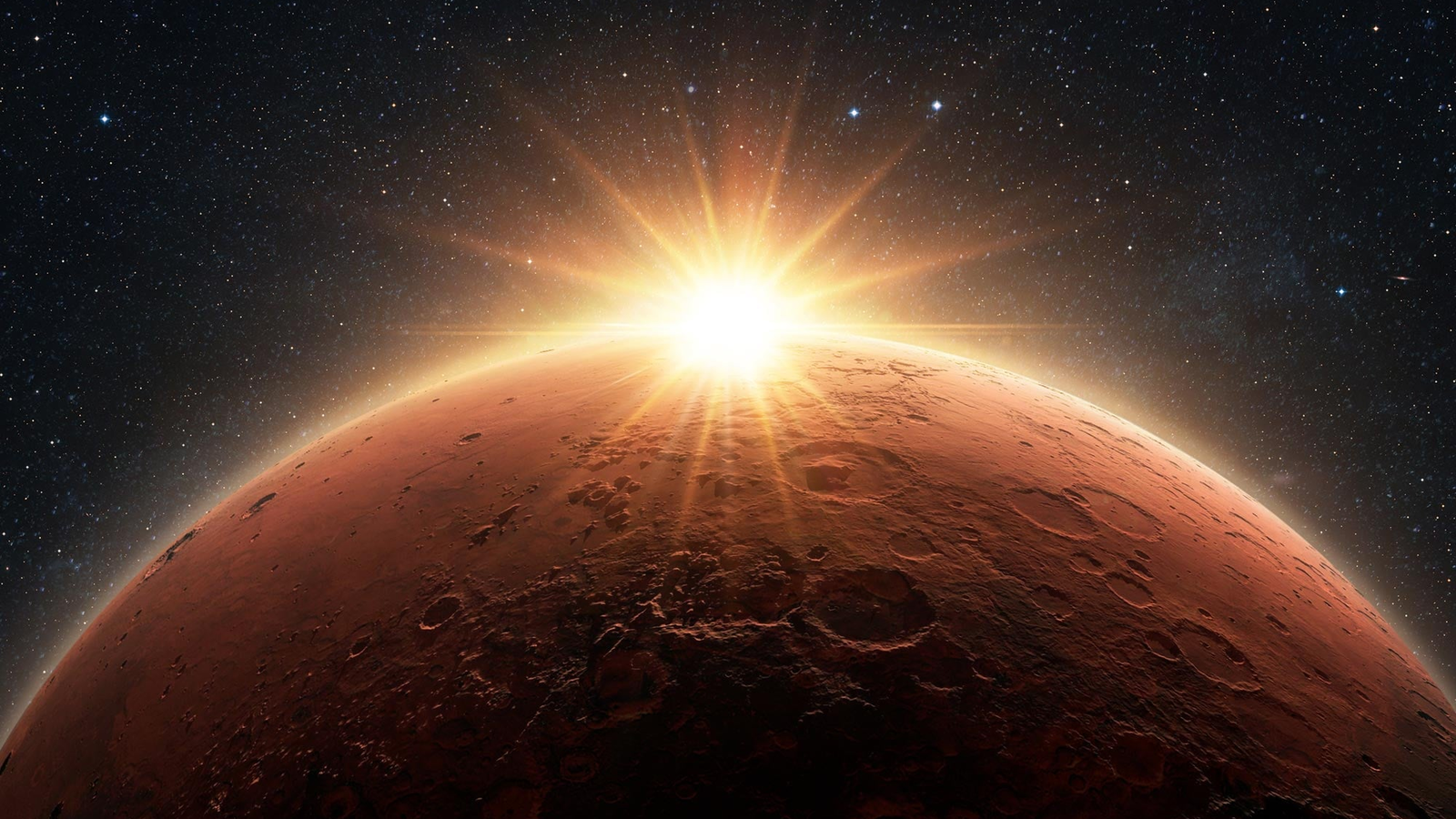
Beneath the quiet, rust-colored plains of Mars lies a story of fiery recycling that rewrites how we think rocky planets make complex crust. New seismic detective work suggests Mars did not need moving tectonic plates to produce layered, evolving crustal domains. Instead, the Red Planet appears to have hosted vast, long-lived magmatic systems that sorted and reprocessed molten rock deep below the surface.
A buried boundary that refuses to fit the simple model
NASA's InSight lander delivered the clue. Its seismometer, the first to listen to marsquakes and meteoroid impacts, recorded a sharp change in seismic behavior about 24 kilometers beneath the surface. That depth had been noted before, but its geological meaning was unclear. Researchers at the University of Oxford took a different tack: they matched the recorded seismic speeds to hundreds of possible rock chemistries using thermodynamic modeling and statistical tests.
The result pointed away from a uniform crust. The best fit for the deeper layer was ultramafic rock, a dense, iron- and magnesium-rich composition low in silica. Above the boundary, seismic data matched mafic compositions that are relatively richer in silica and more evolved. In plain terms, Mars seems to preserve a deep, heavy residue overlain by lighter, processed melts.
From molten pools to layered crust: how Mars might have sorted itself
On Earth, similar sorting happens where magma chambers feed volcanic arcs and build continental crust. Dense crystals settle while lighter melt migrates upward, producing chemical layering over time. The Oxford team argues Mars pulled off a comparable trick without plate motion. Molten reservoirs deep in the crust could have persisted long enough for fractional crystallization and melt extraction to create distinct petrological layers.

Some of the research team at Oxford University’s Department of Earth Sciences behind the study. From left to right: Professor Mike Kendall, Dr Tobermory Mackay-Champion and Professor Jon Wade.
Imagine enormous connected plumbing systems running horizontally for hundreds or perhaps thousands of kilometers in the northern hemisphere, rather than a scatter of isolated volcanoes. That scale implies transcrustal magmatism on Mars: molten material traversing and evolving through the crust, remaking the rock as it moved.
- Seismic evidence identifies a compositional boundary near 24 km depth.
- Thermodynamic modeling favors ultramafic rocks beneath and mafic rocks above.
- Interconnected magmatic networks could explain lateral continuity across vast distances.
Habitability, recycling, and why plate tectonics may not be the whole story
Geological recycling on Earth helps regulate climate and shuttles water and volatile elements between the surface and interior. Plate tectonics has been central to that picture, so Mars' apparent ability to develop internal recycling without mobile plates matters. If transcrustal magmatism can produce chemical differentiation and volatile exchange on a stagnant-lid world, then the ensemble of processes that support habitable conditions may be broader than previously thought.
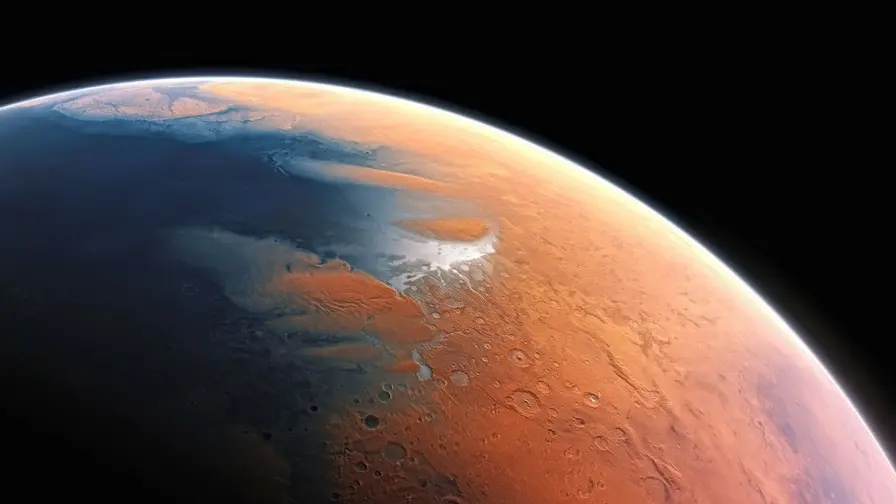
Professor Jon Wade, one of the study co-authors, noted that this shifts a key assumption: if Mars created crustal complexity through internal magmatic processing, then the range of planets that could host some of the building blocks for habitability widens. Size or the absence of plate tectonics would not automatically disqualify a world from developing diverse crustal reservoirs.
Data, methods, and the value of precision seismology
The Oxford researchers combined InSight seismic arrivals with sophisticated thermodynamic models and a rigorous statistical framework. Instead of relying on a single interpretation, they compared observed seismic velocities with large libraries of mineral assemblages and compositions. That approach reduced ambiguity and highlighted how a compositional contrast, rather than just a thermal or porosity change, best explains the signal.
Why does that matter? Because seismic soundings integrated with mineral physics let scientists move from vague statements about 'layers' to specific inferences about rock types and the processes that created them. It is a leap from saying Mars is layered to saying those layers are the fingerprints of deep magmatic evolution.
Expert Insight
Dr. Lena Ortiz, a planetary geologist not involved with the study, commented: "This work shows what you can do when you combine precise seismology with petrological models. On Mars, the absence of plate motion may have encouraged magmatic systems to remain in place and evolve for millions of years. That creates geologic memory in the crust that we can now read." Her view underscores how new datasets and fresh analytical approaches change the questions we can ask about other worlds.
Implications for future exploration and exoplanet studies
The findings refine targets for future missions and guide laboratory experiments on Martian meteorites. If large-scale magmatic systems were common, their chemical fingerprints may still be accessible at the surface in regions where erosion or later volcanism exposed older crust. Rover and sample-return campaigns could test the models by seeking the predicted contrasts in rock chemistry.
Beyond Mars, the work informs exoplanetary science. Models of planetary evolution often treat tectonics as a binary switch: either present or absent. But if stagnant-lid planets can generate internal diversity through persistent magmatic plumbing, then a wider range of exoplanets could host the geochemical cycles that influence atmosphere and surface chemistry.
Conclusion
Mars is teaching us to be cautious about assumptions. Seismic traces deep below the surface reveal a planet capable of internal recycling and chemical evolution on scales once thought exclusive to tectonically active worlds. As seismology, modeling, and missions advance, the boundary at 24 kilometers may prove to be a key chapter in the Red Planet's geological autobiography, and a lesson about how varied planetary evolution can be.

“My work centers on sustainability, energy, and environmental science — examining how innovation can lead to a greener future.”

Discussion
Leave a Comment
Comments (3)
Interesting take, feels a bit overinterpreted from a single seismic profile. still cool tho, hope rovers or samples can settle it soon
Is that 24 km boundary really chemical and not just thermal or porosity? sounds cool but I wanna see more transects, one spot feels thin
Wow, Mars had a giant magma plumbing system? mind blown. Makes me rethink planetary crust... where would you even sample that 24 km mark! 😮