
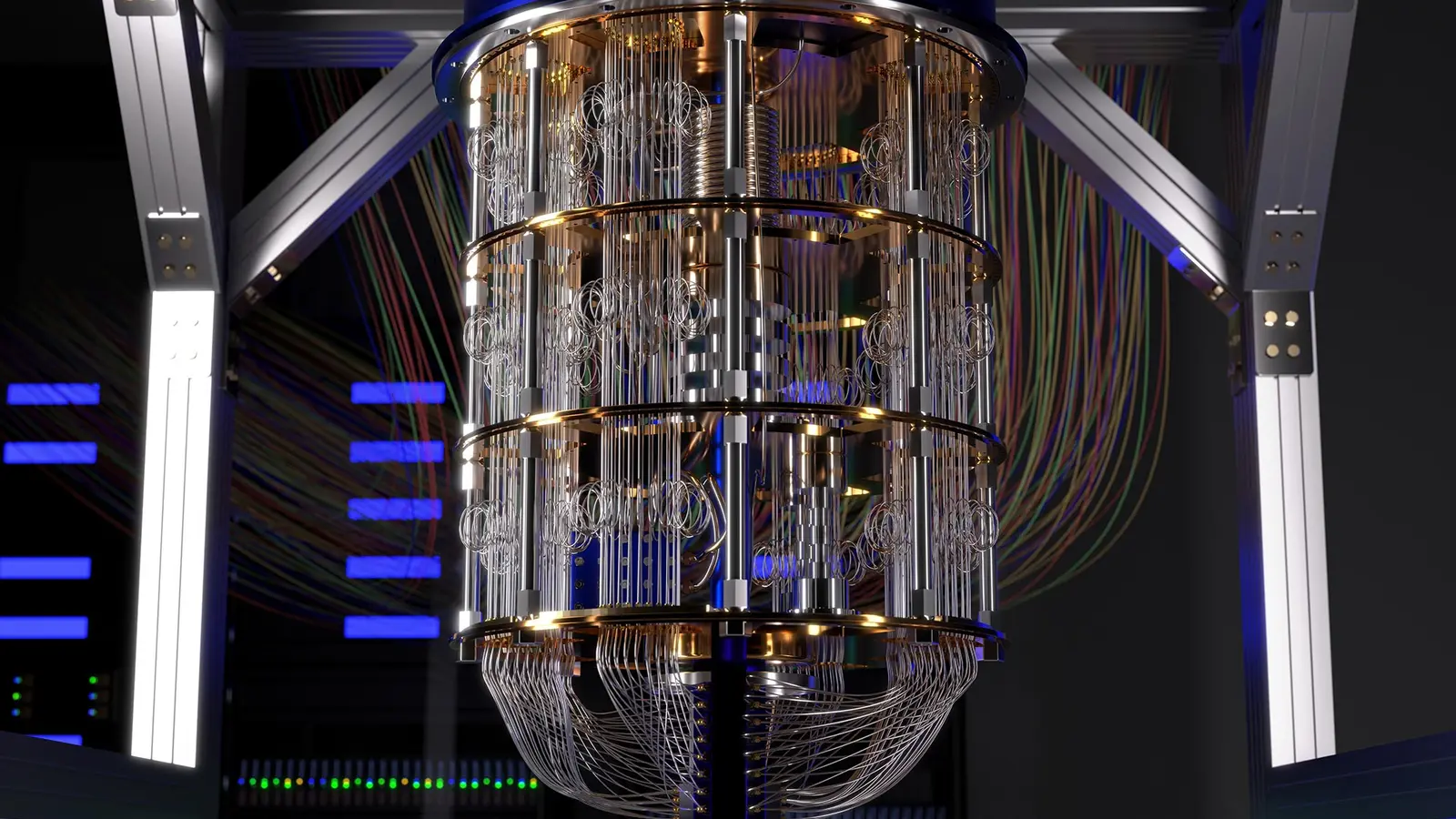
In roughly the time it takes to finish a coffee, a quantum processor produced an output that leading classical simulators cannot realistically reproduce. The result is not only speed; it is also a method to check that the machine did the job correctly.
How the team closed a long-standing gap
Researchers from IBM and the University of Chicago reported on July 30, 2026, that a quantum computer completed a computationally demanding task in about 15 minutes while providing a way to establish statistical confidence in the result. That combination addresses a central hurdle for quantum advantage: doing something beyond classical reach and proving you did it right.
The experiment relied on a fresh design for encoded quantum circuits, which let the team both push computational hardness and detect errors as the calculation progressed. In short: the researchers encoded information across many physical components so logical qubits could survive noise and let the scientists measure fidelity in flight.
Why verification has been the bottleneck
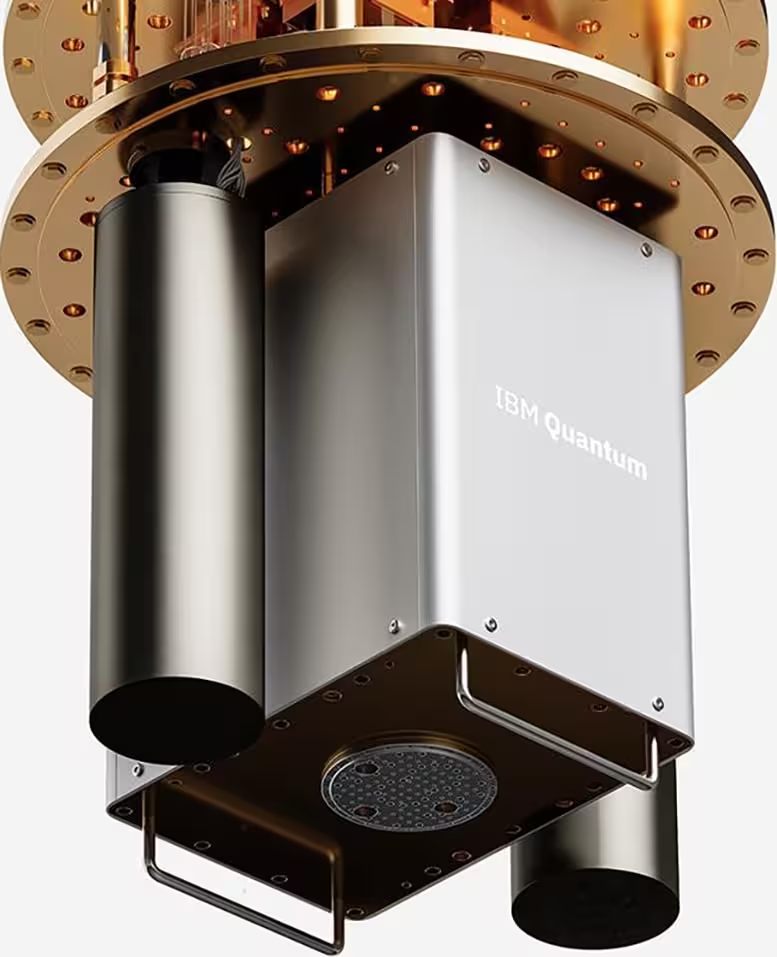
Random circuit sampling has been a standard benchmark for testing whether quantum devices can outpace classical computers. In that task, a quantum processor generates genuinely complex probability patterns that classical machines struggle to reproduce. The more complex the pattern, the harder it becomes even to confirm correctness.
Verification often collapses into an either-or. Either you trust unproven assumptions about the hardware, or you accept that checking the output might be as hard as computing it classically. The IBM-UChicago team took a different route. By structuring the circuits to preserve the same computationally hard character as random circuit sampling, they also made it possible to detect inconsistencies and quantify how noise affected the state during the run.
“Verification remains one of the biggest challenges in firmly establishing experimental quantum advantage,” said Bill Fefferman, Associate Professor at the University of Chicago. “This experiment develops techniques to better characterize the fidelity of hard quantum states under noise, increasing confidence that the quantum computer is solving a computationally hard problem.”
What they actually ran
The demonstration used one of the larger error-corrected logical systems reported so far: 70 logical qubits. Logical qubits are encoded across multiple physical qubits to protect quantum information from errors introduced by imperfect hardware and environmental noise.
The team executed 2,415 logical two-qubit operations and 468 logical T gates. Those figures measure circuit complexity in two complementary ways. Crucially, the encoding reduced the effective logical error rate to about one tenth of the underlying physical error rate, allowing the computation to retain high fidelity despite the long sequence of operations.
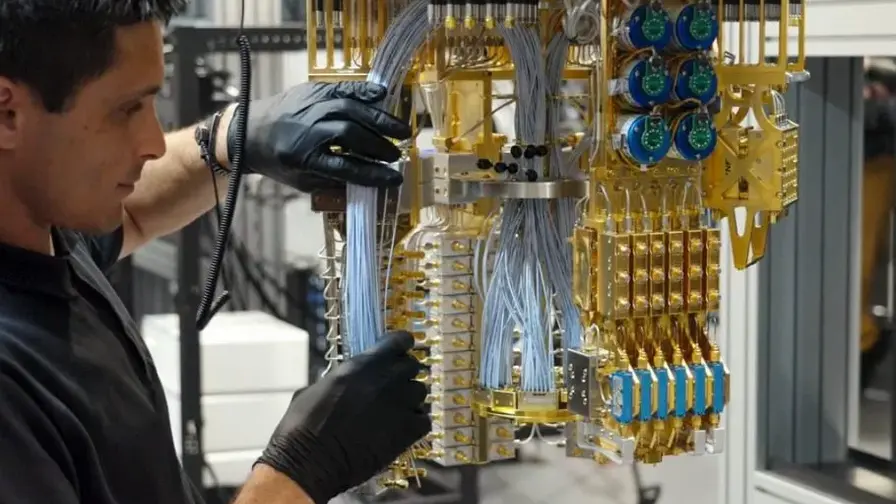
Soumik Ghosh, a PhD student in Fefferman’s group, emphasized that verification improvements do more than validate experiments. They may open the door to practical uses for near-future quantum machines by providing reliable performance diagnostics as systems scale.
Jay Gambetta, Director of IBM Research, said the demonstration marks a turning point. “We are now firmly in the quantum advantage era,” he said. “We have demonstrated a quantum computation beyond the practical reach of classical computers that establishes, with statistical confidence, a lower bound on how faithfully it was executed. This milestone gives scientists, developers, and businesses a new foundation for trusting quantum computers as they scale to problems far beyond what we can achieve classically.”

Implications for simulation and applications
Classical simulation techniques for these sorts of problems would require impractically long runtimes to match the quantum experiment. That is the practical meaning of quantum advantage here: not just a theoretical speedup, but a real reduction in the time to solution for a classically intractable task.
Still, quantum advantage measured on a benchmark does not automatically translate into immediate, widespread utility. Verification and error correction are necessary foundation layers. Without them, results from larger machines would remain suspect. This demonstration links those layers: it shows that error suppression at the logical level and a principled verification strategy can coexist in a single experiment.
What comes next
Circuits and results from the experiment have been published through the Quantum Advantage Tracker, allowing independent groups to inspect the data and try new classical verification attempts. That public release is important. Open data accelerates progress by letting theorists and experimentalists probe failure modes, test new decoders, and refine simulation tactics.
Longer term, the techniques used here could serve as building blocks for fault-tolerant systems targeting chemistry, optimization, and materials problems where classical methods struggle. The path is not immediate. But this work reduces key uncertainties about whether large quantum circuits can be run with measurable reliability.
Expert Insight
Dr. Amina Patel, a quantum information scientist at a national laboratory, commented: "This experiment is notable because it treats verification as an integral part of the computation rather than an afterthought. That mindset matters. When engineers can say not only what a machine did, but how confidently it did it, the community can move from demonstrations toward applications with clarity and purpose."
Conclusion
The IBM and University of Chicago demonstration does more than break a speed record. It stitches together error-corrected logical computing and in-line verification, showing a credible route to quantum computations that are both classically hard and auditable. For researchers and industry watchers, the result is a clear signal: quantum systems are approaching the scale and reliability needed to tackle new kinds of computational problems.

“The cosmos has always fascinated me. I write about space missions, astronomy, and the technologies pushing humanity beyond Earth.”

Discussion
Leave a Comment
Comments (2)
Wow, if true this is a milestone. verification in flight? mindblown. still wondering how it scales to real problems tho, not just benchmarks.
wait, 15 minutes and verifiable? sounds huge but is the verification really airtight or are they leaning on assumptions, or classical shortcuts? curious about raw data & decoders…